Precise temperature control can make the difference between evenly baked food and a recipe that is underdone, overbrowned, or poorly set. The right thermometer helps you verify oven conditions and monitor temperature-sensitive ingredients.
We selected 10 baking thermometers under $100, including fast digital probes, battery-free oven gauges, and versatile models for candy, frying, grilling, and roasting.
Best 10 Baking Thermometers Under 100 Picks for 2026
Fast-Read Pick

- One-second temperature readout
- 5.3-inch stainless steel probe
- -58°F to 572°F range
Best For: Home cooks needing a fast, versatile thermometer
Oven Accuracy Pick
Taylor 3-Inch Analog Oven Thermometer

- 100°F to 600°F measurement range
- Large three-inch easy-read dial
- Hangs or stands inside the oven
Best For: Bakers checking actual oven temperature
Waterproof Baking Pick
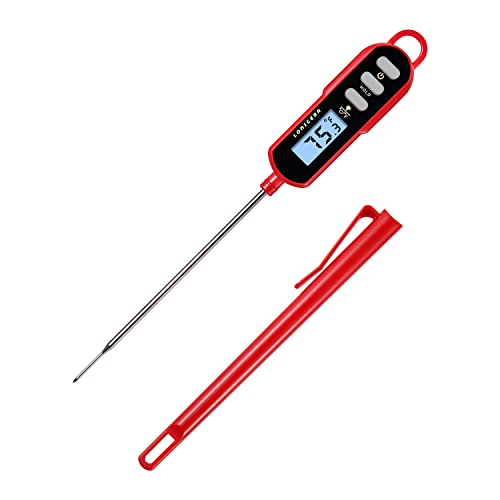
- IP67 waterproof design
- 5.1-inch probe with backlit display
- Useful for sourdough and dough temperature
Best For: Sourdough bakers wanting easy cleanup
Leave-In Value Pick

- Two oven- and grill-safe thermometers
- Large food-reference dials
- Leave-in design for roasting and baking
Best For: Cooks monitoring multiple dishes
Best Recalibratable Pick
GoodCook Everyday Digital Thermometer

- LCD display with stainless steel probe
- Recalibratable Fahrenheit/Celsius design
- Includes protective storage sleeve
Best For: Routine baking and indoor kitchen use
Best Oven-Monitoring Pick
PECULA Stainless Steel Oven Thermometer
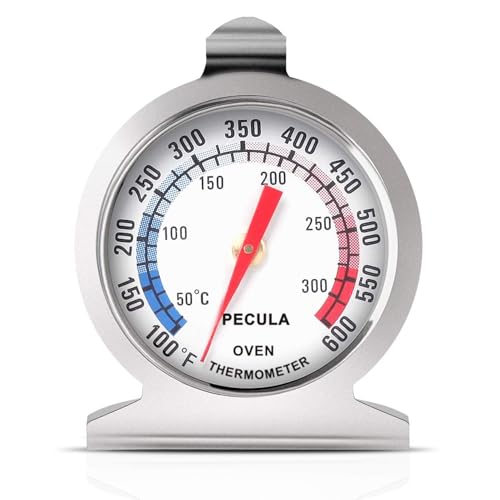
- 100–600°F analog temperature range
- Hook and stand enable flexible placement
- Battery-free stainless steel construction
Best For: Monitoring oven temperature during baking
Best Versatile Probe
Digital Candy and Food Thermometer
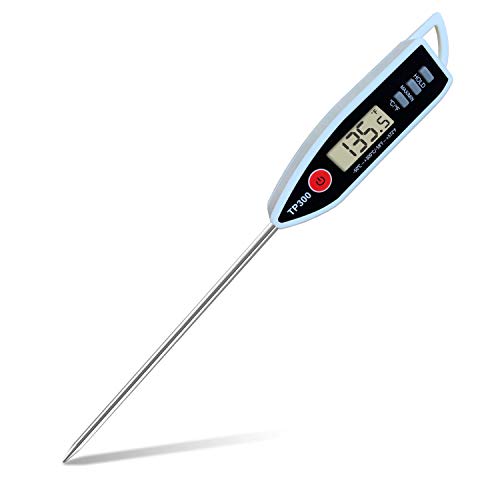
- -58°F to 572°F measurement range
- Five-inch stainless steel probe
- Hold and maximum/minimum temperature functions
Best For: Baking, candy, frying, grilling, and hot liquids
Best Analog Oven Pick
PECULA Stainless Steel Oven Thermometer

- Large dial with red-zone indicators
- 100–600°F / 50–300°C range
- Stand or hang; reusable stainless steel design
Best For: Simple oven-temperature monitoring without an LCD
Best Waterproof Instant-Read Pick
ANDAXIN Digital Meat Thermometer

- Three-second readings with ±1°F stated accuracy
- IP65 waterproof and backlit LCD
- Lock, calibration, and -58–572°F range
Best For: Multi-purpose baking, grilling, and frying
Best Long-Probe Pick
Smart Digital Food Thermometer
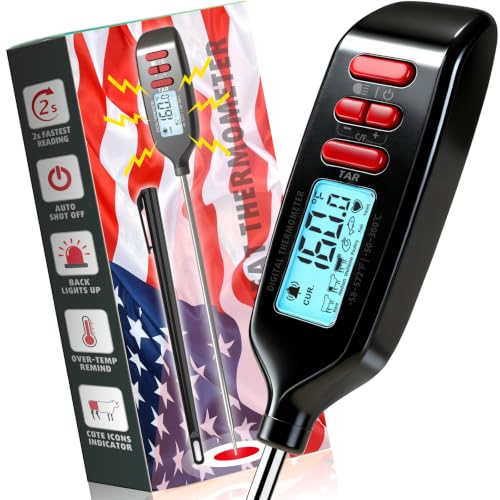
- Two-second readings and backlit display
- 5.5-inch 304 stainless steel probe
- Target-temperature alert and -58–572°F range
Best For: Deep dishes, hot oil, roasts, candy, and baking
Fast-Read Pick – TempSwift Digital Thermometer
For shoppers comparing baking thermometers under 100, the TempPro TempSwift stands out for its one-second digital readout and broad temperature range. Its 5.3-inch stainless steel probe is useful for checking dough, liquids, meats, and other hot foods while keeping your hands farther from the heat.
Best For: Home cooks who want one fast, versatile thermometer for baking, grilling, and everyday cooking.
Pros:
- Reads temperatures in about one second with stated accuracy of +/-0.9°F.
- Long 5.3-inch food-grade stainless steel probe helps maintain distance from heat.
- Measures from -58°F to 572°F and switches between Fahrenheit and Celsius.
- Includes a battery, probe-tip cover, hanging hole, and automatic shutoff.
Cons:
- Hand washing is recommended rather than dishwasher cleaning.
- Uses a small LR44 battery.
This is a practical choice when speed and versatility matter more than specialty oven monitoring. The long probe and wide range make it especially adaptable for baking, bread making, grilling, and liquids.
Oven Accuracy Pick – Taylor 3-Inch Analog Oven Thermometer
Among baking thermometers under 100, the Taylor Analog Oven Thermometer is a straightforward way to check whether your oven is reaching its displayed temperature. Its large dial covers 100°F to 600°F and can stand on a rack or hang inside the oven.
Best For: Bakers who want a simple, battery-free-style analog oven gauge for monitoring overall oven temperature.
Pros:
- Wide 100°F to 600°F range suits low-temperature cooking and high-heat baking.
- Large three-inch dial includes clearly marked cooking zones.
- Stainless steel construction is designed for repeated oven use.
- Can hang from an oven rack or stand upright.
Cons:
- Analog resolution is less granular than a digital thermometer.
- Should not be placed in the dishwasher.
- It measures oven temperature rather than the internal temperature of food.
This model is best viewed as an oven-calibration aid rather than a probe for dough or candy. Its large face and flexible placement make it convenient for identifying temperature differences between an oven’s setting and its actual heat.
Waterproof Baking Pick – LONICERA Digital Thermometer
For baking thermometers under 100 that are easy to clean, the LONICERA Digital Cooking Thermometer combines a one-second readout with an IP67-rated waterproof design. Its long probe and backlit display also make it useful for bread dough, sourdough fermentation, liquids, and general cooking.
Best For: Sourdough bakers and home cooks who want a washable, quick-reading thermometer with a readable display.
Pros:
- Provides fast readings with stated accuracy of +/-1°F.
- 5.1-inch probe helps keep hands away from hot ingredients.
- IP67 waterproof design allows rinsing under running water.
- Backlit display, hold function, Fahrenheit/Celsius switching, and built-in magnet add convenience.
Cons:
- Product details list a two-second response time in one specification field despite the one-second advertised readout.
- Hand washing is still listed in the care instructions.
- Uses an LR44 battery.
The LONICERA is a strong fit for bakers who frequently check dough temperature and want simple cleanup. Its backlight and hold button are useful extras, while the broad -58°F to 572°F range supports more than baking alone.
Leave-In Value Pick – Escali AH1 2-Pack
For shoppers seeking baking thermometers under 100 in a multipack, the Escali AH1 provides two oven- and grill-safe analog thermometers. The leave-in design lets you monitor roasts, casseroles, and other foods without repeatedly opening the oven, while the large dials show Fahrenheit and Celsius readings.
Best For: Cooks who want two durable analog thermometers for simultaneous oven, grill, roasting, or baking use.
Pros:
- Two thermometers offer convenient multipan or oven-and-grill coverage.
- Leave-in construction helps monitor food without losing oven heat.
- Large 2.375-inch dials include food-specific temperature references.
- Stainless steel construction is oven safe, rust resistant, and NSF certified.
Cons:
- Analog dials are less precise to read than digital displays.
- Listed measurement range is limited compared with instant-read thermometers.
- Care details include hand washing, despite the product description also mentioning dishwasher safety.
This two-pack makes sense when you value continuous monitoring and quantity over instant readings. The food-reference markings and leave-in format are particularly convenient for roasting and baking larger dishes.
Best Recalibratable Pick – GoodCook Everyday Digital Thermometer
For shoppers comparing baking thermometers under 100, the GoodCook Everyday offers a straightforward digital readout with a stainless steel probe and recalibration capability. Its compact design and included sleeve make it convenient for routine kitchen use.
Best For: Bakers who want a simple, reusable instant-read thermometer with recalibration support.
Pros:
- Digital LCD display for easy reading.
- Stainless steel probe and reusable construction.
- Recalibratable design with Fahrenheit and Celsius readings.
- Includes a protective storage sleeve and limited lifetime warranty.
Cons:
- Its listed upper temperature range is 220°F, limiting use for some high-temperature tasks.
- Designed for indoor use rather than outdoor cooking.
The GoodCook is a practical choice when convenient digital readings and recalibration matter more than an especially broad temperature range.
Best Oven-Monitoring Pick – PECULA Stainless Steel Oven Thermometer
Among baking thermometers under 100, the PECULA stands out as a dedicated oven-monitoring tool with a broad 100–600°F range. Its analog dial, hook, and stand let you position it where the oven temperature is easiest to check.
Best For: Bakers who want to monitor oven temperature continuously without relying on a handheld probe.
Pros:
- Wide 100–600°F temperature range with 1°F/1°C resolution.
- Hook-and-stand design supports flexible placement.
- Battery-free mechanical operation.
- Stainless steel body and tempered glass lens are designed for high-heat use and easy wipe cleaning.
Cons:
- Analog display may require closer reading than an LCD.
- It is intended for oven and cooking-area monitoring rather than taking a deep internal food reading.
Choose this model if maintaining awareness of the oven’s actual temperature is your priority, especially for baking, roasting, or other high-heat cooking.
Best Versatile Probe – Digital Candy and Food Thermometer
For shoppers seeking baking thermometers under 100 that can handle more than oven checks, this digital probe thermometer covers candy, deep-frying, baking, milk, roasting, and grilling. It provides readings in 3–5 seconds and includes useful hold and maximum/minimum functions.
Best For: Cooks who need one thermometer for baking, candy making, frying, grilling, and general food temperature checks.
Pros:
- Wide -58°F to 572°F range with readings accurate to ±0.9°F.
- Five-inch food-grade 304 stainless steel probe helps keep hands away from heat.
- LCD display, Fahrenheit/Celsius switching, and hold function support convenient use.
- Records maximum and minimum temperatures and includes an automatic shutoff feature.
Cons:
- Requires one included LR44 battery.
- The probe-style design requires manual placement and checking rather than continuous oven monitoring.
This is the most flexible option of the three for bakers who also make candy, monitor hot liquids, or cook with high-heat methods.
Best Analog Oven Pick – PECULA Stainless Steel Oven Thermometer
For shoppers comparing baking thermometers under 100, the PECULA is a straightforward choice for monitoring oven temperature without relying on a digital display. Its large analog dial, red-zone indicators, and broad 100–600°F range make it practical for conventional ovens, toaster ovens, roasting, and grilling.
Best For: Bakers who want a simple, battery-free oven temperature gauge with an easy-to-read dial.
Pros:
- Large dial with clear red-zone indicators for quick reading.
- Measures from 100–600°F (50–300°C).
- Can stand or hang horizontally or vertically.
- Stainless steel construction and reusable design.
Cons:
- Analog display may be less precise to read than an LCD.
- Designed for oven monitoring rather than quick probe measurements.
The PECULA favors simplicity over extra features. Choose it if your main goal is checking whether your oven is running at the temperature shown on its controls.
Best Waterproof Instant-Read Pick – ANDAXIN Digital Meat Thermometer
Among baking thermometers under 100, the ANDAXIN stands out for fast digital readings and flexible kitchen use. It reaches a reading in about three seconds, supports temperatures from -58°F to 572°F, and includes features that are useful for baking, grilling, frying, and general cooking.
Best For: Cooks who want a washable, backlit instant-read thermometer for indoor and outdoor food preparation.
Pros:
- Reads temperatures in approximately three seconds with stated accuracy within 1°F.
- IP65 waterproof body can be washed under running water.
- Backlit LCD helps with low-light cooking.
- Lock and calibration functions add convenience and accuracy control.
Cons:
- Hand-wash only according to the care instructions.
- Requires a lithium metal battery, although one is included.
With its wide range, magnetic back, hanging hole, and one-year warranty, the ANDAXIN is a versatile option for bakers who also cook on the grill or stovetop.
Best Long-Probe Pick – Smart Digital Food Thermometer
For baking thermometers under 100 that can also handle liquids and deep foods, this digital model combines a two-second reading time with a 5.5-inch stainless steel probe. Its backlit display, target-temperature alert, and broad -58°F to 572°F range make it useful for bread, cakes, candy, frying oil, soups, and roasted foods.
Best For: Bakers and cooks who need extra reach for deep dishes, hot oil, roasts, or liquid ingredients.
Pros:
- Checks temperatures in about two seconds.
- 5.5-inch 304 stainless steel probe helps keep hands away from heat.
- Backlight and over-temperature reminder support easier monitoring.
- Includes a probe sheath and CR2032 battery.
Cons:
- Should not be soaked; care requires hand washing and wiping.
- Stated accuracy is ±1.8°F, less precise than some models.
The long probe and alert function make this a strong all-around choice when baking is only part of your cooking routine. It is especially practical for deep liquids and hot oil where a short probe can be awkward.
How We Picked the Best Baking Thermometers Under 100
We focused on thermometers that provide practical value for home baking and related kitchen tasks. The selection includes instant-read digital models, analog oven thermometers, and multipurpose probes suited to candy, oil, meat, and general cooking.
Key considerations included readability, temperature range, response speed, probe design, waterproofing, oven safety, power requirements, recalibration capability, and useful features such as backlighting, protective sleeves, hooks, and stands. Because temperature accuracy depends on proper placement and calibration, we also favored designs that make checking and handling easier.
Quick Comparison
- Best for fast spot checks: Choose an instant-read digital thermometer with a quick response and easy-to-read display.
- Best for monitoring the oven: Select an oven-safe analog thermometer that can stand or hang inside the oven.
- Best for baking and cooking versatility: Look for a long probe and a broad temperature range for candy, frying oil, roasting, and baking.
- Best for low-maintenance use: A battery-free analog model avoids batteries, while waterproof digital models are easier to clean.
Key Buying Factors for Baking Thermometers Under 100
Digital or Analog Display
Digital thermometers are generally easier to read quickly and may offer faster measurements, backlighting, or recalibration. Analog oven thermometers are useful for continuous monitoring and do not require batteries, but they can take longer to interpret and may be less convenient for quick ingredient checks.
Temperature Range and Intended Use
Confirm that the thermometer covers your recipes. Bread, cakes, and oven checks need a different range than candy, deep-frying, or high-heat grilling. A broad range is valuable if one tool will serve several purposes.
Probe Length, Placement, and Safety
A longer probe helps keep hands away from hot pans and is especially useful for roasts, oil, and deep mixtures. For oven thermometers, verify that the unit is designed to remain in the oven. Do not leave a standard instant-read digital thermometer inserted unless the manufacturer specifically permits it.
Accuracy, Cleaning, and Calibration
Look for clear accuracy specifications and recalibration support when available. Waterproof or water-resistant construction can simplify cleanup, but the display housing should still be handled according to the care instructions. Avoid immersing any thermometer beyond its stated limit.
Who Should Buy Which Baking Thermometers Under 100?
Occasional bakers should choose a straightforward oven thermometer or affordable instant-read model that solves their main accuracy problem without unnecessary features. Frequent bakers may benefit from owning both: an oven gauge for checking temperature stability and a digital probe for ingredients and finished foods.
Candy makers and cooks who fry should prioritize a wide temperature range and a sufficiently long probe. Grillers and roast cooks should look for fast readings, a durable probe, and a clear display. If you share tools across a busy kitchen, waterproofing, backlighting, a protective sleeve, and easy storage can justify choosing a more feature-rich option.
