Making bread, pizza, pasta, or sourdough at home is easier when a machine handles the repetitive kneading. The best dough makers under $300 combine useful capacity with timed mixing and, in many cases, built-in fermentation.
This roundup compares 10 affordable models with different bowl sizes, control systems, and batch capacities so you can choose a machine that fits your recipes, counter space, and baking routine.
Best 10 Dough Kneading Machines Under 300 Picks for 2026
Best Fermentation Pick
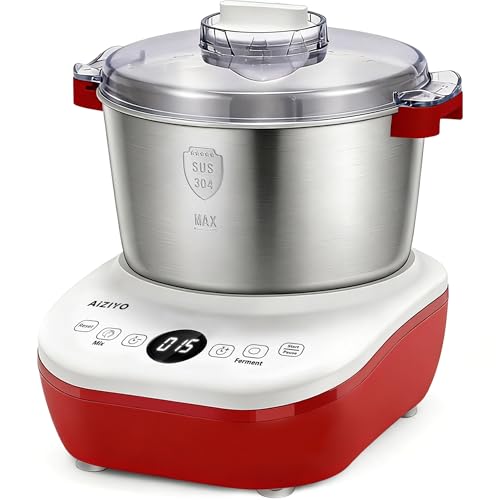
- 77–100°F fermentation range
- Mix-pause-mix kneading program
- 304 stainless steel bowl
Best For: Home bakers wanting integrated kneading and proofing
Best Large-Batch Pick

- 7.4-quart stainless steel bowl
- Processes up to 2,100g flour
- Automatic 100°F fermentation
Best For: Family-size batches and frequent baking
Quiet Precision Pick
Sunvivi 5.2QT Electric Dough Maker

- Built-in weighing function for measured ingredients
- Fermentation support and adjustable kneading time
- Low-noise motor with removable stainless steel bowl
Best For: Home bakers wanting quiet, measured, large-batch dough preparation
Hands-Free Fermentation Choice

- Dedicated dough-kneading design for home baking
- Heated fermentation reaches 100°F
- 5.3-quart bowl handles up to 1.4 kilograms of dough
Best For: Beginners seeking hands-free kneading and guided fermentation
Timer-Controlled Value

- Customizable 5-to-40-minute kneading timer
- 200-watt motor with fermentation function
- 5-liter 304 stainless steel bowl and measuring accessories
Best For: Home bakers wanting flexible timing and a complete starter kit
Best for Weighing Convenience

- Integrated weighing function
- Adjustable 15-minute kneading cycle
- Removable parts and dishwasher-safe care
Best For: Home bakers seeking simpler measuring and cleanup
Best for Large Batches
6.5QT Stainless Steel Dough Maker

- 6.5-quart 304 stainless steel bowl
- 15-minute timed kneading design
- 77–95°F constant-temperature fermentation
Best For: Frequent bakers preparing larger household batches
Best Fermentation Pick – AIZIYO DoughChief 5.3QT
For shoppers comparing dough kneading machines under 300, the AIZIYO DoughChief stands out for combining kneading and proofing in one compact appliance. Its 5.3-quart stainless steel bowl, touch controls, and fermentation function suit regular bread, pizza, pasta, and mochi preparation.
Best For: Home bakers who want automatic kneading plus controlled dough proofing.
Pros:
- Maintains a fermentation range of 77–100°F.
- Uses a mix-pause-mix program and S-shaped blade to support even kneading.
- Wide top opening allows ingredients to be added while mixing.
- Includes a 304 stainless steel bowl, digital display, and time-setting function.
Cons:
- The 5.3-quart capacity is smaller than the 7.4-quart options in this roundup.
- At 200 watts and 75 dB, it may not be the quietest or most powerful choice.
The DoughChief is a practical choice when consistent fermentation matters as much as kneading. It offers useful automation without taking up the space of a larger-capacity machine.
Best Quiet Compact Option – Joydeem 5.3Qt Electric Dough Maker
Among dough kneading machines under 300, the Joydeem 5.3-quart model offers a compact approach to everyday dough preparation. Its intermittent kneading motion, adjustable timers, and temperature-controlled fermentation support bread, pizza, pasta, sourdough, roti, dumplings, and steamed buns.
Best For: Home cooks who want a relatively quiet machine for varied dough recipes.
Pros:
- Operates at a listed 50 dB noise level with four silicone suction cups for stability.
- Handles 300–1,600g of flour, with up to 1,300g recommended for fermented dough.
- Offers 5–40-minute mixing and 5–120-minute fermentation settings.
- Uses a 304 stainless steel bowl and blade for durability and easier cleaning.
Cons:
- Has one speed and no speed adjustment.
- Warm water may be needed during winter because the fermentation system does not reach high temperatures.
Joydeem is a sensible fit for smaller households and bakers who value quiet operation and flexible timing. Its single-speed design keeps controls straightforward, though it offers less adjustment than a traditional stand mixer.
Best Large-Batch Pick – Saker 7.4Qt Dough Maker
If you need dough kneading machines under 300 for family-size baking, the Saker 7.4-quart model provides more room than the smaller 5.3-quart machines. Its 250-watt motor, large stainless steel bowl, and automatic 100°F fermentation mode are designed for larger batches of bread, pizza, noodles, pastries, and sourdough.
Best For: Families and frequent bakers preparing up to 2,100g of flour in one batch.
Pros:
- 7.4-quart bowl accommodates 300–2,100g of flour.
- Maintains a constant 100°F fermentation temperature with one-touch operation.
- 250-watt motor is designed for multiple dough types.
- Transparent lid and top feeding window allow monitoring and ingredient additions.
Cons:
- Its 14-inch footprint is larger than the 5.3-quart alternatives.
- The listed noise level is 65 dB, so it may not be ideal for noise-sensitive kitchens.
The Saker makes the most sense when batch size is the priority. It combines a generous bowl with automated fermentation, making it convenient for family baking and meal prep.
Best Hands-Free Value – 7.4QT Electric Dough Mixer
This 7.4-quart electric mixer is a useful contender among dough kneading machines under 300 for bakers who want hands-free preparation and generous capacity. It is designed specifically for bread, pizza, roti, and sourdough, with timer controls and fermentation heat for more consistent dough handling.
Best For: Home bakers making large batches who want simple push-button kneading and fermentation.
Pros:
- 7.4-quart 304 stainless steel bowl supports 600–2,100g of flour.
- Built-in timer and 77–100°F fermentation range reduce the need for monitoring.
- Hands-free kneading is designed for heavy bread, pizza, and sourdough doughs.
- Features reduced vibration, low-noise operation, and a stainless steel bowl for easier cleanup.
Cons:
- Push-button controls provide less control than a digital touch panel.
- The listed 200-watt motor is lower-powered than the Saker’s 250-watt motor.
This model is appealing for shoppers who want a large bowl and straightforward automation without extra controls. Its focus on hands-free kneading makes it especially practical for routine family baking.
Quiet Precision Pick – Sunvivi 5.2QT Electric Dough Maker
For shoppers comparing dough kneading machines under 300, the Sunvivi 5.2-quart model stands out for combining automatic kneading, fermentation, and built-in weighing. Its stainless steel bowl, adjustable timer, and low-noise DC motor make it a practical choice for regular home baking.
Best For: Home bakers who want measured ingredients, fermentation support, and quieter operation for larger batches.
Pros:
- Built-in weighing function supports measurements from 2.2 to 11 pounds.
- 5.2-quart capacity suits bread, pizza, buns, and dumpling dough.
- Removable bowl, blade, and cover simplify cleanup.
- Adjustable kneading time and low-noise DC motor support convenient operation.
Cons:
- It has only one speed setting.
- The 200-watt motor is intended for household use rather than heavy commercial production.
The Sunvivi is a well-rounded option when convenience matters most. Its weighing feature and fermentation function reduce the need for separate tools, while the generous capacity and removable parts make it especially useful for family-sized baking sessions.
Hands-Free Fermentation Choice – 5.3QT Dough Kneader Machine
Among dough kneading machines under 300, this 5.3-quart kneader is designed specifically for dough rather than general mixing. It provides hands-free kneading, timer control, and a fermentation setting that heats dough to 100°F, making it a straightforward option for bread, pizza, pasta, and sourdough.
Best For: Beginners and families who want automatic kneading with guided timing and faster, more consistent fermentation.
Pros:
- Designed specifically for kneading dough and gluten development.
- Handles up to 1.4 kilograms of dough in a 5.3-quart 304 stainless steel bowl.
- Fermentation function heats dough to 100°F and can reduce rising time compared with room-temperature fermentation.
- Removable S-shaped stainless steel blade and low-noise motor support easy, comfortable use.
Cons:
- Controls use a knob rather than a touch panel.
- The supplied notes do not specify multiple speed settings.
This model focuses on the core task of making dough with minimal hands-on work. Its capacity is suitable for family baking, while the integrated timer and heated fermentation function offer useful structure for less experienced bakers.
Timer-Controlled Value – 5L Electric Dough Maker
For buyers searching dough kneading machines under 300, this 5-liter electric dough maker offers a useful mix of timer control, fermentation, and included measuring accessories. Its 200-watt DC copper motor, 5-to-40-minute timer, and visible lid make it suited to hands-off home dough preparation.
Best For: Home users who value customizable kneading times, a roomy bowl, and included measuring tools.
Pros:
- Microcomputer timer lets you set mixing and kneading times from 5 to 40 minutes.
- 200-watt motor operates at 140 to 170 rpm and includes a fermentation function.
- 5-liter stainless steel basin reduces the need for repeated small batches.
- Includes a measuring cup, measuring spoon, dumpling-wrapper accessory, and egg-white separator.
Cons:
- Listed noise level is 75 dB, so it may not be ideal for noise-sensitive kitchens.
- The supplied notes do not state a maximum dough weight.
- Its included accessories may be less useful if you already own measuring tools.
This silver model is a practical value-oriented choice for bakers who want flexible timing and a larger mixing basin. The clear screen and top opening also make it easier to monitor the process and add water while kneading.
Best All-Around Fermentation Pick – 5.3Qt Dough Mixer
If you’re comparing dough kneading machines under 300, this 5.3-quart model stands out for combining dough mixing with automatic fermentation. Its 250W motor, touch controls, transparent lid, and 5-quart stainless steel bowl make it a practical choice for everyday bread, pizza, dumpling, and pastry preparation.
Best For: Families and home bakers who want one machine for kneading and temperature-controlled fermentation.
Pros:
- Automatic fermentation operates from 77–100°F after kneading.
- 5-quart capacity handles 300–1,600g of flour and up to three loaves at once.
- Touch controls include time setting, digital display, and auto shutoff.
- Transparent lid and top feeding window make it easy to monitor and adjust ingredients.
Cons:
- For best fermentation results, the recommended flour limit is 1,300g.
- The 250W motor may be better suited to household batches than especially heavy-duty use.
- The included accessories may add storage needs.
Choose this model if fermentation is as important to you as kneading. Its broad recipe range and family-size bowl offer strong versatility, while the low-noise base and viewing lid improve day-to-day convenience.
Best for Weighing Convenience – 5.2QT Dough Maker
Among dough kneading machines under 300, this 5.2-quart electric dough maker is a useful option for bakers who want weighing and fermentation functions built in. Its stainless steel interior, adjustable timing, and DC motor are designed to simplify routine bread, pizza, and dumpling preparation.
Best For: Home cooks who value integrated weighing, timed kneading, and easier cleanup.
Pros:
- Combines dough making with a weighing function.
- 5.2-quart capacity supports batches from 2.2 to 11 pounds according to the supplied specifications.
- Adjustable kneading time and countdown settings can complete a cycle in as little as 15 minutes.
- Removable cover and blade, stainless steel liner, and dishwasher-safe care instructions support maintenance.
Cons:
- The supplied notes do not specify the weighing function’s accuracy or increment settings.
- At 200W, it has less listed power than some larger dough machines.
- Only a dough maker is listed among the included components.
This is a sensible pick when measuring ingredients and managing kneading time are priorities. Its compact household-oriented design and quieter DC motor make it particularly appealing for regular kitchen use.
Best for Large Batches – 6.5QT Stainless Steel Dough Maker
For shoppers comparing dough kneading machines under 300, this 6.5-quart model is geared toward larger household batches. It pairs a 304 stainless steel bowl with a hand-kneading-style S-shaped blade, constant-temperature fermentation, knob controls, and a stable suction-cup base.
Best For: Families and frequent bakers who want a larger bowl for bread, pizza, dumplings, and pastries.
Pros:
- 6.5-quart bowl handles approximately 300–1,400g of dough in one batch.
- Smart timer and mix-pause-mix operation are designed to develop gluten in about 15 minutes.
- Constant-temperature fermentation operates from 77–95°F.
- 304 stainless steel bowl and blade are durable, odor-resistant, and easy to rinse; the blade is dishwasher-safe.
Cons:
- The bowl is not recommended for dishwasher cleaning.
- Fermentation requires yeast or baking powder.
- Knob controls may offer fewer automated settings than a touch-panel model.
This model makes the most sense if capacity, stable operation, and durable stainless steel construction matter more than a compact footprint. Its removable lid, low-noise design, and constant-temperature fermentation add useful convenience for larger baking sessions.
How We Picked the Best Dough Kneading Machines Under 300
We focused on the features that matter most for everyday home baking: dough capacity, bowl material, kneading controls, fermentation settings, timer functions, included accessories, and ease of cleaning. The selection includes compact household models and larger machines designed for families or frequent batch baking.
Because specifications can vary by seller and configuration, check the current listing for exact dimensions, wattage, maximum flour or dough limits, included attachments, and warranty coverage before ordering. A stated capacity is not always the same as the recommended working capacity for heavy dough.
Quick Comparison
| Feature | What to look for | Best suited to |
|---|---|---|
| Capacity | About 5 to 5.3 quarts | Most everyday household batches |
| Large capacity | 6.5 to 7.4 quarts | Families and frequent baking |
| Fermentation | Timed or seasonal temperature settings | Bread and sourdough workflows |
| Controls | Touch panel, timer, or simple presets | Different preferences for convenience |
| Weighing function | Integrated ingredient measurement | Streamlined, repeatable preparation |
Key Buying Factors for Dough Kneading Machines Under 300
Capacity and Dough Limits
Choose capacity based on the dough you actually make, not just the bowl’s advertised volume. A 5-quart machine is generally practical for regular home batches, while 6.5- to 7.4-quart models provide more room for multiple loaves or larger pizza batches. Confirm the maximum recommended dough weight, especially for dense whole-wheat or enriched dough.
Kneading Performance and Motor Details
Look for a stable base, effective dough-hook design, and specifications that explain the machine’s power or speed. A higher wattage number alone does not guarantee better kneading. For heavy dough, stability and a suitable low-speed setting are just as important.
Fermentation and Controls
Built-in fermentation can simplify proofing by keeping dough in a warmer, enclosed environment. Timers and preset programs are useful for repeatable results, while touch controls may be easier to clean than physical switches. If you prefer manual control, prioritize adjustable time and speed settings.
Cleaning and Countertop Fit
Stainless steel bowls are durable and typically straightforward to wipe clean. Check whether the lid, hook, and other removable parts are dishwasher-safe. Also measure your available counter and cabinet space; larger dough makers can be noticeably heavier and taller than compact models.
Who Should Buy Which Dough Kneading Machines Under 300?
Choose a compact 5- to 5.3-quart model if you bake occasionally, have limited counter space, or usually prepare one standard batch. A 6.5- or 7.4-quart machine is a better match for larger households, frequent bread baking, and bigger pizza or pasta batches. Models with fermentation functions suit bakers who want fewer separate proofing tools, while a weighing function is useful for anyone who values consistent ingredient measurement. If you mainly need dependable kneading and already proof dough elsewhere, prioritize bowl size, stability, and easy cleanup over extra programs.
