The best energy-efficient wine coolers protect your bottles without adding unnecessary power use, noise, or bulk to your kitchen, dining area, or home bar.
We compare 10 compact and full-size models, including thermoelectric and compressor designs, to help you choose the right capacity, temperature range, and installation style for your collection.
Best 10 Energy Efficient Wine Coolers Picks for 2026
Best Large-Capacity Pick
24-Bottle Compressor Wine Cooler

- Holds up to 24 Bordeaux bottles
- 41–64°F digital temperature range
- Upright storage for four open bottles
Best For: Medium-sized wine collections needing compressor cooling
Best Quiet Compact Pick
BLACK+DECKER 12-Bottle Wine Chiller

- Quiet thermoelectric cooling
- Stores up to 12 bottles
- Mirrored door helps block UV light
Best For: Small collections and space-conscious rooms
Best Small Energy Saver

- 65 kWh listed annual energy use
- 46–64°F digital temperature control
- Removable shelf and double-layer glass
Best For: Small collections focused on low energy consumption
Best Countertop Option

- Quiet solid-state thermoelectric cooling
- Compact countertop footprint
- Digital temperature control and LED display
Best For: Small collections in kitchens, bedrooms, or offices
Best Overall Compact Pick
Ivation 12-Bottle Compressor Wine Cooler
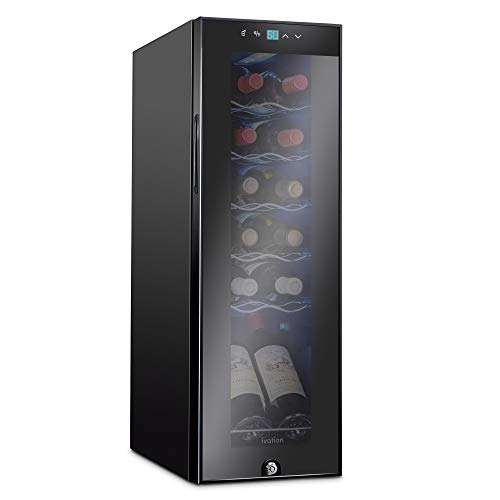
- 41°F–64°F compressor cooling
- UV-resistant double-paned glass
- 115.17 kWh annual energy use
Best For: Small collections needing stable, lockable storage
Best Slim Energy Saver
NutriChef 12-Bottle Slim Wine Fridge

- 112 kWh reported annual energy use
- Energy Star and BEE 5-star specifications
- Slim design with quiet compressor cooling
Best For: Small kitchens, offices, and countertops
Best Large Dual-Zone Option
46-Bottle Dual Zone Wine Fridge

- Two zones from 40°F to 65°F
- Front-venting under-counter design
- Holds up to 46 standard bottles
Best For: Larger mixed wine collections and home bars
Best Slim Space Saver
12-Bottle Slimline Wine Cooler

- 65% more efficient solid-state cooling than previous models
- Slim 10.4-inch width for tight spaces
- 46°F–64°F digital temperature control
Best For: Small collections and narrow kitchens
Best Larger Freestanding Pick
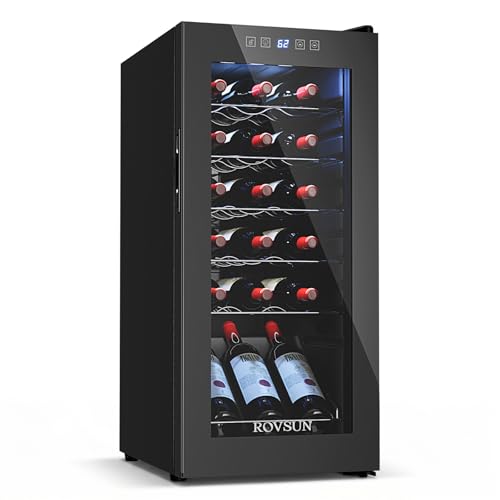
- Compressor cooling from 41°F to 64°F
- Stores up to 18 standard bottles
- Removable shelves and double-layer glass door
Best For: Larger collections and mixed beverages
Best Quiet Countertop Model

- 155 kWh annual energy consumption listed
- Quiet, low-vibration thermoelectric cooling
- 46°F–64°F digital temperature range
Best For: Small countertop collections and quiet rooms
Best Large-Capacity Pick – 24-Bottle Compressor Wine Cooler
For shoppers comparing energy efficient wine coolers for a medium-sized collection, this 24-bottle Wine Enthusiast model combines compressor cooling with a space-conscious freestanding design. Its 41–64°F range, digital controls, and upright storage for open bottles make it a versatile option for everyday wine storage.
Best For: Collectors who need room for up to 24 Bordeaux bottles and want compressor-based cooling.
Pros:
- Compressor cooling is designed for consistent operation across a wider range of ambient temperatures.
- Stores up to 24 bottles and includes an upright holder for up to four open bottles.
- Front touchscreen controls and an easy-to-read LED temperature display simplify adjustments.
- Compact 17-inch width helps fit larger capacity into a relatively small footprint.
Cons:
- Its 30.5-inch height and 47-pound weight may be more than some small spaces can accommodate.
- Manual defrost requires occasional maintenance.
This is a strong all-around choice when capacity and temperature consistency matter more than countertop portability. The warranty coverage and established Wine Enthusiast support add reassurance for long-term use.
Best Quiet Compact Pick – BLACK+DECKER 12-Bottle Wine Chiller
This BLACK+DECKER chiller is a practical choice among energy efficient wine coolers for smaller collections. Its thermoelectric cooling system operates quietly, while the mirrored door, five removable chrome racks, and 46–66°F range suit everyday red and white wine storage.
Best For: Apartment kitchens, home bars, or buyers wanting a quiet 12-bottle cooler with a compact footprint.
Pros:
- Thermoelectric cooling is described as energy-efficient and quiet.
- Five full-length removable chrome racks provide flexible bottle organization.
- Mirrored front helps block potentially harmful UV light.
- Its 10-inch depth and 12-bottle capacity work well where space is limited.
Cons:
- The 46–66°F range may be less suitable for shoppers seeking colder storage.
- Thermoelectric cooling can be more dependent on surrounding room conditions than compressor cooling.
With reported annual energy consumption of 155 kWh and a compact design, this model balances quiet operation with useful storage. It is best suited to modest collections rather than serious long-term cellaring.
Best Small Energy Saver – FOHERE 8-Bottle Wine Cooler
For a compact collection, the FOHERE is one of the more energy efficient wine coolers to consider, with listed annual energy consumption of 65 kWh. It offers 46–64°F digital temperature control, a removable shelf, and a double-layer glass door in a small freestanding cabinet.
Best For: Buyers who want a small eight-bottle cooler with low listed annual energy consumption and adjustable storage.
Pros:
- Listed annual energy consumption is 65 kWh per year.
- 46–64°F control accommodates both red and white wine storage.
- Removable shelf allows the interior to be adjusted for different bottle sizes.
- Double-layer glass helps protect wine from UV and heat exposure.
Cons:
- Eight-bottle capacity is limited for growing collections.
- The product notes recommend freestanding or under-counter placement and do not recommend built-in installation.
- It must remain upright for 24–36 hours before powering on.
This model makes sense when minimizing energy use and floor space takes priority over capacity. Verify the placement requirements and the listed 220-volt specification before purchasing.
Best Countertop Option – 6-Bottle Mini Wine Cooler
This Wine Enthusiast countertop unit is designed for shoppers seeking energy efficient wine coolers in a very small footprint. Its solid-state thermoelectric cooling, digital temperature control, and six-bottle capacity make it suitable for kitchens, bedrooms, offices, or home bars.
Best For: Countertop users who need quiet, compact storage for a small selection of wine.
Pros:
- Energy-efficient solid-state cooling is designed for quiet operation and meets U.S. energy standards.
- Compact 9.75-inch width fits easily on many countertops.
- Digital touchscreen and LED display provide straightforward temperature adjustments.
- Three shelves help organize up to six Bordeaux bottles.
Cons:
- Six-bottle capacity is not suitable for larger collections.
- It requires clearance for ventilation, including at least 2 inches on the sides and 4 inches at the back and top.
- It is freestanding only and is not suitable for built-in or under-counter installation.
For occasional wine storage, this cooler offers a quiet, efficient format that can fit where larger units cannot. Keep it in an ambient environment below 75°F and follow the specified ventilation clearances for best cooling performance.
Best Overall Compact Pick – Ivation 12-Bottle Compressor Wine Cooler
For shoppers seeking energy efficient wine coolers in a compact format, the Ivation 12-bottle model combines compressor cooling with a space-saving freestanding design. Its 41°F–64°F range, UV-resistant glass, and adjustable racks make it suitable for both everyday chilling and longer-term storage.
Best For: Small collections, sparkling wines, and buyers who want a lockable cooler with stable temperature control.
Pros:
- Compressor cooling maintains a 41°F–64°F range despite outside heat.
- Double-paned UV-resistant glass helps insulate the interior and protect wine.
- Removable racks, digital controls, LED lighting, and a door lock add flexibility.
- Reported annual energy consumption is 115.17 kWh.
Cons:
- Single-zone cooling cannot set separate temperatures for red and white wines.
- Its 12-bottle capacity may be limiting for growing collections.
- Freestanding installation may require dedicated floor or counter space.
This is a practical choice when stable compressor cooling and compact storage matter more than dual-zone flexibility. The quiet, lockable design and low-energy LED light round out its everyday usability.
Best Slim Energy Saver – NutriChef 12-Bottle Slim Wine Fridge
The NutriChef is a strong option for anyone comparing energy efficient wine coolers for a narrow kitchen, office, or countertop area. Its slim footprint, 41°F–64°F temperature range, digital controls, and compressor cooling provide straightforward storage for up to 12 standard bottles.
Best For: Compact spaces and buyers prioritizing low reported energy use, quiet operation, and simple controls.
Pros:
- Reported annual energy consumption is 112 kWh, slightly below the Ivation model.
- Energy Star and BEE 5-star specifications are listed.
- Ultra-quiet compressor operation and a slim 9.9-inch depth suit smaller spaces.
- Digital temperature display, soft-touch controls, LED lighting, and child safety lock are included.
Cons:
- Single-zone storage does not allow separate red and white wine temperatures.
- Capacity is limited to 12 standard-sized bottles.
- The supplied dimensions and countertop installation information may require careful placement planning.
Choose this model when efficiency credentials and a narrow profile are key priorities. It offers the core features needed for convenient wine chilling without taking up much room.
Best Large Dual-Zone Option – 46-Bottle Dual Zone Wine Fridge
For larger collections, this 46-bottle unit brings energy efficient wine cooler features together with dual-zone storage and front ventilation. Independent 40°F–55°F and 55°F–65°F zones let you organize white, sparkling, and red wines separately while the compressor system circulates air for more consistent cooling.
Best For: Home bars, kitchen installations, and collectors who need separate temperature zones for up to 46 Bordeaux-style bottles.
Pros:
- Dual zones support separate storage for white, sparkling, and red wines.
- Front ventilation allows under-counter or freestanding installation without extra side or rear clearance.
- Six removable wooden shelves accommodate different bottle sizes.
- Double-layer UV-resistant glass, frost-free operation, and reversible door orientation add convenience.
Cons:
- Reported annual energy consumption is 170 kWh, higher than the smaller models.
- The 87-pound, 24-inch-wide cabinet requires substantially more installation space.
- Its larger capacity and dual-zone design may be unnecessary for small collections.
This is the most capable choice of the three for mixed wine collections and built-in-style placement. It uses more energy overall, but its larger capacity and two independent temperature zones provide meaningful storage flexibility.
Best Slim Space Saver – 12-Bottle Slimline Wine Cooler
If you need energy efficient wine coolers for a compact kitchen, apartment, or entertaining area, this 12-bottle Wine Enthusiast Slimline model is designed to use narrow vertical space. Its thermoelectric cooling system, adjustable digital temperature control, and upright bottle rack make it a practical choice for smaller collections.
Best For: Space-conscious wine drinkers who want dedicated storage for up to 12 bottles.
Pros:
- Solid-state cooling is rated 65% more efficient than previous models based on daily kilowatt usage and meets current U.S. Department of Energy guidelines.
- Narrow 10.4-inch width fits well in limited spaces.
- Digital touchscreen adjusts the temperature from 46°F to 64°F.
- Upright rack secures opened bottles, while removable wavy chrome shelves accommodate standard storage.
Cons:
- Capacity is limited to 12 bottles, and larger bottle shapes may reduce usable space.
- The temperature range may not suit users seeking colder beverage storage.
With its slim footprint and clearly stated energy-efficiency advantage, this cooler is a strong fit when reducing space and electricity use matters more than maximizing capacity.
Best Larger Freestanding Pick – ROVSUN 18-Bottle Wine Fridge
Among energy efficient wine coolers, the ROVSUN 18-bottle model offers a larger freestanding format with compressor refrigeration and a 41°F-to-64°F temperature range. It is suited to households that need more room for wine, Champagne, or beer while still wanting quiet operation and adjustable electronic controls.
Best For: Homes, apartments, offices, or dorms needing flexible storage for a larger beverage collection.
Pros:
- Compressor cooling provides a broad 41°F-to-64°F adjustable range.
- Holds up to 18 standard 750 ml wine bottles, though bottle sizes can affect capacity.
- Double-layer glass, removable shelves, and soft LED lighting support convenient storage.
- R600a refrigerant and a claimed whisper-quiet compressor design are suited to indoor use.
Cons:
- The unit is substantially taller and wider than compact countertop models.
- Actual capacity may be reduced by oversized bottles or mixed beverage storage.
- The supplied details do not provide a specific annual energy-consumption figure.
This ROVSUN is a practical choice when capacity and a wider cooling range are priorities. Buyers focused specifically on verified annual energy use should compare its energy label or documentation before purchase.
Best Quiet Countertop Model – Ivation 8-Bottle Wine Cooler
For shoppers comparing energy efficient wine coolers for a countertop, the Ivation 8-bottle model combines thermoelectric cooling with a compact horizontal design. Its 46°F-to-64°F control range, low-noise operation, smoked Thermopane door, and stated 155 kWh annual energy consumption make it easy to evaluate for small wine collections.
Best For: Countertops, small spaces, and users who value quiet, low-vibration operation.
Pros:
- Thermoelectric cooling operates without a compressor to minimize vibration and noise.
- Annual energy consumption is listed at 155 kWh, with DOE and ETL specifications.
- Digital exterior controls adjust temperatures from 46°F to 64°F.
- Smoked Thermopane door and insulated construction help limit light and support a stable interior environment.
Cons:
- Capacity is limited to eight bottles.
- The countertop footprint is deeper than the unit is tall, so placement space should be measured carefully.
- The single wood shelf offers less storage flexibility than models with multiple removable racks.
The Ivation stands out for quiet, vibration-conscious storage and a clearly listed energy figure. It is a sensible fit for a small collection, but larger households will likely need a higher-capacity cooler.
How We Picked the Best Energy Efficient Wine Coolers
We evaluated these wine refrigerators across the factors that matter most in everyday use: cooling technology, stated bottle capacity, temperature adjustment, footprint, noise, storage flexibility, controls, and installation type. We also considered whether each model suits a specific use case, such as countertop storage, a compact apartment kitchen, or a larger collection.
Energy efficiency is not determined by one specification alone. A smaller cooler generally needs less power than a large cabinet, while compressor and thermoelectric systems each have practical advantages. We prioritized models that offer useful temperature control and sensible storage without unnecessary features or oversized designs.
Quick Comparison
| Best For | Recommended Type | Typical Capacity |
|---|---|---|
| Small spaces | Countertop thermoelectric cooler | 6–8 bottles |
| Everyday collections | Compact freestanding cooler | 12 bottles |
| More consistent cooling | Compressor wine refrigerator | 18–24 bottles |
| Separate red and white storage | Dual-zone wine fridge | Up to 46 bottles |
Key Buying Factors for Energy-Efficient Wine Coolers
Cooling Technology
Thermoelectric models are often compact, quiet, and well suited to moderate room temperatures. They work especially well for countertop storage and smaller collections. Compressor coolers typically provide stronger, more consistent cooling and are a better choice when the room temperature varies or you need to store more bottles.
Capacity and Bottle Layout
Rated capacity usually assumes standard Bordeaux-style bottles. Champagne bottles, Burgundy shapes, and larger labels can reduce usable space. Look for removable or adjustable shelves, upright bottle storage, and a layout that matches the bottles you actually buy.
Temperature Control
Digital controls make it easier to set and monitor the cabinet. If you store both red and white wine regularly, consider a dual-zone unit. A single-zone cooler is usually simpler and may use less energy when you only need one serving temperature.
Size, Ventilation, and Noise
Measure the available area before buying, including door clearance and space around the vents. Freestanding models should not be tightly enclosed unless the manufacturer permits it. For bedrooms, offices, or open-plan kitchens, check noise expectations and favor quiet thermoelectric designs when their cooling performance is sufficient.
Energy Use and Daily Habits
Choose a capacity that fits your collection rather than leaving a large cabinet mostly empty. Keep the door closed, avoid placing the cooler near an oven or direct sunlight, and allow proper ventilation. These steps can improve efficiency regardless of the cooling system.
Who Should Buy Which Energy Efficient Wine Coolers?
Choose a 6- to 8-bottle countertop model if you want a small, accessible cooler for a few favorite bottles or have limited space. These are practical for apartments, bedrooms, and entertaining areas.
Choose a 12-bottle slim or standard cooler for everyday home use. This size offers a useful balance of capacity, footprint, and operating simplicity, especially for buyers building a modest collection.
Choose an 18- to 24-bottle compressor model if you need stronger cooling, more storage, or better performance in warmer rooms. These units are suited to serious home bar and dining-room setups.
Choose a larger dual-zone refrigerator if you regularly serve red and white wine and want separate temperature settings. It requires more space and may consume more energy, but the flexibility can justify the larger footprint for a substantial collection.
