If you want smooth tomato sauce, applesauce, or jam without a bulky setup, the right strainer can make a small kitchen feel much more efficient.
These compact picks focus on easy storage, practical capacity, and less prep work so you can process produce faster with less mess.
Best 10 Food Strainer Machines for Small Kitchens Picks for 2026
Compact Clamp Food Strainer for Sauces
Johnny Apple Sauce Maker, Tomato Sauce Maker

- Clamp mount fits countertops from 3/4" to 2-1/8" thick.
- Works for sauces, purees, juices, jams, soups, and baby food.
- Includes screen, spiral, and manual; motor sold separately.
Best For: Small kitchens needing a versatile clamp-on strainer for fresh sauces and purees.
Low-Profile Stainless Food Mill
OXO Good Grips Stainless Steel Food Mill
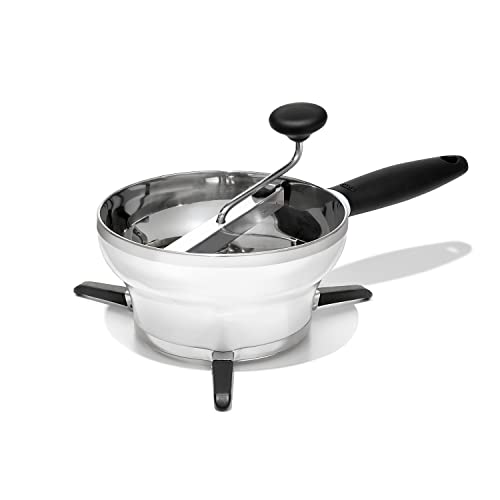
- Stainless steel bowl works well for hot foods and resists staining.
- Three discs provide fine, medium, and coarse textures.
- Folds for storage and sits over bowls or pots up to 11" wide.
Best For: Small kitchens that need a compact food mill for hot purees and easy storage.
Versatile 3-Quart Sauce Strainer
Norpro 1951 The Original Sauce Master
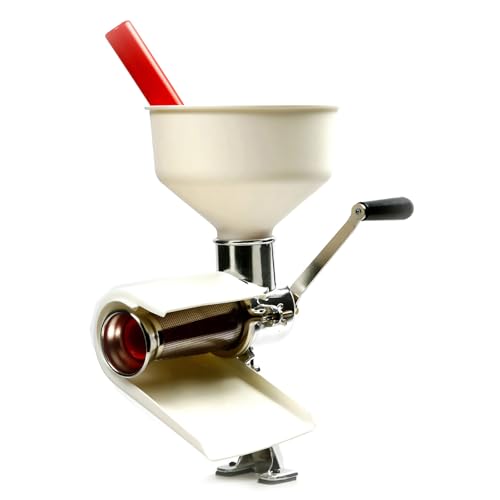
- 3-quart capacity handles fruits, vegetables, and purees.
- Chrome-plated screen separates juice and pulp in one operation.
- Includes fine mesh screen, spiral, recipe booklet, and guide.
Best For: Small kitchens that need a versatile, medium-capacity strainer for homemade sauces.
Simple Suction-Mount Tomato Strainer
Tomato Strainer, Easily Juices w No Peeling

- Suctions to the counter for steadier use.
- Separates skins and seeds while juicing tomatoes.
- Good for salsa, tomato puree, and seasonal cooking.
Best For: Tomato lovers with small kitchens who want a simple suction-mount strainer.
Manual Multi-Use Food Mill
Stainless Steel 3-Disc Rotary Mill

- Three discs for fine, medium, or coarse results
- Dual-hook design adds stability over bowls
- Dishwasher-safe stainless steel with silicone grip
Best For: Small kitchens needing a manual mill for sauces, purees, and jams
Electric Large-Batch Tomato Strainer

- 250-watt motor with forward and reverse speeds
- 1-gallon hopper handles bigger batches
- Includes 3 stainless steel screens and stomper
Best For: Batch sauce making when you want electric speed and less manual effort
Compact Storage Food Mill

- Compact design with removable, nestable handles
- Three discs for smooth to coarse results
- Dishwasher-safe stainless steel build
Best For: Small households that need a space-saving manual mill for everyday prep
Electric Batch Sauce Maker
VEVOR Electric Tomato Strainer

- Separates peels and seeds in one pass
- 4 screens for sauces, jams, and purees
- DC motor is steady and low-noise
Best For: Continuous sauce making and harvest-season batch canning
Compact Manual Mill
Stainless Steel Food Mill With 3 Milling Discs

- Three discs for fine to coarse textures
- Stable dual-hook design with silicone grip
- Dishwasher-safe stainless steel construction
Best For: Small kitchens needing a simple manual mill for sauces and preserves
Household Food Mill
Hungry Artisan Stainless Steel Food Mill
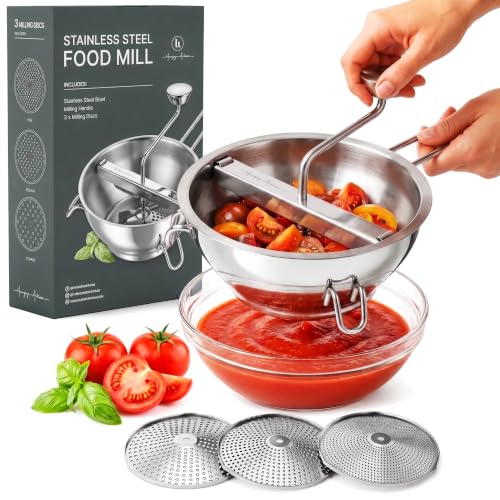
- Three discs for smooth to coarse milling
- Ergonomic crank for easier hand use
- Dishwasher-safe stainless steel build
Best For: Everyday sauces, preserving, and smaller home batches
Compact Clamp Food Strainer for Sauces – Johnny Apple Sauce Maker, Tomato Sauce Maker
If you want one of the most practical food strainer machines for small kitchens, this clamp-based model keeps the footprint modest while handling a wide range of produce. It is built for apples, tomatoes, purees, pie fillings, juices, jams, cream soups, and baby food, with the added flexibility of optional electric-motor use if you want less manual effort later.
Best For: Home cooks who need a space-conscious strainer for sauces, purees, and seasonal produce.
Pros:
- Clamp base provides a secure mount on countertops from 3/4″ to 2-1/8″ thick.
- Includes apple/tomato screen, standard spiral, and instruction manual right out of the box.
- Handles a broad range of foods, from sauces and juices to baby foods and cream soups.
- Cast aluminum body, stainless steel screens, and BPA-free plastic components.
Cons:
- Optional electric motor is sold separately.
- Accessory screens for salsa, pumpkin, berries, and grape spiral are extra.
This is a strong pick if you want a dependable, multi-use strainer that can sit securely on a small counter and still produce fine homemade sauces. The 5-year warranty is another practical plus for frequent kitchen use.
Low-Profile Stainless Food Mill – OXO Good Grips Stainless Steel Food Mill
Among food strainer machines for small kitchens, this food mill stands out for its simpler setup and storage-friendly design. The stainless steel bowl handles hot foods well and resists staining, while the folding legs and compact 2.3-quart capacity make it easier to use over bowls and pots without taking over the counter.
Best For: Cooks who want a straightforward food mill for hot purees, with easy storage after use.
Pros:
- Stainless steel bowl is suitable for hot foods and helps prevent staining.
- Includes three grinding discs for fine, medium, and coarse textures.
- Three non-slip legs hold the mill over bowls and pots up to 11″ in diameter.
- Folds down for easier storage in tight spaces.
Cons:
- 2.3-quart capacity is smaller than larger dedicated strainers.
- Best for purees and mills rather than wide-ranging straining tasks.
If your kitchen is short on storage but you still want control over texture, this is a practical, low-fuss option. It is especially appealing for hot foods where a stainless bowl is a clear advantage.
Versatile 3-Quart Sauce Strainer – Norpro 1951 The Original Sauce Master
This 3-quart model is a classic-style choice for small kitchens that still want serious straining capability. It processes fruits, vegetables, and purees in one operation, separating juice from pulp for sauces, soups, baby food, and other homemade recipes, with optional accessory screens available if you want to expand later.
Best For: Family cooks who want a reliable, medium-capacity strainer for sauces and purees.
Pros:
- 3-quart capacity is useful without being overly bulky.
- Chrome-plated steel screen separates juice and pulp in one step.
- Includes standard fine mesh screen, standard spiral, recipe booklet, and instruction guide.
- Additional berry, pumpkin, and salsa screens are available separately.
Cons:
- Hand wash only, so cleanup is less convenient than dishwasher-safe options.
- Accessory screens are not included.
For cooks who want a proven hand-crank strainer with room to handle bigger batches, this model is a sensible middle ground. It offers a good balance of capacity, versatility, and straightforward operation for home use.
Simple Suction-Mount Tomato Strainer – Tomato Strainer, Easily Juices w No Peeling
If your priority is a compact, easy-to-use tool, this tomato strainer is designed to keep the process simple in smaller kitchens. It juices, strains, and purees tomatoes without peeling, deseeding, or coring, while the suction mount and included stainless steel pusher help keep the setup controlled on the counter.
Best For: Tomato-focused cooks who want a small, easy-clean strainer for salsa and sauces.
Pros:
- Skins and seeds are ejected to the side while juice runs down the tray.
- Suction cup base helps stabilize the strainer during use.
- Includes a stainless steel pusher for guiding tomatoes into the juicing area.
- Useful for homemade salsa, tomato puree, and farm-to-table cooking.
Cons:
- Primarily focused on tomatoes rather than broader food processing.
- Plastic construction may feel less heavy-duty than metal alternatives.
This is a practical choice if you mainly make tomato-based recipes and want a smaller, more targeted machine. It is especially appealing for seasonal cooking when quick cleanup and easy setup matter most.
Manual Multi-Use Food Mill – Stainless Steel 3-Disc Rotary Mill
If you’re comparing food strainer machines for small kitchens, this stainless steel food mill offers a compact manual way to process tomatoes, potatoes, jams, and soft fruits. The three milling discs give you texture control, while the dual-hook design and silicone-grip handle help keep it stable over bowls and pots.
Best For: Small kitchens that want a durable, hand-crank food mill for sauces, purees, and everyday preserving.
Pros:
- Three milling discs provide fine, medium, and coarser texture options.
- Dual-hook support and triangle structure help it stay steady on bowls.
- Silicone-covered handle and crank add grip and comfort during use.
- Stainless steel build is durable and dishwasher safe.
Cons:
- Manual operation may be slower than electric strainer machines.
- Works best for soft foods rather than harder ingredients.
This is a practical pick if you want a straightforward food mill with useful versatility and an easy-clean stainless steel design. The included spoon adds a helpful touch for pressing food through the sieve and scraping the underside during milling.
Electric Large-Batch Tomato Strainer – Weston Deluxe Sauce Maker
For small kitchens that still need fast processing, this electric option stands out among food strainer machines for small kitchens because it quickly removes skins and separates seeds from tomatoes and other soft produce. The 250-watt motor, reverse function, and large hopper make it better suited to bigger jobs than a typical hand mill.
Best For: Cooks who want an electric tomato strainer for sauces, purees, and batch preserving.
Pros:
- 250-watt motor with two speeds helps process food efficiently.
- Reverse mode is included to help prevent jamming.
- 1-gallon hopper supports larger batches without constant refilling.
- Comes with three stainless steel screens for different textures.
Cons:
- Electric design takes up more space than a manual food mill.
- May be more machine than needed for very small prep jobs.
This is a strong choice if your main goal is fast sauce-making and preserving with less hands-on effort. The included screens and stomper give it the flexibility to handle everything from smooth puree to chunkier salsas.
Compact Storage Food Mill – Hungry Artisan 3-Disc Mill
This compact food mill is a smart fit for food strainer machines for small kitchens because it is designed around storage, cleanup, and everyday batch sizes. With three stainless steel discs, removable handles, and a hand crank, it gives you flexible control for applesauce, tomato sauce, baby food, and mashed potatoes.
Best For: Smaller households and compact kitchens that need an easy-storing manual mill for everyday cooking.
Pros:
- Three interchangeable discs offer smooth, medium, and coarse texture control.
- Removable handles and handle nesting make storage easier.
- Double-welded support handles help stabilize the mill on pots and bowls.
- Dishwasher-safe stainless steel construction simplifies cleanup.
Cons:
- Manual crank operation takes more effort than an electric strainer.
- Best suited to smaller batches and soft ingredients.
For a compact kitchen, this model balances versatility with easier storage better than many bulkier strainers. It is a sensible pick if you want a durable stainless steel tool for regular sauces and purees without giving up too much cabinet space.
Electric Batch Sauce Maker – VEVOR Electric Tomato Strainer
If you’re comparing food strainer machines for small kitchens, this VEVOR electric tomato strainer is built for faster sauce prep with less manual effort. Its stainless steel filter screen separates peels and seeds in one pass, and the included screens let you switch between smoother or thicker textures for different recipes.
Best For: Home cooks who want an electric option for tomato sauce, puree, juice, and seasonal batch canning.
Pros:
- Stainless steel filter screen separates peels and seeds for smoother results in one pass
- DC motor provides steady power, high torque, and low noise for continuous sauce making
- Includes 4 screens for tomato sauce, strawberry jam, pumpkin puree, salsa, and more
- 304 stainless steel parts and tool-free removable core components support easier cleaning
Cons:
- Better suited to continuous sauce making and larger batches than quick one-off jobs
- Electric design may take up more storage space than a simple manual mill
- Guard cover helps reduce splatter, but cleanup is still part of the process
Overall, this is a practical pick if you want the speed of an electric strainer and the flexibility to handle several textures. It makes the most sense for kitchens that regularly process tomatoes or other fruit and vegetable batches.
Compact Manual Mill – Stainless Steel Food Mill With 3 Milling Discs
For food strainer machines for small kitchens, this stainless steel food mill is a compact manual option that keeps prep simple. The three milling discs give you texture control for sauces, potatoes, jams, and other soft foods, while the ergonomic crank and stable hook design help make hand milling easier.
Best For: Small kitchens that want a dishwasher-safe manual food mill for everyday sauces, mash, and preserving.
Pros:
- Three milling discs offer different pore sizes for more texture control
- Dual hook design and silicone-covered crank help keep the mill stable and easier to use
- Stainless steel build is sturdy, mirror-polished, and dishwasher safe
- Includes a multifunctional spoon, plus measuring and funnel-style extras mentioned in the notes
Cons:
- Manual cranking takes more effort than an electric strainer
- Best for soft foods like tomatoes, potatoes, fruits, and vegetables rather than hard ingredients
- Works as a household-sized tool, so batch capacity may be limited compared with larger machines
This is a sensible choice if you want a durable, space-friendly mill without adding an electric appliance to the counter. It focuses on dependable texture control and easy cleanup for routine home cooking.
Household Food Mill – Hungry Artisan Stainless Steel Food Mill
This Hungry Artisan food mill fits well into food strainer machines for small kitchens because it keeps the design practical and household-sized. With three interchangeable discs and an ergonomic hand crank, it gives you control over smoothness for tomato sauce, applesauce, mashed potatoes, and other soft recipes.
Best For: Home cooks who want a straightforward manual mill for everyday cooking, canning, and preserving.
Pros:
- Three stainless steel discs let you choose between fine and coarse textures
- Ergonomic rotary hand crank is designed for smoother manual operation
- Stainless steel construction is durable and dishwasher safe
- Works for tomato sauce, applesauce, baby food, mashed potatoes, jams, and more
Cons:
- Manual milling requires more effort than electric sauce makers
- Household-sized design may not suit larger batch processing needs
- Check dimensions and capacity to make sure it fits your setup
As a balanced manual option, this food mill is a good fit if you want texture control without a bulky appliance. It offers the basics most small kitchens need for sauces, purees, and seasonal prep.
How We Picked These Food Strainer Machines for Small Kitchens
We focused on space-saving designs, ease of cleaning, stable operation, and versatility for common small-batch tasks like tomatoes, apples, and cooked fruits. For Food Strainer Machines for Small Kitchens, the best choice is usually the one that balances footprint with enough output to justify using it.
We also looked at whether a model is manual or electric, how much assembly it requires, and whether it can handle typical preserving tasks without needing extra accessories.
Quick Comparison: Manual Vs. Electric
Manual food mills and clamp-style strainers are generally smaller, quieter, and easier to store. They suit occasional users and kitchens with very limited counter space.
Electric models usually process more food with less effort, making them better if you regularly make sauce, puree, or preserves. The tradeoff is a larger footprint and more cleanup.
Key Buying Factors for Food Strainer Machines for Small Kitchens
Footprint and Storage
Measure both the machine and where you will store it. A compact body, removable parts, or a design that fits inside a cabinet can matter more than peak output in a small kitchen.
Batch Size and Capacity
If you process only a few pounds at a time, a hand-crank or compact mill may be enough. Larger harvests, canning days, or frequent sauce making may justify a higher-capacity electric unit.
Versatility
Look for tools that can handle tomatoes, soft fruit, cooked vegetables, and potatoes if you want one machine for multiple jobs. Interchangeable discs or screens add flexibility.
Ease of Cleaning
Simple disassembly, dishwasher-safe parts, and fewer hard-to-reach seams are especially valuable when counter space is limited and cleanup areas are tight.
Mounting and Stability
Clamp-based units need a sturdy surface and enough edge clearance. If your counters are thin, crowded, or irregular, a freestanding design may be easier to use.
Who Should Buy Which Food Strainer Machines for Small Kitchens?
If you want the smallest, simplest option for occasional sauce making, choose a manual mill or clamp-based strainer. If your priority is low effort and higher throughput, an electric model is the better fit.
For most buyers with limited space, the best Food Strainer Machines for Small Kitchens are the ones that are compact, easy to clean, and useful enough to earn a permanent spot in the cabinet.
