Choosing among induction cooktops for dementia patients requires more than comparing wattage. The best options combine clear controls, dependable safety features, and a design that reduces the chance of unattended cooking accidents.
This roundup compares 10 portable and double-burner models with features such as child locks, timers, temperature controls, overheat protection, and automatic shutoff functions. Always match the cooktop to the user’s abilities and provide appropriate supervision.
Best 10 Induction Cooktops for Dementia Patients Picks for 2026
Simple Safety Pick
Amazon Basics Portable Induction Cooktop

- Child lock, auto-pause, and overheat protection
- Eight power levels plus a three-hour timer
- Compact single-burner design for small spaces
Best For: Small kitchens and supervised single-pan cooking
Easy Low-Heat Option
Nuwave Gold Precision Induction Cooktop
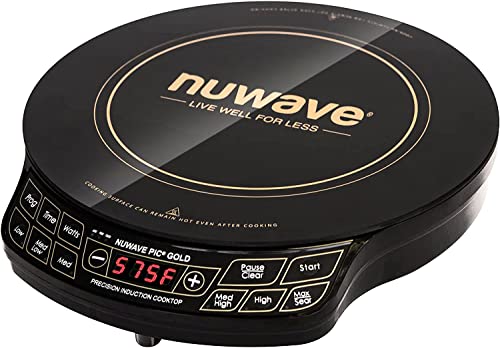
- Temperature range from 100°F to 575°F
- Adjustments can be made while cooking
- Shatter-proof ceramic-glass cooking surface
Best For: Precise, low-temperature cooking with supervision
Most Adjustable Single Burner
Duxtop Portable Induction Cooktop
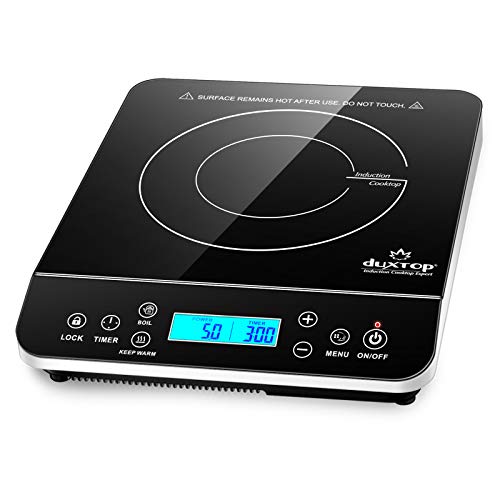
- Twenty power and 20 temperature levels
- Child lock and 60-second auto-pan shutoff
- Keep-warm, fast-boil, and up-to-10-hour timer
Best For: Structured cooking routines needing detailed control
Simple Single-Burner Pick
Duxtop 8100MC Portable Induction Cooktop
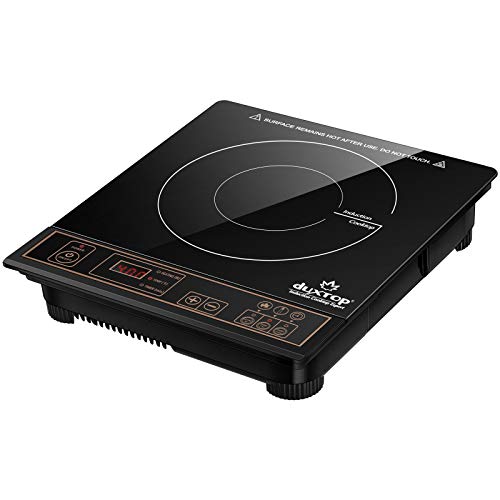
- Auto-pan detection turns the unit off when cookware is absent.
- 15 power and 15 temperature settings offer cooking flexibility.
- Compact, lightweight design with a two-year warranty.
Best For: Compact, supervised single-burner cooking
Safety-Focused Touch Pick
AAOBOSI 1800W Portable Induction Cooktop

- Child lock and residual heat indicator add useful safeguards.
- 20 power and temperature levels support precise adjustments.
- Four preset modes and a four-hour timer expand convenience.
Best For: Supervised cooking with preset modes and safety indicators
Two-Burner Meal Prep Pick

- Two independent induction zones cook dishes simultaneously.
- Dynamic Watt Technology balances power between burners.
- Adjustable temperature range spans 50°F to 575°F.
Best For: Caregiver-assisted two-pan meal preparation
Commercial-Grade Control
ChangBERT Enhanced Induction Cooktop
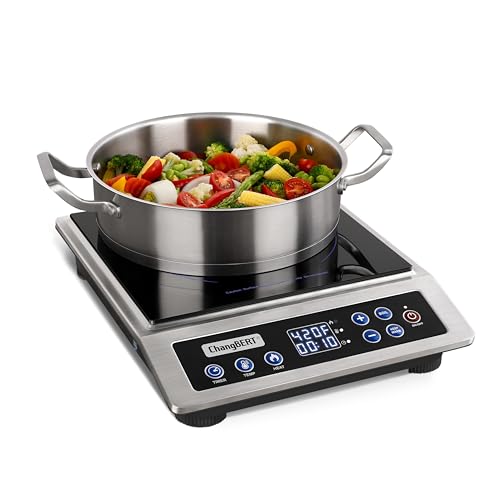
- Tactile physical buttons and clear dual display
- 9 power and 18 temperature settings
- One-touch Boil, Keep Warm, and Max Power
Best For: Users needing durable construction and straightforward manual controls
Precision Cooking
Nuwave Pro Chef Induction Cooktop

- 94 temperatures from 100°F to 575°F
- Adjust settings during cooking
- Shatter-proof ceramic glass surface
Best For: Caregiver-assisted cooking requiring fine temperature control
Simple Safety Pick – Amazon Basics Portable Induction Cooktop
For shoppers comparing induction cooktops for dementia patients, this Amazon Basics model combines straightforward touch controls with useful safeguards. Its child lock, auto-pause, overheat protection, voltage warning, and timer can support a more controlled cooking setup, though supervision and safe-use routines remain important.
Best For: Small kitchens, RVs, cabins, and users who need one portable burner with basic safety features.
Pros:
- Child lock, auto-pause, overheat protection, and voltage warning help limit common cooking risks.
- Eight power settings and temperature control from 160°F to 440°F provide flexible cooking.
- Three-hour timer and preset cooking modes simplify meal preparation.
- Compact, 6.2-pound design and tempered-glass surface are convenient for storage and cleanup.
Cons:
- It supports only one pan at a time.
- It requires flat-bottom magnetic cookware measuring 5.7 to 8.2 inches.
- Touch controls may still require assistance for users with difficulty managing digital interfaces.
This is a practical, space-saving choice when built-in safety features and a limited cooking footprint matter more than multiple burners. Confirm cookware compatibility and consider using it with supervision.
Easy Low-Heat Option – Nuwave Gold Precision Induction Cooktop
Among induction cooktops for dementia patients, the Nuwave Gold stands out for its immediate digital adjustments and broad temperature range. The shatter-proof ceramic-glass surface has no open flame or exposed hot coil, while preset temperatures can make repeat cooking tasks easier to manage.
Best For: Users who benefit from precise temperature selection, gentle heating, and a large cooking surface.
Pros:
- Six preset temperatures and adjustable settings from 100°F to 575°F offer detailed control.
- Cooking time and temperature can be changed without restarting the process.
- Shatter-proof ceramic glass has no open flame or exposed heating coil.
- The 12-inch heat-resistant cooking surface accommodates a larger induction-ready pan.
Cons:
- The supplied notes do not list a child lock or automatic shutoff feature.
- It has one heating element, so only one dish can cook at a time.
- It requires induction-compatible cookware.
The Nuwave Gold is appealing for controlled simmering and precise adjustments, but its listed safety features are less extensive than some alternatives here. A caregiver may want to manage setup and monitor use.
Most Adjustable Single Burner – Duxtop Portable Induction Cooktop
For those evaluating induction cooktops for dementia patients, the Duxtop 9600LS offers extensive power and temperature selections alongside several automatic safeguards. Its child safety lock, auto-pan detection, keep-warm setting, and timer can help create a more structured cooking routine.
Best For: Users who want many cooking adjustments, a long timer, and automatic response when cookware is missing or unsuitable.
Pros:
- Twenty power levels and 20 temperature settings allow fine adjustments.
- Child lock helps prevent cooking and timer settings from being changed accidentally.
- Auto-pan detection shuts the unit off after 60 seconds when cookware is absent or incompatible.
- Keep-warm, fast-boil, and timer functions add useful cooking assistance.
Cons:
- The many touch settings may be more complex for users who need very simple controls.
- It requires magnetic-bottom cookware with a minimum diameter of 5 inches.
- Cookware may produce high-pitched sounds during operation.
This model provides one of the strongest combinations of adjustability and automatic protection in the group. Its feature-rich interface is best paired with clear instructions and supervision.
Two-Dish Family Option – VBGK 2-Burner Induction Cooktop
This VBGK unit is a two-burner option for households considering induction cooktops for dementia patients and needing to prepare two dishes at once. Independent controls, a kids lock, timer, overheat protection, residual-heat indication, and auto shut-off provide useful safeguards, but the dual-zone layout may require extra familiarity.
Best For: Households that need simultaneous cooking and have space for a larger countertop appliance.
Pros:
- Two independent heating zones can cook two dishes simultaneously.
- Kids lock, timer, overheat protection, residual-heat indicator, and auto shut-off support safer operation.
- Nine power levels provide options for boiling, simmering, frying, and other cooking tasks.
- Round edges and two cooling fans contribute to a user-friendly countertop design.
Cons:
- The larger 23.62-by-14.1-inch footprint takes more counter space.
- Two independent touch controls may be more demanding than a single-burner layout.
- It requires magnetic-bottom cookware, and the supplied details list a 220-volt specification despite describing 110–120-volt use; verify electrical requirements before purchase.
The VBGK is the most capable choice for preparing multiple dishes, especially in a supervised household setting. Verify the electrical setup carefully and keep the controls locked when the cooktop is not in use.
Simple Single-Burner Pick – Duxtop 8100MC Portable Induction Cooktop
Duxtop 1800W Portable Induction Cooktop Countertop Burner, Gold 8100MC | BT-180G3
Check Price On AmazonFor shoppers comparing induction cooktops for dementia patients, the Duxtop 8100MC offers a compact single-burner design with automatic pan detection and a straightforward digital control panel. Its 15 power levels, 15 temperature settings, and countdown timer provide flexibility, though users should be comfortable operating push-button controls.
Best For: A small kitchen or supervised cooking setup needing one portable induction burner with automatic shutoff when cookware is removed.
Pros:
- Auto-pan detection shuts the unit off after 60 seconds without compatible cookware.
- Offers 15 power levels, 15 temperature settings from 140°F to 460°F, and a timer up to 170 minutes.
- Lightweight, compact, ETL approved, and backed by a two-year manufacturer warranty.
Cons:
- Requires induction-compatible magnetic cookware.
- Push-button controls may be less intuitive than a simpler dial.
- Some layered cookware may produce a high-pitched sound.
The Duxtop is a practical choice when compact storage and automatic pan detection matter. As with any cooktop, it should be used with appropriate supervision and cookware.
Safety-Focused Touch Pick – AAOBOSI 1800W Portable Induction Cooktop
The AAOBOSI is worth considering among induction cooktops for dementia patients because it combines a child safety lock, residual heat indicator, timer, and preset cooking modes. Its touch controls provide precise adjustment, but caregivers should confirm that the interface is comfortable for the intended user.
Best For: Households wanting multiple safety-oriented features and preset modes for boiling, hot-pot cooking, stewing, and keeping food warm.
Pros:
- Includes a child safety lock and residual heat indicator.
- Provides 20 power levels and 20 temperature levels from 120°F to 465°F.
- Offers four preset modes and a timer lasting up to four hours.
Cons:
- Touch controls may require more visual and finger precision than physical controls.
- Compatible induction cookware is required.
- Its one-year warranty is shorter than some competing options.
With its lock, heat indicator, and preset functions, the AAOBOSI has a useful safety feature set. Its touch interface makes caregiver orientation and supervision especially important.
Two-Burner Meal Prep Pick – Nuwave Double Pro Cooktop
For larger meal preparation, the Nuwave Double Pro provides two induction zones with independent controls. Among induction cooktops for dementia patients, it may suit supervised use where a caregiver wants to manage two pans at once, but its touch panel and wider footprint require careful setup.
Best For: Caregiver-assisted kitchens that need simultaneous cooking at different temperatures.
Pros:
- Two independently controlled cooking zones support multitasking.
- Dynamic Watt Technology distributes power between burners for boiling and simmering.
- Temperature settings range from 50°F to 575°F in five-degree increments.
Cons:
- At 14 pounds and 23.6 inches wide, it is less portable than single-burner models.
- Touch controls may be less accessible for users who prefer physical controls.
- The supplied notes do not list an automatic pan-detection or child-lock feature.
The Nuwave is the most capable option here for preparing two dishes simultaneously. Its larger size and advanced touch controls make it better suited to a stable countertop and active caregiver oversight.
Commercial-Grade Control – ChangBERT Enhanced Induction Cooktop
For shoppers comparing induction cooktops for dementia patients, the ChangBERT Enhanced Version offers tactile physical buttons, clear dual displays, and simplified one-touch functions. Its 9 power levels, 18 temperature settings, and automatic timer support controlled everyday cooking, though supervision and safe kitchen routines remain important.
Best For: Households wanting a durable, high-power portable burner with straightforward physical controls and easy-to-read settings.
Pros:
- Physical buttons provide tactile feedback and may reduce accidental touches.
- One-touch Boil, Keep Warm, and Max Power functions simplify common tasks.
- Offers 9 power levels, 18 temperature settings, and a 12-hour timer.
- NSF-certified commercial-grade construction with an 8-inch heating coil.
Cons:
- The 1800W maximum setting may require attention to the household circuit.
- Its professional-grade feature set may be more than needed for simple meals.
- Induction cookware compatibility is required.
The tactile controls and clearly presented settings make this a practical option when ease of operation is a priority. Its high-power commercial design is best paired with supervision, especially for users who may forget an active cooking task.
Precision Cooking – Nuwave Pro Chef Induction Cooktop
Among induction cooktops for dementia patients, the Nuwave Pro Chef stands out for its responsive digital controls and precise temperature selection. It provides six preset temperatures plus 94 adjustable settings from 100°F to 575°F, but the touch interface may be less intuitive for someone who benefits from tactile controls.
Best For: Caregivers or confident cooks who prioritize precise temperature adjustments in a portable, commercial-grade unit.
Pros:
- Offers 94 temperature settings in 5°F increments from 100°F to 575°F.
- Settings and cooking time can be adjusted while cooking.
- Shatter-proof ceramic glass surface is designed for intense heat.
- Portable 7-pound design includes 900W, 1500W, and 1800W options.
Cons:
- Touch controls may offer less tactile feedback than physical buttons.
- The extensive temperature range may feel complicated for basic cooking.
- The supplied details do not list child lock or automatic pan shutoff.
This cooktop is a strong fit when a caregiver can help set controls or when the user is comfortable with digital operation. Its precise adjustment range is useful for sauces and searing, while the absence of listed child-safety features deserves consideration.
Safety-Focused Simplicity – Mueller RapidTherm Induction Cooktop
For families seeking induction cooktops for dementia patients, the Mueller RapidTherm combines one-touch presets with a child lock, pan detection, automatic shutoff, and overheat protection. Its pause function and 4-hour timer can help manage cooking tasks, although users should still receive supervision appropriate to their needs.
Best For: Small kitchens and households prioritizing automatic safety features and preset cooking modes.
Pros:
- Child lock freezes inputs except Off after a three-second hold.
- Automatic pan detection shuts the unit off after a pan is lifted or incompatible cookware is detected.
- Four presets include Hot Pot, Slow Cook, Boil, and Keep Warm.
- Provides 8 power levels, 8 temperature settings, a pause function, and a 4-hour timer.
Cons:
- Touch controls may be harder to operate for users who need tactile feedback.
- Only magnetic, flat-bottom cookware measuring 4.7 to 10.2 inches is compatible.
- Sustained 1800W cooking is best used on a dedicated 15-amp circuit.
The RapidTherm has the most clearly stated safety-oriented features in this group, especially its child lock, pan detection, and automatic shutoff. Its presets reduce the number of steps for routine cooking, making it a sensible option when caregivers also want straightforward safeguards.
How We Picked the Best Induction Cooktops for Dementia Patients
We focused on features that can make daily cooking more predictable and easier to supervise. The selected models offer portable countertop designs, with power levels, temperature settings, timers, presets, or safety locks varying by product. We also considered heating-area size, control simplicity, portability, and whether the cooktop is suitable for one-pan or multi-pan cooking.
Safety features are helpful but are not a substitute for supervision. Product specifications and control layouts should be checked before purchase, particularly when the cooktop will be used by someone with memory loss, reduced dexterity, or difficulty recognizing hazards.
Quick Comparison
Single-burner models are generally the simplest choice for limited cooking tasks and take up less counter space. Double-burner options can support more complete meal preparation but introduce additional controls and require greater attention. Models with a child lock, timer, overheat protection, or automatic shutoff can offer useful safeguards, while clear touch panels and large displays may make settings easier to confirm.
| Priority | What to look for |
|---|---|
| Simplest setup | Single burner, clear display, fewer controls, and straightforward preset functions |
| Added supervision | Timer, lock function, overheat protection, and automatic shutoff |
| Flexible cooking | Multiple power levels, temperature settings, and a larger heating coil |
| More than one pan | Double-burner design, provided the user can manage both cooking zones safely |
Key Buying Factors for Induction Cooktops for Dementia Patients
Controls and Visibility
Choose controls that are easy to identify and confirm. Large labels, high-contrast displays, audible feedback, and a small number of clearly separated buttons can reduce confusion. Avoid assuming that more settings are better; extensive menus may be difficult to navigate.
Timers and Automatic Safety Features
A built-in timer can limit unattended heating, while overheat protection and automatic shutoff may reduce risk if cookware is removed or the unit becomes too hot. Verify how each feature works because safeguards differ between models.
Cookware Compatibility and Stability
Induction requires compatible magnetic cookware, such as many cast-iron or magnetic stainless-steel pans. Look for a stable base, non-slip feet, and a cooking surface that is large enough for the intended pan. Keep cords away from the edge of the counter.
Heat and Cleanup
Induction cooktops heat the pan rather than producing an exposed flame, and the surface typically cools faster than a traditional hot plate. The surface can still remain hot, so a clear cool-down routine and supervision are important. A smooth, easy-clean surface is preferable for everyday use.
Who Should Buy Which Induction Cooktops for Dementia Patients?
Choose a basic single-burner model for a user who needs occasional heating and benefits from a simple routine. Consider a model with a lock, timer, and overheat protection when reducing accidental changes or unattended cooking is the main priority. A larger-coil or higher-control model makes sense for a confident cook who needs more precise results. Double-burner cooktops are best reserved for users who can safely manage multiple pans or for caregivers preparing meals with extra capacity.
Before buying, compare the exact control layout, safety behavior, warranty, and return policy. For anyone with significant memory impairment, caregivers should decide whether supervised use or a safer alternative is more appropriate.
