The best infrared thermometers for beginners make quick temperature checks simple without requiring complicated setup or technical experience. A good model should offer clear readings, intuitive controls, a useful temperature range, and reliable targeting.
We selected 10 options for different needs, from cooking and pizza ovens to HVAC troubleshooting and general household tasks. Use the guide below to compare features and choose the right balance of accuracy, range, targeting, and ease of use.
Best 10 Infrared Thermometers for Beginners Picks for 2026
Best All-Around Pick

- -58°F to 842°F range
- 12:1 distance-to-spot ratio
- Backlit display with included batteries
Best For: General home, cooking, automotive, and HVAC checks
Best Pocket Option
Traceable Mini Infrared Thermometer

- Pocket-sized non-contact design
- Reads in less than one second
- NIST-traceable certificate included
Best For: Portable checks and calibration-conscious users
Best for High Heat

- Measures up to 1130°F
- Adjustable 0.1–1.0 emissivity
- 12:1 ratio with max-temperature display
Best For: High-temperature tools, cooking, and HVAC checks
Best Simple Professional-Style Pick
Klein Tools IR1 Infrared Thermometer
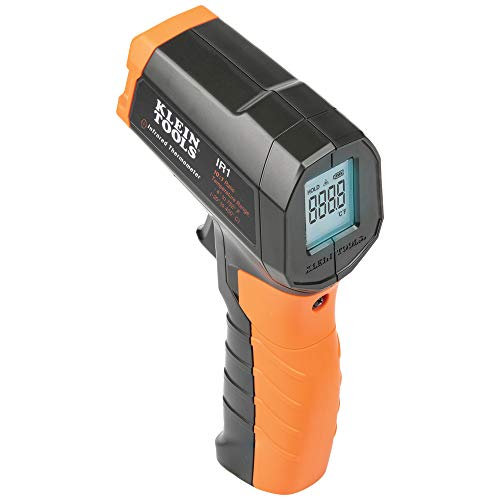
- 10:1 distance-to-spot ratio
- -4°F to 752°F measurement range
- Laser, auto-hold, and backlit display
Best For: Workshop, maintenance, and indoor surface checks
Fast Surface Scanning
TempScan Infrared Thermometer Gun
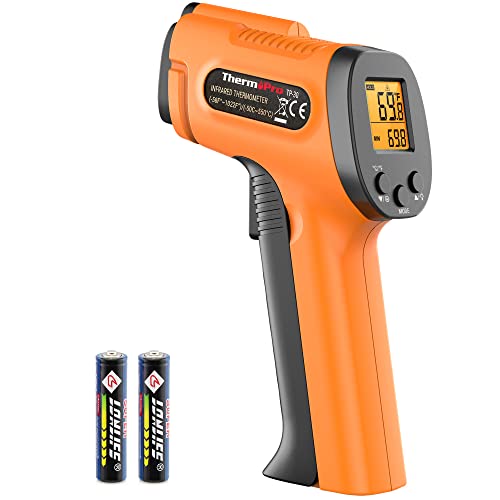
- -58°F to 1,022°F measurement range
- Adjustable emissivity and 12:1 targeting
- Backlit display with max/min/average readings
Best For: Beginners measuring cooking, HVAC, automotive, and household surfaces
Precision Targeting
Klein Tools IR5 Infrared Thermometer
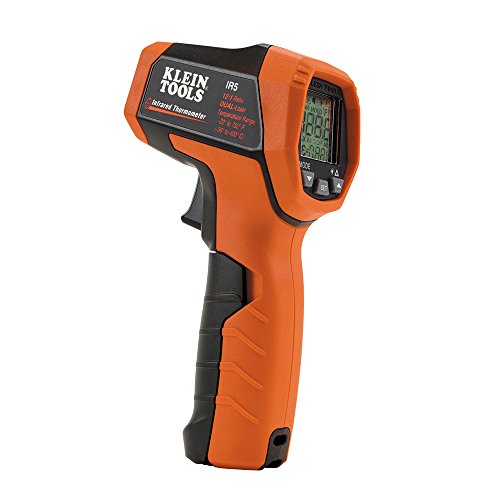
- Dual laser targeting with 12:1 resolution
- -22°F to 752°F measurement range
- Alarms and max/min/average/difference modes
Best For: Beginners wanting advanced controls for maintenance and diagnostics
Cooking Versatility
TempScan 2-in-1 Infrared Thermometer

- Infrared surface scanner plus meat probe
- Surface readings up to 1,022°F
- Fast probe checks with ±1.8°F precision
Best For: Beginners cooking, grilling, making candy, and monitoring liquids
Simple Starter Pick

- -58°F to 932°F range
- Backlit LCD with scan-and-hold operation
- Preset 0.95 emissivity
Best For: Basic cooking, BBQ, and pizza-oven temperature checks
Most Versatile Beginner Tool

- -58°F to 1112°F range
- 0.5-second response with calibration function
- Backlit display and low-battery indicator
Best For: Multi-purpose kitchen, HVAC, automotive, and DIY use
Feature-Rich Beginner Pick
VC IR-861 Infrared Thermometer

- 0.3-second response and ±1.5% accuracy
- Adjustable 0.1–1.0 emissivity
- High/low alarms and MAX/MIN/AVG/DIF modes
Best For: Cooking, HVAC, and users wanting advanced monitoring features
Best All-Around Pick – Etekcity Lasergrip 774
For beginners comparing infrared thermometers, the Etekcity Lasergrip 774 is a practical general-purpose option. It offers non-contact readings from -58°F to 842°F, a 12:1 distance-to-spot ratio, a backlit LCD, and results in about half a second.
Best For: Home maintenance, cooking, automotive checks, HVAC work, and other everyday surface-temperature measurements.
Pros:
- Broad -58°F to 842°F measurement range.
- 12:1 distance-to-spot ratio supports readings from a comfortable distance.
- Backlit display, auto-off function, and included AAA batteries simplify use.
- Displays the average temperature across the targeted circular area.
Cons:
- Designed for surface temperatures rather than body-temperature readings.
- Results can vary with surface characteristics and the measurement area.
The Lasergrip 774 is an approachable starting point when you want useful range and simple controls without a complicated setup. Its average-area reading and fixed 12:1 targeting make correct positioning important for consistent results.
Best Pocket Option – Traceable Mini Infrared Thermometer
The Traceable Mini is a compact choice for beginners who want infrared thermometers for beginners that can travel easily. It provides non-contact readings in less than one second, fits in a pocket, and includes adjustable emissivity from 0.01 to 1.
Best For: Portable spot checks, field work, and users who value a small thermometer with documented calibration.
Pros:
- Pocket-sized design with a metal case and wrist strap.
- Readings arrive in less than one second.
- Minimum/maximum memory and hold functions add useful tracking options.
- Includes an NIST-traceable calibration certificate.
Cons:
- Its upper temperature limit is 220°C.
- The compact format may offer fewer convenience features than larger gun-style models.
This is a sensible pick when portability and traceable calibration matter more than a very wide temperature range. Adjustable emissivity also gives beginners room to learn how different surfaces affect infrared readings.
Best for High Heat – Etekcity Lasergrip 1080
Beginners who need infrared thermometers for beginners with extra temperature headroom should consider the Etekcity Lasergrip 1080. It measures from -58°F to 1130°F, reads in about half a second, and includes adjustable emissivity for different surfaces.
Best For: Heat-gun projects, ovens, grills, HVAC work, and other high-temperature surface checks.
Pros:
- Very wide -58°F to 1130°F measurement range.
- Adjustable emissivity from 0.1 to 1.0.
- 12:1 distance-to-spot ratio helps measure from a safer distance.
- Backlit display shows maximum temperature and includes a battery indicator.
Cons:
- Emissivity adjustment requires extra setup and understanding.
- It is intended for surface measurements, not people or animals.
The Lasergrip 1080 is more capable than a basic household thermometer, especially around very hot surfaces. Its advanced settings are useful, but beginners should follow the recommended measuring distance and learn when to adjust emissivity.
Best Simple Professional-Style Pick – Klein Tools IR1 Infrared Thermometer
The Klein Tools IR1 is a straightforward option for beginners looking for infrared thermometers for beginners with familiar controls. Its 10:1 distance-to-spot ratio, targeting laser, auto-hold, and backlit display support quick readings across a -4°F to 752°F range.
Best For: Electrical, maintenance, workshop, and general indoor surface-temperature checks.
Pros:
- 10:1 optical resolution supports distance-based measurements.
- Wide -4°F to 752°F range for many household and workshop tasks.
- Targeting laser, auto-hold, backlight, and auto power-off simplify operation.
- Includes a custom pouch and 9V battery.
Cons:
- Fixed emissivity of 0.95 offers less adjustment for different surfaces.
- Not intended for use on people or animals.
- Its range is narrower than the Etekcity Lasergrip 1080’s.
The IR1 favors uncomplicated operation over extensive customization. Its fixed emissivity makes setup easy, while the targeting laser and auto-hold help new users take repeatable surface readings.
Fast Surface Scanning – TempScan Infrared Thermometer Gun
For beginners comparing infrared thermometers, the TempPro TempScan is a straightforward choice for checking cooking surfaces, HVAC vents, engines, and household repairs. Its 12:1 distance-to-spot ratio, sub-500-millisecond response time, and adjustable emissivity make it adaptable to different surfaces.
Best For: Beginners who want one fast, versatile thermometer for cooking and general home projects.
Pros:
- Measures a broad -58°F to 1,022°F range.
- Adjustable emissivity from 0.1 to 1.0 helps accommodate different surface materials.
- Displays maximum, minimum, and average readings, with a backlit screen.
- Includes two AAA batteries.
Cons:
- Uses a single laser rather than dual targeting.
- Designed for surface readings, so it does not replace a food-internal probe.
This is a practical entry-level option when speed and broad temperature coverage matter more than specialized features. The simple display and automatic shutoff also help keep routine measurements easy.
Precision Targeting – Klein Tools IR5 Infrared Thermometer
The Klein Tools IR5 is a strong pick among infrared thermometers for beginners who want clearer targeting and more measurement controls. Its dual laser targeting, adjustable emissivity, and 12:1 optical resolution support accurate non-contact readings across household and maintenance tasks.
Best For: Beginners who want a more feature-rich tool for maintenance, troubleshooting, and surface temperature checks.
Pros:
- Dual lasers help identify the measurement area.
- Measures from -22°F to 752°F.
- Offers maximum, minimum, average, and difference calculation modes.
- Includes high/low alarms, a backlit display, and adjustable emissivity.
Cons:
- Its upper temperature limit is lower than some alternatives in this roundup.
- Requires a 9V battery rather than AAA batteries.
- It is not intended for measuring people or animals.
The IR5 is well suited to users who appreciate measurement alarms and multiple calculation modes. It is a capable beginner tool, especially when targeting accuracy and diagnostic features are priorities.
Cooking Versatility – TempScan 2-in-1 Infrared Thermometer
For beginners shopping for infrared thermometers mainly for cooking, the TempPro TempScan 2-in-1 adds an important advantage: a built-in meat probe. Use the infrared sensor for pans, grills, pizza stones, and oven surfaces, then switch to the probe for internal food, candy, frying oil, or liquid temperatures.
Best For: Home cooks and grillers who need both surface and internal temperature readings.
Pros:
- Combines non-contact infrared scanning with a meat probe.
- Measures surface temperatures up to 1,022°F.
- Probe readings are designed for fast internal temperature checks with ±1.8°F precision.
- Motion-sensing wake and sleep, auto-off, and °F/°C switching simplify use.
Cons:
- The probe adds a component to clean and manage.
- Its infrared measurement is intended for surfaces, not internal food temperatures.
- The supplied notes do not specify the probe’s maximum temperature range.
This is the most versatile choice for kitchen beginners because it covers both preheating and doneness checks in one device. The built-in magnet, hanging hole, and battery-saving sleep function make it convenient for regular use.
Simple Starter Pick – GM50 Infrared Thermometer
For beginners comparing infrared thermometers for beginners, the GM50 keeps the basics straightforward. It measures surface temperatures from -58°F to 932°F, offers one-handed trigger operation, and includes a backlit LCD for checking readings in dim conditions.
Best For: Cooking, BBQ, pizza ovens, and general surface-temperature checks.
Pros:
- Wide -58°F to 932°F measurement range
- Simple scan-and-hold trigger operation
- Backlit display and automatic shutoff
- Includes two AAA batteries
Cons:
- Preset 0.95 emissivity may be less suitable for shiny or polished metals
- Response time is listed at 10 seconds
- Not intended for measuring human temperature
The GM50 is a practical entry-level option when you want uncomplicated temperature checks for cooking and household tasks. Its fixed emissivity is easy for common organic and painted surfaces, but users measuring reflective metal should follow the masking-tape or flat-black-paint guidance.
Most Versatile Beginner Tool – UW510 Infrared Thermometer
The UW510 is a flexible choice for beginners who want infrared thermometers for beginners that can move beyond the kitchen. Its -58°F to 1112°F range, 0.5-second response, calibration function, and adjustable-use design support cooking, automotive, HVAC, and DIY checks.
Best For: Beginners who want one thermometer for food, appliances, vehicles, HVAC, and household projects.
Pros:
- Broad -58°F to 1112°F measurement range
- Fast readings in as little as 0.5 seconds
- One-button calibration helps maintain consistency
- Backlit LCD, low-battery indicator, and auto-shutoff
Cons:
- The supplied notes do not specify the adjustable emissivity range
- Its broad capabilities may be more than needed for simple cooking tasks
With fast response and a calibration function, the UW510 offers helpful features without requiring complicated operation. The yellow housing, clear display, and battery indicators also make it approachable for first-time users working in different environments.
Feature-Rich Beginner Pick – VC IR-861 Infrared Thermometer
For beginners seeking infrared thermometers for beginners with room to grow, the VC IR-861 combines simple one-button operation with advanced monitoring features. It measures from -58°F to 1112°F, responds in 0.3 seconds, and adds adjustable emissivity, temperature alarms, and MAX/MIN/AVG/DIF recording.
Best For: Cooking and HVAC users who want fast readings plus alerts and extra data functions.
Pros:
- Very fast 0.3-second response with stated ±1.5% accuracy
- Adjustable 0.1–1.0 emissivity for varied materials
- High/low alarms with sound-light alerts
- 12:1 distance-to-spot ratio and backlit LCD
Cons:
- More settings may take beginners longer to learn
- Laser targeting should be used carefully around people and reflective surfaces
- The supplied details do not specify a protective case
The VC IR-861 is a strong choice when basic temperature readings are only the starting point. Its alarms and recording modes can help monitor frying oil, ovens, grills, and HVAC equipment, while adjustable emissivity gives users more control as their experience develops.
How We Picked the Best Infrared Thermometers for Beginners
We focused on features that matter most when learning to use a non-contact thermometer: straightforward controls, readable displays, practical temperature ranges, dependable laser targeting, and useful measurement functions. We also considered specialized designs, including models with meat probes, dual lasers, adjustable emissivity, alarms, and compact bodies.
Because infrared readings can vary with surface material, distance, and reflections, beginner-friendly usability was weighted alongside specifications. A wide range alone does not guarantee better results; the best choice depends on what you plan to measure.
Quick Comparison
| Best For | Features to Look For | Why It Matters |
|---|---|---|
| Cooking and grilling | Food-safe design, backlight, broad range | Makes hot pans, grills, and ovens easier to check |
| Pizza ovens | High maximum temperature and clear laser | Helps identify hot and cool areas across the cooking surface |
| HVAC and home maintenance | Good distance-to-spot ratio and adjustable emissivity | Improves readings on ducts, vents, walls, and equipment |
| General household use | Simple trigger operation and auto-hold | Reduces the learning curve for occasional measurements |
| Meat temperature checks | Infrared measurement plus contact probe | Provides a more suitable internal food-temperature check |
Key Buying Factors for Infrared Thermometers for Beginners
Temperature Range
Choose a range that covers your actual projects. Most household and cooking tasks do not require an extreme maximum, while pizza ovens, furnaces, and some mechanical applications may benefit from higher limits.
Distance-To-Spot Ratio
This ratio describes how large the measured area becomes as you move farther away. A 12:1 model can measure a smaller target from a greater distance than a basic 8:1 design. For small components or precise HVAC checks, a higher ratio is useful.
Emissivity Adjustment
Adjustable emissivity can improve results on different surfaces, especially metal. Beginners measuring mostly matte surfaces such as food, painted walls, or ceramic may find a fixed-emissivity model easier to use.
Targeting and Display
A visible laser, backlit screen, auto-hold, and minimum or maximum readings can make measurements easier to interpret. Dual lasers may help define the approximate measurement area, but they do not replace correct positioning.
Infrared Versus Probe Measurements
Infrared thermometers measure surface temperature only. If you need the internal temperature of meat or another item, choose a two-in-one model with a contact probe or use a dedicated probe thermometer.
Who Should Buy Which Infrared Thermometers for Beginners?
Choose a Basic Compact Model for Occasional Use
A small, simple thermometer is the practical choice for checking ovens, radiators, freezers, grills, and household surfaces a few times a month. Prioritize readable controls and comfortable handling over advanced settings.
Choose a High-Range Model for Pizza Ovens and Workshops
For pizza ovens, kilns, grills, engines, or heating equipment, select a model with a high upper limit, a clear laser, and a durable handheld design.
Choose Adjustable Emissivity for Technical Work
HVAC technicians, DIY users, and workshop owners should look for adjustable emissivity, a stronger distance-to-spot ratio, and minimum/maximum tracking. These features provide more control when surfaces vary.
Choose a Probe Combo for Food Safety
If you cook meat regularly, a combined infrared-and-probe thermometer offers greater flexibility. Use the infrared function for pans and griddles, then use the probe to verify internal doneness.
