Rolling consistent pastry by hand takes time, especially when you are making multiple batches. A pastry sheeter can help you flatten dough evenly and repeat thickness settings, whether you bake at home or run a small kitchen.
These 10 picks include compact folding manual models, wider tabletop rollers, and an electric option. The right choice depends on the dough you make, the width you need, and how much space you can give the machine.
Best 10 Pastry Sheeter Machine Picks for 2026
Best Electric Option
22.7-Inch Commercial Dough Sheeter

- Electric rolling with less manual effort
- Adjustable 2–30 mm thickness
- Foldable; weighs 52 pounds
Best For: Frequent bakers who want powered dough rolling
Best Compact Manual Pick
15.5-Inch Folding Dough Sheeter

- Folds for compact storage
- 55 settings; stated 0–27 mm range
- Manual operation needs no outlet
Best For: Small kitchens wanting a highly adjustable manual sheeter
Best Two-Board Setup

- Rough and smooth PE boards included
- Boards measure 27.5 x 12 inches
- Adjustable 0–17.5 mm thickness
Best For: Home bakers who want a choice of rolling surfaces
Best Large Folding Model
40.5 x 22.8-Inch Manual Sheeter
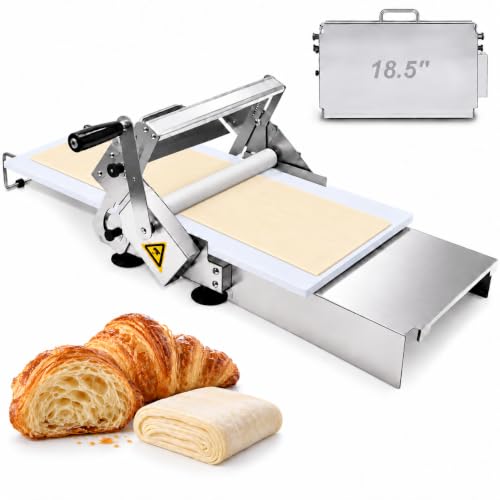
- Listed at 40.5 x 22.8 inches
- Folds for storage
- Setting count conflicts within the listing
Best For: Bakers seeking a larger foldaway manual machine
Wide-Format Pick
15.5-Inch Manual Dough Sheeter

- 15.5-inch dough board
- Adjustable roller gap
- 35-pound stainless steel build
Best For: Wider sheets and larger dough batches
Foldaway Pick

- Foldable for storage
- Listed with 55 settings
- Check conflicting thickness ranges
Best For: Adjustable rolling in smaller workspaces
Fine-Adjustment Pick
Foldable Tabletop Dough Sheeter

- 0.5 mm thickness increments
- Two-sided gap controls
- Confirm conflicting size details
Best For: Precise manual rolling with fold-down surfaces
Compact Countertop Pick
12-Inch Folding Manual Dough Sheeter

- 12-inch manual roller
- Adjusts from 0 to 17.5 mm
- Folds for storage; includes two boards
Best For: Space-conscious home bakers and small bakeries
Best Heavy-Duty Pick
Folding 0–25 mm Manual Dough Sheeter
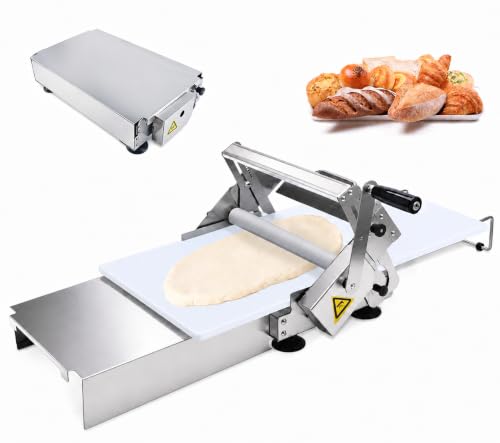
- 56 stated thickness positions
- 0–25 mm range in 0.5 mm increments
- Folds for storage; operates without electricity
Best For: Bakers prioritizing precise adjustments and varied doughs
Wide-Range Home Pick
12-Inch 304 Stainless Folding Sheeter

- 12-inch roller
- Adjusts from 0.2 to 27 mm
- Folding 304 stainless steel design
Best For: Home bakers making wrappers, crusts, and pastries
Best Electric Option – 22.7-Inch Commercial Dough Sheeter
This electric pastry sheeter machine is aimed at bakers who want powered rolling for pastry, pizza dough, and pasta. Its adjustable 2–30 mm thickness range and foldable countertop design make it a practical choice when consistency and storage both matter.
Best For: Bakeries, pizza shops, and frequent home bakers who prefer electric rolling.
Pros:
- Electric operation reduces manual rolling effort.
- Adjusts from 2–30 mm for different doughs.
- Foldable design and food-contact 304 stainless steel construction.
Cons:
- Cannot be set thinner than the stated 2 mm minimum.
- At 52 pounds, it may be inconvenient to move or store frequently.
Choose this model if powered operation matters more than portability. Check that its minimum thickness suits the pastry you plan to make.
Best Compact Manual Pick – 15.5-Inch Folding Dough Sheeter
This 15.5-inch manual pastry sheeter machine folds for storage and offers 55 thickness options across a stated 0–27 mm range. It suits kitchens that want a broad adjustment range without dedicating counter space to an electric machine.
Best For: Home kitchens and small catering setups with limited storage space.
Pros:
- Folding construction helps conserve storage space.
- 55 thickness options accommodate a range of doughs.
- Manual operation requires no power outlet.
Cons:
- Hand-cranked operation requires more effort than an electric model.
- Its listed 15.5-inch size may not suit bakers seeking a wider machine.
The appeal here is adjustability in a foldaway format. It is worth considering if you are comfortable cranking dough by hand.
Best Two-Board Setup – Folding Manual Dough Sheeter
This manual pastry sheeter machine includes two 27.5 x 12-inch PE rolling boards—one rough and one smooth. With an adjustable 0–17.5 mm thickness range, it offers a choice of rolling surfaces for doughs such as croissants, pizza, and pasta.
Best For: Home bakers who want two board surfaces in a foldable manual setup.
Pros:
- Includes separate rough and smooth rolling boards.
- Adjustable thickness spans 0–17.5 mm.
- Folding design and non-slip base support storage and stability.
Cons:
- Manual cranking takes more work than electric rolling.
- Its stated maximum thickness is lower than those of some other models here.
This is the option to compare if board choice is useful to your workflow. Its 22-pound listed weight is also worth accounting for when deciding where to store it.
Best Large Folding Model – 40.5 x 22.8-Inch Manual Sheeter
This folding pastry sheeter machine is listed at 40.5 x 22.8 inches and uses a manual rotating handle. Its stated 0–25 mm thickness range makes it an option for bakers planning to roll pastry, pizza dough, or cookies on a larger setup.
Best For: Bakers with room to operate a larger manual sheeter but a need to fold it away afterward.
Pros:
- Large listed dimensions provide a roomy setup.
- Folds for storage and has a stainless steel construction.
- Rotating handle and stable tabletop design support manual rolling.
Cons:
- Requires hand cranking and adequate space when opened.
- The listing mentions both 56 adjustable thicknesses and five settings, so the exact number of settings is unclear.
Consider this model for its larger folding format, but verify its adjustment controls before buying if precise setting increments are important to you.
Wide-Format Pick – 15.5-Inch Manual Dough Sheeter
If you regularly roll broad sheets for croissants, pizza, or puff pastry, this pastry sheeter machine offers a 15.5-inch working width and an adjustable roller gap. Its manual handle requires no powered setup, though you will need room for its 40.5-by-22.8-inch footprint during use.
Best For: Bakers who prioritize a wider rolling surface for larger dough batches.
Pros:
- 15.5-inch dough board supports wider sheets.
- Adjustable thickness control suits different dough preparations.
- Stainless steel rollers and frame with non-slip feet.
Cons:
- At 35 pounds, it is relatively heavy to move or store.
- Hand-crank operation still requires manual effort.
Choose this model for its width and sturdy tabletop setup; check that your counter can accommodate its listed dimensions before buying.
This foldable pastry sheeter machine is aimed at bakers who want adjustable rolling without keeping a full setup on the counter. Its 12-inch format, hand crank, and collapsible structure suit smaller workspaces, while the stated 25.9-pound weight makes it less convenient to carry than the word “portable” might suggest.
Best For: Small kitchens or pastry workspaces that need a foldable, manually operated sheeter.
Pros:
- Foldable design helps reduce storage space.
- Listed with 55 thickness settings for varied doughs.
- Food-grade stainless steel rollers and a 360-degree rotating handle.
Cons:
- The title states a 0–25 mm range, while the notes state 0–27 mm; confirm the actual range before ordering.
- Manual cranking may be less suitable for sustained high-volume work.
Its main appeal is the combination of fine adjustment and foldaway storage. Verify the thickness specification if an exact roller gap matters to your recipes.
For bakers who want to dial in their roller gap, this pastry sheeter machine lists 0–25 mm adjustment in 0.5 mm increments, with controls on both sides. Fold-down work surfaces support dough while rolling and reduce its storage footprint afterward.
Best For: Bakers who want fine thickness adjustments and foldable work surfaces.
Pros:
- 0.5 mm adjustment increments across the listed 0–25 mm range.
- Two-sided controls help set an even roller gap.
- Stainless steel dough-contact surfaces can be wiped clean.
Cons:
- Requires hand-crank operation rather than powered feeding.
- Listed product dimensions of 21 x 3 x 2 inches appear inconsistent with the 40.5 x 22.8-inch title; confirm sizing before purchase.
The adjustment controls are the standout feature here. Because the provided size specifications conflict, verify the working and stored dimensions if fit is a deciding factor.
Compact Countertop Pick – 12-Inch Folding Manual Dough Sheeter
This pastry sheeter machine pairs a 12-inch manual roller with a folding design for kitchens where storage space matters. Its 0–17.5 mm thickness range covers thin pastry sheets as well as thicker pizza and bread dough.
Best For: Home bakers and small bakeries seeking a compact, hand-cranked sheeter for pastry and pizza dough.
Pros:
- Adjustable thickness from 0 to 17.5 mm.
- Foldable design helps free up counter space between uses.
- 304 stainless steel construction; includes two sheeter boards.
Cons:
- Manual operation requires hand cranking.
- 17.5 mm maximum is lower than the thicker settings offered by the other listed models.
Choose this one if a 12-inch roller and compact storage are more important than the widest thickness range.
Best Heavy-Duty Pick – Folding 0–25 mm Manual Dough Sheeter
If precise thickness changes are your priority, this pastry sheeter machine offers a stated 0–25 mm range with 0.5 mm increments and 56 adjustment positions. Its hand-cranked, folding layout is intended for both home kitchens and bakery workspaces.
Best For: Bakers who want fine thickness adjustments for croissants, puff pastry, pizza dough, and other varied recipes.
Pros:
- 56 stated thickness positions across a 0–25 mm range.
- Folds to a stated 19.7 × 11.8-inch storage footprint.
- Runs without electricity and has food-grade stainless steel dough-contact parts.
Cons:
- Requires manual cranking.
- The stated 40.5 × 22.8-inch in-use size needs substantial work space.
This is the stronger fit when you need small thickness increments and can accommodate its larger setup area during rolling.
Wide-Range Home Pick – 12-Inch 304 Stainless Folding Sheeter
This pastry sheeter machine combines a 12-inch roller with a stated 0.2–27 mm adjustment range, making it worth considering for both thin dumpling wrappers and thicker crusts. The folding frame is designed to reduce its storage footprint when baking is done.
Best For: Home bakers or small bakeries making a mix of wrappers, pizza crusts, and laminated pastries.
Pros:
- Wide stated thickness range of 0.2–27 mm.
- 12-inch roller accommodates a variety of dough preparations.
- Folding design and 304 stainless steel construction.
Cons:
- Hand-crank operation still takes manual effort.
- Listed at 17.71 pounds, so consider its weight when planning storage.
Its main advantage is flexibility: the adjustment range spans delicate wrappers and thicker dough while retaining a fold-away design.
How We Picked These Pastry Sheeter Machines
We compared the listed machines by rolling width, manual versus electric operation, stated thickness adjustment, folding design, and likely workspace needs. The selection includes compact home-oriented rollers, wider tabletop models, and one electric commercial-style sheeter. Product names do not establish build quality or real-world performance, so treat advertised measurements and materials as specifications to verify before ordering.
Quick Comparison: Which Type Fits Your Kitchen?
A compact folding manual sheeter is a practical starting point if you make occasional pie dough, cookies, or small batches of laminated pastry and need to put the machine away afterward. Wider manual models offer more room for larger dough sheets, but they require a bigger, stable work surface and more effort to feed dough consistently. An electric model may suit frequent production when reducing hands-on rolling is more important than portability, cost, or storage space.
Do not compare machines by overall dimensions alone. The usable roller width determines how wide a dough sheet can pass through; the machine’s full footprint determines whether it fits your counter. Check both.
Key Buying Factors for a Pastry Sheeter Machine
Width and Available Space
Match usable rolling width to the pastry you actually make. A narrow roller can work well for small batches but may require dividing or repositioning larger dough. Measure your counter with room left for dough to enter and exit the rollers. If a model folds, confirm its dimensions both in use and in storage.
Thickness Control and Dough Handling
Look for clearly marked settings and a usable range that covers both initial flattening and your final dough thickness. Listings that advertise many settings are not necessarily easier to use; smooth, repeatable adjustment matters more than the count. Check how the machine feeds dough, particularly if you plan to roll delicate laminated dough rather than sturdier pizza dough.
Manual or Electric Operation
Manual machines avoid a power requirement and can be easier to store, but repeated passes take physical effort. Electric sheeters can support a faster workflow, provided their capacity suits your batches and you have suitable power and space. For either type, review cleaning instructions, roller access, and whether replacement parts or service are available.
Materials, Stability, and Listing Details
Stainless-steel claims can refer to only part of a machine. Check which components contact food, how the unit stays stable during use, and what is included in the box. Several models here have similar titles and dimensions, so compare the actual specifications, warranty, and seller support rather than assuming they are interchangeable.
Who Should Buy Which Pastry Sheeter Machine?
Occasional home bakers: Start with a compact folding manual model if storage is your main constraint. Frequent home bakers and small bakeries: Consider a wider manual tabletop model when larger sheets justify the extra counter space. Higher-volume kitchens: Evaluate the electric option if repeated hand rolling slows production, after confirming its usable width, electrical requirements, and cleaning routine. The best Pastry Sheeter Machine is the one that fits your dough, batch size, and daily workspace—not simply the one with the most adjustment settings.
