Fresh roti starts with the right technique, but the right tool can make shaping and cooking less work. Some of these picks press dough by hand; others use heat to cook flatbreads, so they suit different routines.
We’ve brought together seven manual and electric options to help you choose based on how you make roti, how much counter space you have, and how much control you want.
Best 7 Roti Makers Picks for 2026
Best Large Manual Press
Victoria 10-Inch Cast Iron Tortilla Press

- 10-inch pressing surface
- Seasoned cast iron
- Presses dough; does not cook
Best For: Larger manually pressed flatbreads
Best Compact Cast-Iron Press

- 8-inch manual press
- Seasoned cast-iron plates
- Hand care required to prevent rust
Best For: Smaller kitchens using a manual press
Best Electric Heating Plates
Westinghouse WKRM293 Roti Maker

- Cooks up to 8-inch flatbreads
- Five temperature settings
- Power and ready lights
Best For: Electric cooking with adjustable heat
Best Automated Dough Prep

- Automates mixing and kneading
- Three baking settings
- 36.2-pound countertop appliance
Best For: Hands-off preparation with ample counter space
Compact Versatility
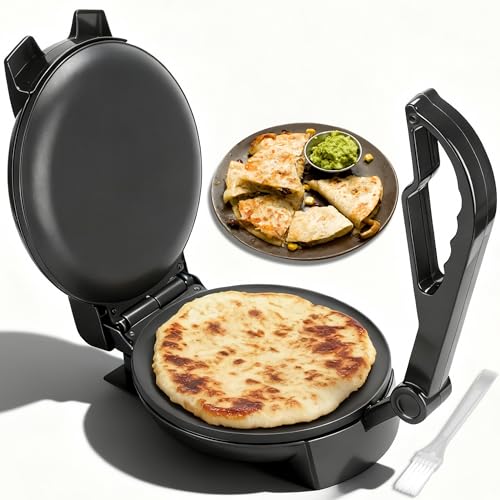
- 8-inch cooking format
- Adjustable temperature control
- Nonstick plate wipes clean
Best For: Small kitchens and varied flatbreads
Handle-Friendly Pick
10-Inch Electric Tortilla Maker

- 10-inch cooking format
- Power and temperature indicator lights
- Detachable ergonomic handle
Best For: Wider flatbreads and visible heating cues
Simple One-Knob Option

- 10-inch nonstick plate
- Adjustable one-knob control
- 1,100-watt heating
Best For: Simple controls and larger flatbreads
Best Large Manual Press – Victoria 10-Inch Cast Iron Tortilla Press
Among manual roti makers, this 10-inch Victoria press offers a larger pressing surface for flatbreads. Its seasoned cast-iron plates flatten dough, but you’ll still need to cook the roti separately.
Best For: Home cooks who want a larger, heavy-duty manual press for roti and other flatbreads.
Pros:
- 10-inch pressing surface accommodates larger rounds.
- Reinforced cast-iron design with engineered plates intended to avoid pinching.
- Seasoned with flaxseed oil and made without PTFE or PFOA.
Cons:
- At 10.5 pounds, it is heavy to move or store.
- Presses dough only; it does not heat or cook flatbreads.
Choose this over a smaller press if diameter matters more than portability. Its weight and manual operation are the main trade-offs.
Best Compact Cast-Iron Press – Victoria 8-Inch Roti Maker
If you’re comparing manual roti makers for a smaller kitchen, this 8-inch Victoria press has a smaller footprint than the brand’s 10-inch version. It flattens dough for roti and other flatbreads; cooking happens separately.
Best For: Cooks who want an 8-inch manual press and are comfortable caring for cast iron.
Pros:
- Reinforced design with flat plates intended to prevent pinching.
- Seasoned with flaxseed oil, without synthetic coatings or paints.
- Can press dough for roti, tortillas, empanadas, and arepas.
Cons:
- Weighs 8 pounds despite its smaller footprint.
- Requires careful drying to avoid rust; it is not dishwasher-safe.
- Does not cook the pressed dough.
This is a practical pick when you prefer a traditional press to an electric appliance. Follow the included care instructions to maintain its cast-iron surface.
Best Electric Heating Plates – Westinghouse WKRM293 Roti Maker
Unlike manual presses, the Westinghouse WKRM293 is an electric option among roti makers, with 8-inch nonstick plates and an adjustable thermostat. Power and ready lights help you track when the appliance is on and ready to cook.
Best For: Shoppers who want an electric roti maker with temperature control rather than a cast-iron press.
Pros:
- Nonstick surface is designed for 8-inch rotis and tortillas.
- Adjustable thermostat offers five settings.
- Power and ready indicator lights show operating status.
- Weighs 3 pounds.
Cons:
- Requires a 110–120-volt outlet.
- Cleaning calls for a slightly damp cloth rather than dishwasher use.
This model makes sense if you want heating and pressing in one appliance. Its 8-inch capacity is worth checking against the size of flatbread you plan to make.
Best Automated Dough Prep – Fully Automatic Roti Maker
For buyers seeking more automation from roti makers, this model is described as measuring flour, dispensing water, mixing and kneading dough, then cooking the flatbread. Its controls also allow adjustments to dough moisture, browning, and oil dosage.
Best For: Buyers who prioritize automated dough preparation and have room for a large countertop machine.
Pros:
- Automates several preparation steps that manual presses leave to the cook.
- Offers three baking temperature settings.
- Removable accessories are described as dishwasher-safe.
Cons:
- At 36.2 pounds, it is much heavier than the other options here.
- Its 15-by-16-inch footprint and 16-inch height need dedicated space.
- Rated at 1,700 watts.
The appeal is reduced hands-on dough work, not portability. Check its size and power requirements before choosing it for your kitchen.
Compact Versatility – FineMade 8-Inch Roti Maker
Among roti makers, this 8-inch FineMade model is a compact option for smaller flatbreads. Its 1,000-watt heating system and adjustable temperature control let you tailor cooking to the texture you want.
Best For: Small kitchens and cooks who want one appliance for rotis, tortillas, crepes, and other small-format foods.
Pros:
- Adjustable heat offers control over softness and browning.
- Nonstick plate can be wiped clean after use.
- Also designed for chapatis, mini pancakes, and eggs.
Cons:
- Its 8-inch format is less suited to larger flatbreads.
- The listed dimensions are 12 x 7 x 8 inches, so check your storage space.
Choose this model if compact size and cooking variety matter more to you than a larger plate.
If you’re comparing 10-inch roti makers, this 1,100-watt model pairs a temperature knob with red and green indicator lights to help you track heating. Its detachable handle is intended to make operation and storage easier.
Best For: Cooks who want a wider cooking surface and visible heating cues.
Pros:
- Temperature knob lets you adjust the level of browning.
- Indicator lights show power and when the set temperature is reached.
- Detachable, ergonomic handle supports more convenient storage.
Cons:
- At 5.51 pounds, it is heavier than some shoppers may want to move frequently.
- The listing gives package dimensions rather than the appliance’s assembled footprint.
The controls and indicator lights are its main advantages; check your available counter and storage space before choosing it.
For shoppers seeking straightforward roti makers, this 10-inch, 1,100-watt model centers on one adjustable temperature knob. Its nonstick heating plate is intended for flatbreads, chapatis, tortillas, and pizza crusts.
Best For: Home cooks who prefer simple controls and a larger plate for varied flatbreads.
Pros:
- 10-inch plate provides room for larger flatbreads.
- Adjustable temperature accommodates different dough and browning preferences.
- Nonstick surface is designed for easier cleanup.
Cons:
- No heating-status indicator lights are mentioned in the supplied details.
- The supplied details do not specify the appliance’s dimensions or weight.
Its appeal is a roomy cooking surface with uncomplicated controls; consider the missing size details if storage space is tight.
How We Picked These Roti Makers
This roundup covers two distinct tools: manual cast-iron presses that flatten dough and electric machines designed to heat it. We focused on the differences that matter before purchase, including size, temperature control, storage, and whether a separate pan is needed. A press and an electric cooker are not interchangeable, and results with wheat roti depend heavily on dough consistency and technique.
Quick Comparison
The two Victoria cast-iron presses are the traditional, stovetop-friendly choices: they shape dough, but you’ll cook it separately on a tawa or skillet. The Westinghouse WKRM293 adds an adjustable thermostat in an electric format. The Fully model offers three temperature settings for shoppers who want defined heat options. FineMade’s 8-inch machine favors a smaller footprint, while the two 10-inch electric models offer more surface area; check their full listings for the controls and handle design you prefer.
Key Buying Factors for Roti Makers
Pressing Versus Cooking
Decide first whether you need help flattening dough, cooking it, or both. Manual presses give you direct control over pressure and thickness, but require a separate hot cooking surface. Electric Roti Makers combine heated plates with a pressing action. They can simplify the setup, though you may need to adjust timing and dough moisture to avoid dry or uneven results.
Size and Thickness
An 8-inch plate suits smaller flatbreads and tighter storage spaces; a 10-inch plate gives larger portions more room. Plate diameter does not guarantee the finished roti’s size. With either style, even dough portions and gentle, consistent pressure help produce a more uniform round. If you prefer thin chapatis, consider how easily you can control the press rather than judging by diameter alone.
Heat, Cleanup, and Storage
Adjustable heat can help when switching recipes or correcting browning, while fixed settings offer a simpler routine. Nonstick electric plates may be easier to wipe down, but follow the maker’s care instructions and avoid metal utensils that could damage the coating. Cast iron is heavier and needs proper drying and seasoning care. Check counter clearance, cord placement, and the machine’s voltage before buying—especially if you plan to use it outside its intended market.
Who Should Buy Which Roti Makers?
Choose a Victoria manual press if you already cook on a tawa or skillet and want a durable shaping tool. Consider the Westinghouse or a 10-inch electric option if adjustable heat and a larger cooking area matter most. The FineMade 8-inch model is worth considering for compact kitchens, while the Fully model may appeal if three selectable temperature settings sound easier to manage. Whichever you choose, start with a small batch: roti dough and cooking time often need a little adjustment for a new tool.
