A tart press machine helps shape dough into consistent shells without pressing each one by hand. The right choice depends on whether you bake a few tarts at home or need to prepare trays of shells for service.
These 10 picks span manual presses and multi-cavity electric machines. Below, we focus on the differences that matter before you buy.
Best 10 Tart Press Machine Picks for 2026
Sturdy Manual Pick
Commercial Egg Tart Pressing Machine

- Lever-operated shell forming
- Stable cast-iron base
- 74 x 40 x 18 mm mold
Best For: Countertop shaping of individual tart shells
Timed Electric Pick
110V Eight-Hole Egg Tart Crust Maker

- Bakes up to eight shells
- Double-sided nonstick heating
- Adjustable temperature and timer
Best For: Baking batches of small tart crusts
Flexible Mold Pick

- Lever-assisted shaping
- Multiple mold-size options listed
- Coated mold for easier release
Best For: Manual shaping with mold-size flexibility
Eight-Crust Batch Pick
Electric Egg Tart Shell Machine

- Eight 60 x 60 x 15 mm holders
- 122–572°F listed range
- Timer and crumb tray
Best For: Repeated batches of small baked tart shells
Manual Tart Shaper
Y28 Lever-Style Egg Tart Press
- Manual lever-style shaping
- Choice of mold sizes listed
- Nonstick-coated mold
Best For: Home bakers shaping egg tart shells
Commercial Heated Press
15-Cavity Electric Tart Shell Maker

- 15-cavity cooking plates
- Temperature and timer knobs
- 110V, 1550W electric operation
Best For: Food-service kitchens making multiple shells per batch
Manual Mold Kit
- Lever-style dough shaping
- Food-grade contact components
- Nonstick-coated mold
Best For: Hands-on shaping of egg tart and dessert shells
Sturdy Construction
Commercial Grade Manual Egg Tart Press

- 304 stainless steel and forged aluminum
- Gear-driven vertical press with limit device
- Coated mold for easier release
Best For: Bakers prioritizing sturdy, repeatable manual pressing
Size Options
Manual Egg Tart Shell Maker B00
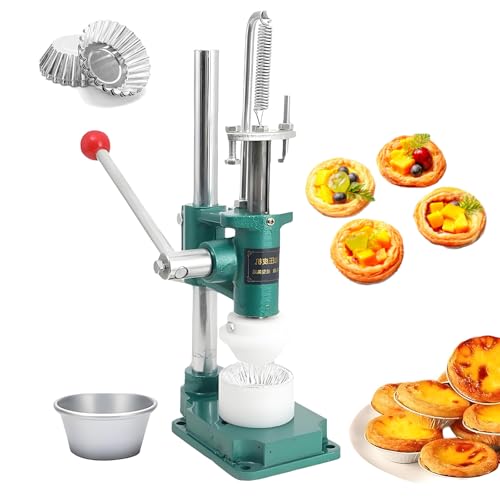
- Lever-operated shell shaping
- Different sizes described in listing
- Coated mold for easier cleanup
Best For: Bakers seeking tart-shell size options
Versatile Baking
Manual Egg Tart Shell Maker SN6201
- Lever-operated dough shaping
- Listed for several small desserts
- Coated mold for easier release
Best For: Bakers making a variety of small desserts
Sturdy Manual Pick – Commercial Egg Tart Pressing Machine
This manual tart press machine shapes egg tart dough with a lever-operated press rather than electricity. Its cast-iron base weighs about 15.4 pounds and is designed to sit on a work surface without being fixed in place.
Best For: Bakers who want a sturdy, countertop tool for forming individual tart shells.
Pros:
- Lever handle reduces the effort of pressing dough.
- Food-grade pressure head and bottom mold contact the dough.
- Coated mold is designed for clean shell release.
Cons:
- Manual operation requires a press for each shell.
- At about 15.4 pounds, it is substantial for a compact tool.
The listed mold measures 74 x 40 x 18 mm. This is a practical choice if consistent shaping matters more to you than automatic baking; the press forms shells but does not cook them.
Timed Electric Pick – 110V Eight-Hole Egg Tart Crust Maker
If you need to bake several shells at once, this electric tart press machine has eight holders and double-sided heating. The listing specifies 110V power, 1550 watts, adjustable temperature, and a timer.
Best For: Home bakers or small baking operations making batches of up to eight tart crusts.
Pros:
- Eight 60 x 60 x 15 mm holders bake shells in one batch.
- Nonstick-coated heating plates are designed for easier release.
- Temperature control, timer, and removable crumb tray support batch work.
Cons:
- Requires a compatible 110V outlet.
- Fixed-size holders limit the shell dimensions you can make.
The seller estimates about 0–5 minutes per batch, though actual results will depend on settings and dough. Choose this over a manual press when baking the crusts in the machine is the priority.
Flexible Mold Pick – Manual Egg Tart Pressing Kit
This manual tart press machine uses a lever to shape dough and is offered as a kit with mold-size options. It is intended for forming egg tart shells and pudding cups, with a coated mold designed to help the shaped dough release.
Best For: Bakers who want manual shell shaping with a choice of mold sizes.
Pros:
- Lever mechanism helps form uniform shells.
- Listing describes multiple size options.
- Food-grade pressure head and bottom groove contact the dough.
Cons:
- Does not bake the shells.
- The supplied listing does not specify the dimensions of the individual molds.
At a listed 14.3 pounds, this is more of a dedicated press than a lightweight hand tamper. Check the selected mold configuration before ordering if a particular tart diameter is essential.
Eight-Crust Batch Pick – Electric Egg Tart Shell Machine
This 110V electric tart press machine combines shell forming and baking in eight 60 x 60 x 15 mm holders. Double-sided heated plates, a temperature dial, and a timer make it suited to repeat batches rather than one-at-a-time hand pressing.
Best For: Bakers who want an electric machine for batches of small, uniform tart shells.
Pros:
- Bakes up to eight crusts per batch.
- Temperature range is listed as 122–572°F.
- Nonstick-coated plates and a removable crumb tray aid cleanup.
Cons:
- Needs a 110V electrical supply.
- Eight fixed-size holders are less flexible than interchangeable molds.
The listed output and 1550-watt rating make this worth considering for repeated small-crust batches. Its published features closely resemble the other eight-hole electric model here, so compare the current listings before choosing between them.
Manual Tart Shaper – Y28 Lever-Style Egg Tart Press
If you want a manual tart press machine for shaping dough before baking, the Y28 uses a lever-style press and molds to form consistent tart shells without electrical controls.
Best For: Home bakers making egg tarts and other small molded desserts.
Pros:
- Lever action helps shape uniform crusts.
- Listed with a choice of mold sizes.
- Nonstick-coated mold is designed for easy release and wipe-down cleaning.
Cons:
- Manual operation means pressing each portion yourself.
- The listing does not specify which mold sizes are included.
This is a straightforward shaping tool rather than a heated baker. Confirm the included mold dimensions if a particular tart size matters.
Commercial Heated Press – 15-Cavity Electric Tart Shell Maker
For a tart press machine that also heats the shells, this 110V, 1550W commercial model has 15 cavities, a temperature knob, and a timer knob. Its stainless-steel body and nonstick-coated cast-aluminum plates are aimed at repeated kitchen use.
Best For: Bakeries and food-service kitchens preparing multiple tart shells per batch.
Pros:
- 15-cavity layout makes multiple shells at once.
- Temperature and timer knobs provide cooking controls.
- Nonstick-coated plates can be wiped with a damp cloth after use.
Cons:
- Requires a 110V power connection.
- At 15.4 by 13.4 inches and 22.1 pounds, it takes more space and effort to move than a small manual press.
Choose this model when heated, multi-cavity production matters more than portability; unlike a manual mold, it is designed to cook the shells as it forms them.
Manual Mold Kit – SN6201 Lever-Style Tart Press
The SN6201 is a manual tart press machine for forming dough into egg tart shells. Its lever-style action, food-grade pressure head and bottom groove, and nonstick-coated mold suit hands-on dessert prep.
Best For: Bakers who want a manually operated mold for egg tarts, pudding cups, and small desserts.
Pros:
- Lever-style press is designed for consistent shell shaping.
- Listing offers a choice of sizes.
- Nonstick-coated mold is intended to release shells cleanly and wipe down easily.
Cons:
- Does not heat or bake the dough.
- The listing does not identify the exact mold sizes supplied.
Its supplied description matches the Y28 manual press closely, including the listed dimensions and weight. Check the selected size and included molds before choosing between them.
Sturdy Construction – Commercial Grade Manual Egg Tart Press
This manual tart press machine combines 304 stainless steel and forged aluminum with a gear-driven, vertical press. Its limit device is designed to help shape consistent tart bases when you’re preparing multiple shells.
Best For: Bakers who prioritize sturdy construction and repeatable manual pressing.
Pros:
- 304 stainless steel and forged aluminum construction.
- Gear drive and limit device support consistent pressing.
- Coated mold is designed for easy release and cleaning.
Cons:
- Manual operation requires a press for each shell.
- At 9.46 pounds, it is relatively heavy to move or store.
Choose this press if a stable base and substantial materials matter more to you than a lightweight tool. The supplied information does not specify mold dimensions, so check sizing before purchasing for a particular tart tin.
This lever-operated tart press machine is described as offering different size options for shaping egg tart shells. Its coated nonstick mold is intended to help shells release cleanly and make post-baking cleanup simpler.
Best For: Bakers looking for a manual press with a choice of tart-shell sizes.
Pros:
- Lever design helps press dough into consistent shells.
- Listed size options allow for different tart preferences.
- Coated mold can be wiped clean after use.
Cons:
- At 14.3 pounds, it may be cumbersome to move despite its compact listed dimensions.
- The notes do not identify the included mold sizes.
This is worth considering if sizing flexibility is your priority, but confirm which molds are included before ordering. The listing also describes uses beyond egg tarts, including muffins and mini cakes.
This manual tart press machine uses a lever to shape dough and is listed for egg tarts as well as cheese tarts and other small baked goods. The supplied notes describe a coated nonstick mold and food-grade materials for the pressure head and bottom groove.
Best For: Home or shop bakers who want one manual press for several small-dessert projects.
Pros:
- Lever operation is designed for uniform tart shells.
- Listed uses include egg tarts, muffins, mini cakes, and jelly cups.
- Coated mold is designed for clean release and wipe-down cleaning.
Cons:
- Manual pressing may not suit bakers seeking automated production.
- Listed at 14.3 pounds, despite its compact dimensions.
Its range of suggested uses makes it a practical option if you regularly switch between small desserts. The supplied specifications match those of the B00 listing, so verify mold size and package contents if you’re comparing the two.
How We Picked These Tart Press Machines
We compared the listed machines by pressing method, stated cavity count, construction, and features such as timers and nonstick surfaces. The selection includes compact manual presses and electric machines aimed at higher-volume shell production. A listing alone cannot establish dough compatibility, finished-shell consistency, or long-term durability, so confirm those details with the seller before ordering.
Quick Comparison: Manual Vs. Electric
Manual presses make sense when you want a simpler setup, do not have space for another powered appliance, or make small batches. They generally press one shell at a time, so your pace depends on how quickly you portion dough and operate the press.
Electric models are better suited to repeat batches. The listed options include eight-cavity machines and a 15-piece model, which may reduce the number of cycles needed for a large order. Expect a larger footprint and check the electrical requirements: several listings specify 110V, while the 15-piece model lists a 1550W rating. Neither cavity count nor wattage alone guarantees faster output; heating and pressing cycle times matter too.
Key Buying Factors for a Tart Press Machine
Shell Size and Mold Fit
Start with the tart you intend to make. Ask for cavity diameter and depth, and check whether the molds suit your baking cups or pans. “Egg tart” and “mini tart” are not precise size specifications. If you need several shell sizes, confirm whether molds are interchangeable and whether replacements are available.
Capacity and Workflow
Count the shells you need per batch, then consider dough portioning, loading, pressing, and unloading—not just the advertised number of cavities. An eight-hole machine can be useful for regular batches; a 15-piece model is worth considering when volume justifies its space and power needs. A manual press may be more practical if you only make a few shells at once.
Controls, Materials, and Cleanup
A timer can help you repeat a process, but check what it controls and whether temperature or pressure is adjustable. For any nonstick or coated surface, follow the maker’s cleaning instructions and avoid tools that could scratch it. Stainless steel construction can be a useful durability feature, but inspect the materials that actually touch the dough. Also confirm the machine’s dimensions, plug type, and voltage before buying.
Who Should Buy Which Tart Press Machine?
Occasional home baker: Choose a manual press if straightforward storage and small-batch shaping matter most. Frequent home baker or small bakery: Consider an eight-cavity electric machine if its mold dimensions match your recipes and you have suitable counter space. Higher-volume kitchen: Compare the 15-piece option with your expected daily output, available electrical capacity, and cleanup routine. Whichever type you choose, verify the finished shell size first; a faster press is little help if its molds do not fit your tarts.
