The right infrared thermometer makes it easier to check pan surfaces, griddles, pizza stones, frying oil, and grill grates without touching hot equipment. The 10 models in this roundup cover basic kitchen use as well as higher-temperature cooking and broader household tasks.
Use the guide below to compare temperature range, targeting features, emissivity controls, probe options, and display readability before choosing the best fit for your kitchen.
Best 10 Infrared Thermometers for Home Kitchens Picks for 2026
Best High-Range Pick

- -58°F to 1130°F range
- Adjustable 0.1–1.0 emissivity
- 12:1 targeting with backlit display
Best For: Broad surface-temperature checks around the kitchen
Best for Fast Surface Checks
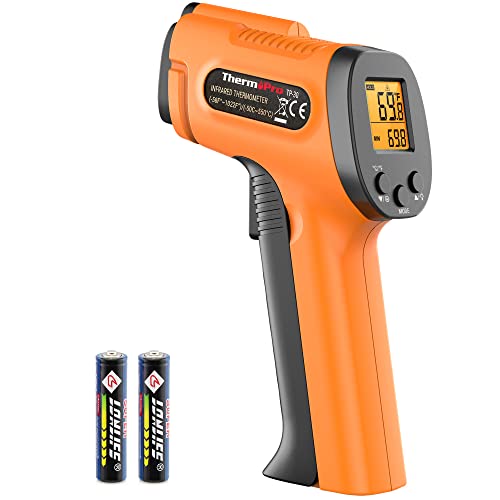
- -58°F to 1022°F range
- Sub-500-millisecond response
- Shows max, min, and average readings
Best For: Quick checks of griddles, pizza ovens, and cooking surfaces
Best Simple Tool
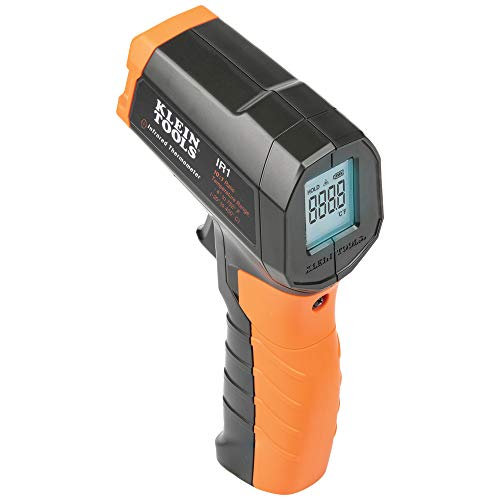
- -4°F to 752°F measurement range
- 10:1 targeting ratio
- Fixed 0.95 emissivity and auto-hold
Best For: Straightforward everyday surface-temperature readings
Best Two-in-One Pick

- Infrared sensor plus meat probe
- 12:1 non-contact surface scanning
- Probe reads food interiors in 2–3 seconds
Best For: Home chefs checking both cookware surfaces and food doneness
Best Overall Range

- -58°F to 842°F measurement range
- Fast readings in under half a second
- 12:1 ratio with backlit LCD
Best For: Versatile home and kitchen surface checks
Best High-Heat Pick
KNINE OUTDOORS Infrared Thermometer

- Measures up to 1,112°F
- Adjustable emissivity from 0.1 to 1.0
- 12:1 ratio with single-laser targeting
Best For: High-temperature ovens, candy, and grill checks
Best Simple Cooking Pick
GM50 Cooking Infrared Thermometer

- -58°F to 932°F measurement range
- 0.1-degree resolution and backlit LCD
- Scan-and-hold function with auto shutoff
Best For: Routine cooking, BBQ, and pizza-oven checks
Best All-Around Pick
Etekcity Lasergrip Color Display

- -58°F to 1130°F range
- Color LCD with max-temperature display
- Adjustable emissivity and fast readings
Best For: Home cooks wanting a versatile, easy-to-read temperature gun
Best for Simple Calibration
UW510 Infrared Temperature Gun

- One-button calibration function
- Backlit LCD and 0.5-second response
- -58°F to 1112°F measurement range
Best For: Users who want repeatable readings with simple controls
Best Feature-Rich Option
IR02C-OR Color LCD Thermometer

- -58°F to 1472°F range with adjustable emissivity
- Infrared and K-type probe measurements
- Humidity, dew-point, and alarm modes
Best For: Advanced home cooks and DIY users wanting expanded measurements
Best High-Range Pick – Etekcity Lasergrip 1080
For shoppers comparing infrared thermometers for home kitchens, the Etekcity Lasergrip 1080 stands out for its exceptionally broad temperature range and adjustable emissivity. It can scan hot or frozen surfaces without contact, making it useful for checking cookware, ovens, grills, and other household surfaces.
Best For: Home cooks who want a wide measurement range, maximum-temperature readings, and flexible surface calibration.
Pros:
- Measures from -58°F to 1130°F with a 0.5-second response time.
- Adjustable emissivity from 0.1 to 1.0 supports readings across different surfaces.
- 12:1 distance-to-spot ratio, backlit display, auto-off, and included batteries.
Cons:
- Measures surface temperature rather than internal food temperature.
- The recommended measurement distance is approximately 14.17 inches.
Its wide range and calibration controls make it a versatile choice for demanding kitchen temperature checks, though you will need a separate probe thermometer for internal doneness.
Best for Fast Surface Checks – TempPro TempScan CORE
The TempPro TempScan CORE is a practical option among infrared thermometers for home kitchens, especially when speed matters. Its 12:1 distance-to-spot ratio, adjustable emissivity, and quick response make it suitable for checking pizza ovens, griddles, and other cooking surfaces.
Best For: Home cooks who need quick readings from a distance and useful scan statistics.
Pros:
- Measures from -58°F to 1022°F with a response time under 500 milliseconds.
- Adjustable emissivity from 0.1 to 1.0 helps accommodate different materials.
- Displays maximum, minimum, and average temperatures from the last scan.
- Backlit LCD and automatic shutoff after 90 seconds support convenient use.
Cons:
- Designed for surface readings, not internal food temperatures.
- Its listed accuracy is ±1.5%, rather than a tighter stated tolerance.
This model balances speed and useful scan data well, making it a sensible choice for preheating and surface monitoring when you do not need a built-in food probe.
Best Simple Tool – Klein Tools IR1
For a straightforward approach to infrared thermometers for home kitchens, the Klein Tools IR1 offers simple laser targeting and a useful -4°F to 752°F measurement range. Its fixed emissivity and auto-hold design keep operation uncomplicated for routine surface checks.
Best For: Users who prefer a simple, durable-feeling infrared thermometer for moderate-temperature kitchen and household surfaces.
Pros:
- 10:1 distance-to-spot ratio supports readings from a practical distance.
- Measures from -4°F to 752°F, covering many everyday cooking applications.
- Includes laser targeting, a backlit display, auto power-off, pouch, and 9V battery.
Cons:
- Fixed emissivity of 0.95 offers less surface-specific adjustment.
- Its upper temperature limit is lower than the other listed models.
- It is not intended for use on people or animals.
The IR1 is appealing when ease of use matters more than extensive customization. Its fixed settings simplify operation, but they provide less flexibility for unusual or reflective surfaces.
Best Two-in-One Pick – TempPro TempScan PLUS TP420
The TempPro TempScan PLUS TP420 is one of the most versatile infrared thermometers for home kitchens because it combines non-contact surface scanning with a meat probe. Use the infrared sensor for pans, grills, and oven surfaces, then switch to the probe for meats, candy, frying oil, soups, or milk.
Best For: Home chefs who want one thermometer for both cookware surfaces and internal food temperatures.
Pros:
- Combines 12:1 infrared scanning with a built-in meat probe.
- Probe provides internal readings in 2–3 seconds with stated ±1.8°F precision.
- Adjustable emissivity supports safer readings from hot surfaces at a distance.
- Motion-sensing wake/sleep, auto-off, magnet, hanging hole, and included batteries add convenience.
Cons:
- The probe’s stated precision is ±1.8°F, not laboratory-grade accuracy.
- It is a multifunction tool with more features to manage than a basic infrared-only model.
Among these options, the TP420 offers the broadest cooking utility. Its combination of surface and internal measurements makes it especially practical for grilling, frying, candy-making, and everyday meal preparation.
Best Overall Range – Etekcity Lasergrip 774
The Etekcity Lasergrip 774 is a versatile choice among infrared thermometers for home kitchens, with a broad temperature range, quick readings, and a 12:1 distance-to-spot ratio. Its backlit display and included batteries make it convenient for everyday cooking and household checks.
Best For: Home cooks who want a versatile, fast-reading thermometer for ovens, grills, cookware, and other household surfaces.
Pros:
- Measures from -58°F to 842°F (-50°C to 450°C).
- Provides readings in less than half a second.
- Uses a 12:1 distance-to-spot ratio for non-contact measurements.
- Includes a backlit LCD, auto-off function, and two AAA batteries.
Cons:
- Designed for surface temperatures, not human temperature measurement.
- Readings reflect the average temperature of the targeted circular area.
The Lasergrip 774 stands out for combining a useful kitchen-ready range with fast operation and a readable display. Its adjustable maximum temperature display and wide application range add flexibility for cooks who also want a general-purpose household infrared thermometer.
Best High-Heat Pick – KNINE OUTDOORS Infrared Thermometer
For infrared thermometers for home kitchens that need extra headroom, the KNINE OUTDOORS thermometer measures up to 1,112°F. It pairs single-laser targeting with adjustable emissivity, making it useful for cooking, oven checks, candy making, and other temperature-sensitive tasks.
Best For: Cooks who regularly check high-temperature ovens, grills, candy, or other hot surfaces.
Pros:
- Measures from -58°F to 1,112°F (-50°C to 600°C).
- Offers adjustable emissivity from 0.1 to 1.0.
- Uses a 12:1 distance-to-spot ratio for non-contact readings.
- Has a large eye-protect LCD and selectable Fahrenheit or Celsius units.
Cons:
- The supplied details specify outdoor usage rather than indoor usage.
- Requires holding the unit button for more than three seconds to switch units.
Its standout advantage is the unusually high 1,112°F upper limit, while adjustable emissivity provides more control across different materials. The single laser helps indicate the measurement target, although users should still follow the intended non-contact surface-measurement approach.
Best Simple Cooking Pick – GM50 Cooking Infrared Thermometer
The GM50 is a straightforward option among infrared thermometers for home kitchens, offering a -58°F to 932°F range, 0.1-degree resolution, and a backlit LCD. Its scan-and-hold display behavior is useful when checking cooking surfaces without making contact.
Best For: Home cooks who want a simple non-contact thermometer for cooking, BBQ, and pizza-oven surface checks.
Pros:
- Measures from -58°F to 932°F (-50°C to 500°C).
- Displays readings at 0.1°F or 0.1°C resolution.
- Backlight supports use in low-light conditions.
- Includes data hold, Celsius/Fahrenheit selection, and two AAA batteries.
Cons:
- Preset emissivity is 0.95 and is not described as adjustable.
- Shiny or polished metal surfaces can produce inaccurate readings without masking tape or flat black paint.
- The product is not for human temperature measurement.
The GM50 focuses on practical basics rather than advanced controls. Its broad cooking range, clear backlight, and hold function make it convenient for routine kitchen checks, provided reflective surfaces are prepared as instructed.
Best All-Around Pick – Etekcity Lasergrip Color Display
For home cooks comparing infrared thermometers for home kitchens, the Etekcity Lasergrip 1260 is a versatile, fast-reading option with a clear color display. It measures surface temperatures from -58°F to 1130°F, offers adjustable emissivity, and can be used for grills, griddles, ovens, and other household tasks.
Best For: Home cooks who want a broadly useful infrared thermometer with a large color display and a wide temperature range.
Pros:
- Wide -58°F to 1130°F measurement range with stated ±2% accuracy.
- Color LCD displays readings and maximum temperatures clearly.
- Adjustable emissivity from 0.1 to 1.0 supports different surfaces.
- Fast readings in less than 0.5 seconds, with auto-off and included batteries.
Cons:
- Measures surface temperature rather than the interior of food.
- The unit is non-washable, so it needs to be kept away from spills.
Its combination of speed, range, adjustable settings, and a two-year warranty makes it a practical choice for cooking and general household measurement.
Best for Simple Calibration – UW510 Infrared Temperature Gun
The UW510 is a straightforward choice for shoppers seeking infrared thermometers for home kitchens, especially when repeatable readings matter. Its one-button calibration function is designed to help maintain consistency, while the backlit LCD, 0.5-second response time, and -58°F to 1112°F range suit cooking and household projects.
Best For: Cooks and DIY users who value a simple calibration function, backlit display, and non-contact operation.
Pros:
- One-button calibration function helps counter measurement drift over time.
- Measures from -58°F to 1112°F and responds in as little as 0.5 seconds.
- Non-contact design is useful for checking hot oil, food surfaces, and appliances.
- Backlit LCD, low-battery indicator, and auto-shutoff improve usability.
Cons:
- Its yellow contemporary design may not suit every preference.
- Like other infrared models, it measures surface temperature rather than internal food temperature.
This model keeps operation uncomplicated while adding calibration support, making it a sensible option for routine kitchen checks and occasional home maintenance.
Best Feature-Rich Option – IR02C-OR Color LCD Thermometer
Among infrared thermometers for home kitchens, the IR02C-OR stands out for adding several diagnostic features to basic surface-temperature measurement. It combines infrared and K-type probe readings, adjustable emissivity, a color display, humidity and dew-point information, and a wide -58°F to 1472°F range.
Best For: Experienced home users who want one tool for cooking, food-surface checks, home maintenance, and temperature-difference monitoring.
Pros:
- Very wide -58°F to 1472°F range with stated accuracy up to ±1.5%.
- Includes a K-type thermocouple probe for contact measurement alongside infrared readings.
- Color display provides ambient temperature, humidity, dew point, and surface information.
- Offers spoilage and temperature-difference alarm modes, plus included case and accessories.
Cons:
- The larger feature set may be more than casual kitchen users need.
- Infrared readings are for inanimate objects; the notes state measurements for people or animals will be inaccurate.
- It requires careful use of the distance-to-spot ratio for smaller targets.
With its probe, alarms, environmental readings, and unusually high temperature ceiling, this is the most capable option here for users who want more than a basic laser thermometer.
How We Picked the Best Infrared Thermometers for Home Kitchens
We focused on features that matter during real cooking tasks: a useful temperature range, dependable noncontact readings, a visible targeting laser, a readable display, and controls that are simple to operate near a hot stove or grill. We also considered adjustable emissivity, minimum and maximum readings, auto-hold, backlighting, and durability.
Because infrared thermometers measure surface temperature rather than internal temperature, models with a built-in meat probe received extra consideration for cooks who want one tool for both pans and food interiors. The selected options also include choices for pizza ovens, griddles, barbecues, HVAC checks, and general home repairs.
Quick Comparison
| Feature | What to look for | Why it matters |
|---|---|---|
| Temperature range | At least about -50°F to 900°F for general kitchen use | Supports everything from chilled surfaces to pizza stones and grills |
| Emissivity | Adjustable control or a kitchen-friendly preset | Improves accuracy on reflective metal and different materials |
| Targeting | Laser pointer, clear aiming, and suitable distance-to-spot ratio | Helps measure the intended area instead of nearby surfaces |
| Extra functions | Probe, minimum/maximum readings, auto-hold, or color display | Makes specialized cooking and quick checks easier |
Key Buying Factors for Infrared Thermometers for Home Kitchens
Temperature Range and Accuracy
Choose a range that exceeds your hottest cooking surface by a comfortable margin. A very high maximum temperature is useful for pizza ovens, grills, and fire-related checks, but it does not automatically mean greater accuracy in normal kitchen use. Look for published accuracy specifications and remember that readings can vary with distance, surface finish, and environmental conditions.
Emissivity and Reflective Surfaces
Infrared devices estimate temperature from emitted radiation. Shiny stainless steel, polished cookware, and foil can produce misleading readings, so adjustable emissivity is valuable. For the most reliable results, measure a matte surface, add a small piece of high-temperature tape, or follow the manufacturer’s guidance rather than aiming at a reflective finish.
Laser, Display, and Handling
A laser helps identify the measurement area, while a backlit or color display is easier to read around a dim grill or oven. Consider grip comfort, button placement, battery access, auto shutoff, and whether the thermometer can hold the reading after you release the trigger.
Probe Versatility
An infrared scan checks the outside of food or cookware; it cannot confirm the internal temperature of meat. If you regularly cook roasts, poultry, candy, or oil, a two-in-one model with a contact probe can be more practical than a standalone infrared gun.
Who Should Buy Which Infrared Thermometers for Home Kitchens?
For everyday cooking: Choose a straightforward model with a readable display, laser targeting, and a broad temperature range.
For pizza ovens and high-heat grilling: Prioritize a high maximum temperature, quick readings, and a clear laser so you can check stones and grates efficiently.
For meat and multi-purpose cooking: Pick a two-in-one infrared thermometer with a probe to measure both surfaces and internal food temperatures.
For stainless-steel cookware and varied household tasks: Adjustable emissivity and minimum/maximum functions are worth paying for, especially if you will also check HVAC vents, appliances, or home-repair surfaces.
