Making fresh pasta for a crowd is far easier when your machine can mix, roll, cut, or extrude dough consistently without constant handwork. The right model can turn a time-consuming weekend project into a repeatable kitchen routine.
This roundup compares 10 pasta machines for large batches, from compact manual rollers to high-capacity electric makers, so you can match speed, output, versatility, and cleanup to the way you cook.
Best 10 Pasta Machines for Large Batches Picks for 2026
Best Electric Roller Set
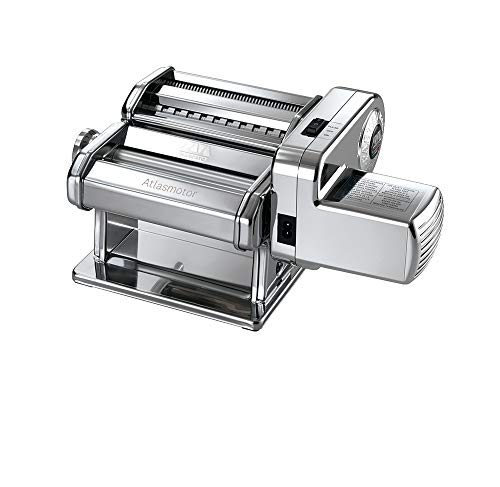
- Electric or manual operation
- 6-inch-wide pasta sheets
- 10 thickness settings
Best For: Flexible home pasta making with room to add shapes
Best Automated Large-Batch Maker
Philips 7000 Series Pasta Maker

- Makes up to 8 portions
- Eight shaping discs included
- Automatic operation and easy cleanup
Best For: Fast family-sized batches with minimal manual work
Best Traditional Italian Roller

- 150mm-wide pasta sheets
- Six adjustable thickness settings
- Motor and accessory compatible
Best For: Manual pasta making with durable construction and upgrade potential
Best Commercial-Style Capacity

- 550W motor for repeated use
- Built-in 2mm and 6mm cutters
- 0.1–5mm adjustable roller gap
Best For: High-volume kitchens and frequent multi-purpose dough prep
Pro-Level Manual Pick

- 10 thickness settings from 0.8–4.8 mm
- Makes lasagna, fettuccine, and tagliolini
- Chrome-plated steel manual construction
Best For: Hands-on cooks making classic pasta shapes
Flexible Budget Option
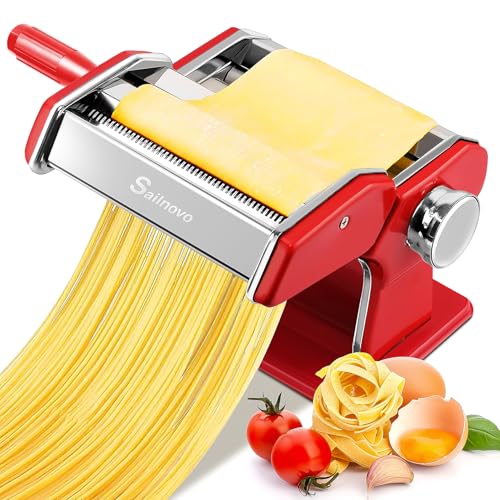
- Nine thickness settings from 0.3–3 mm
- Two cutter widths for varied noodles
- Clamps securely and has detachable parts
Best For: Beginners making assorted pasta and dumplings
Large-Batch Automation

- 500 g flour capacity for about four people
- Eight pasta shapes and four automatic modes
- Includes measuring cups and dishwasher-safe parts
Best For: Families seeking low-effort automated pasta making
Best Manual Value
Nuvantee Adjustable Pasta Maker

- Seven thickness settings from 0.5–3 mm
- Includes 2 mm and 6 mm cutters
- Stainless steel manual construction
Best For: Hands-on cooks making varied pasta styles
Best Electric Roller
GVODE 700W Electric Pasta Maker

- 700W motor with two speeds and reverse
- Eight settings from 0.4–2 mm
- Stainless housing and two cutters
Best For: Motor-assisted rolling for family-sized batches
Best Automatic Extruder

- Mixes, kneads, and extrudes automatically
- Handles up to 500g flour per batch
- Includes 13 shaping discs
Best For: Beginner-friendly family pasta and noodle making
Best Electric Roller Set – Marcato Atlasmotor 150
For cooks comparing pasta machines for large batches, the Marcato Atlasmotor combines manual control with powered rolling. Its 150mm-wide rollers, 10 thickness positions, and included motor make it practical when you want consistent sheets without giving up hands-on flexibility.
Best For: Home cooks who want an Italian-made roller with both electric and manual operation.
Pros:
- Includes the Atlas 150, handcrank, clamp, Pastadrive motor, and manual.
- Creates pasta sheets up to 6 inches wide.
- Offers 10 clearly marked thickness settings.
- Compatible with 11 separately available Marcato accessories.
Cons:
- Additional pasta shapes require separately available accessories.
- Cleaning requires letting residue sit out before brushing it away.
The combination of motorized and manual use makes this a flexible choice for repeated sheet rolling, while the accessory ecosystem leaves room to expand your pasta options over time.
Best Automated Large-Batch Maker – Philips 7000 Series Pasta Maker
The Philips 7000 Series is a convenient option for pasta machines for large batches, producing up to eight portions in one go. Its automatic operation, 150W motor, eight shaping discs, and recipe guidance are designed to simplify fresh pasta preparation.
Best For: Families and hosts who prioritize automated preparation and multiple pasta shapes.
Pros:
- Prepares up to eight portions at once.
- Designed to make pasta in under 10 minutes.
- Includes eight discs for shaping variety.
- Dishwasher-safe, non-stick parts support easier cleanup.
Cons:
- Produces sheets in a stated 1 to 1.5mm thickness range.
- At 20 pounds, it is a substantial countertop appliance.
Choose this model when speed and convenience matter more than traditional hand-rolling. The included HomeID app also provides recipes, including vegan and gluten-free options.
Best Traditional Italian Roller – Imperia Classic Line
The Imperia Classic Line is a durable manual option among pasta machines for large batches, with a solid chromed-steel build and a 150mm sheet width. Its six dial positions cover dough thicknesses from 0.5mm to 5mm, while included supports help keep the machine steady during repeated use.
Best For: Traditionalists who want a sturdy manual machine that can be expanded with accessories or a motor.
Pros:
- Made entirely in Italy with chromed-steel construction.
- Creates sheets up to 150mm wide, plus fettuccine and tagliolini.
- Includes a crank, non-slip base, table support, storage pouch, and cleaning brush.
- Compatible with optional motor and additional shaping accessories.
Cons:
- Manual operation requires turning the crank for each batch.
- Extra pasta shapes and ravioli functions require optional accessories.
This is a strong fit for buyers who value mechanical simplicity and expandability. Its included support pieces make setup more practical, while the optional motor provides a future upgrade path.
Best Commercial-Style Capacity – XINGYUEXUAN Model 180
For especially demanding pasta machines for large batches, the XINGYUEXUAN Model 180 uses a 550W motor and stainless-steel body for repeated rolling and cutting. Its dual 2mm and 6mm cutters and adjustable 0.1–5mm roller gap also make it useful beyond pasta.
Best For: Restaurants, food-prep businesses, and serious home users handling frequent dough work.
Pros:
- 550W motor supports repeated rolling and noodle cutting.
- Built-in 2mm and 6mm cutters provide two noodle widths.
- Adjustable roller gap handles sheets from 0.1mm to 5mm.
- Suitable for pasta, lasagna, ravioli, dumpling wrappers, and wontons.
Cons:
- At 42.3 pounds, it is heavy for a home countertop.
- The 27-inch width requires substantial workspace.
- Its operation is semi-automatic rather than fully automatic.
This machine is aimed at throughput and versatility rather than compact storage. Its commercial-style footprint makes the most sense where frequent batch preparation justifies dedicating counter space.
Pro-Level Manual Pick – Marcato Atlas150
MARCATO Atlas150 Manual Pasta Maker Machine-LASAGNA, FETTUCCINE & TAGLIOLINI. Made in Italy
Check Price On AmazonFor cooks comparing pasta machines for large batches, the Marcato Atlas150 offers a durable manual setup with 10 thickness settings and three included pasta functions. Its chrome-plated steel construction is suited to repeated rolling and cutting, though you will supply the labor for each batch.
Best For: Home cooks who want hands-on control over lasagna, fettuccine, and tagliolini.
Pros:
- Ten thickness settings, from 0.8 to 4.8 mm.
- Includes lasagna, fettuccine, and tagliolini capabilities.
- Chrome- and nickel-plated steel construction with an aluminum blade material.
Cons:
- Manual operation requires ongoing cranking for large batches.
- Only a black crank handle and user manual are listed as included accessories.
The Atlas150 is a strong choice when precise sheet thickness and classic pasta shapes matter more than automation. For especially large quantities, plan on extra hands or more preparation time.
Flexible Budget Option – Sailnovo 3-in-1 Pasta Maker
Among pasta machines for large batches, the Sailnovo 3-in-1 model provides manual rolling with nine thickness settings and two cutting widths. Its secure desk clamp and lightweight aluminum-alloy rollers make it a practical option for preparing varied pasta shapes, although larger quantities still require hand cranking.
Best For: Beginners and families who want adjustable sheets for spaghetti, fettuccine, lasagna, and dumplings.
Pros:
- Nine thickness settings from 0.3 to 3 mm.
- Two cutter widths: 2 mm and 6.25 mm.
- Detachable design, rust-resistant aluminum-alloy rollers, and a stabilizing desk clip.
Cons:
- Manual cranking can be tiring when producing large batches.
- The supplied details list one general setting despite the nine thickness options described.
The Sailnovo stands out for versatility and approachable controls. It is a sensible choice for mixed pasta projects, but cooks regularly preparing very large batches may prefer an electric machine to reduce hands-on effort.
Large-Batch Automation – VEVOR Electric Pasta Maker
For pasta machines for large batches, the VEVOR electric model is the most labor-saving option here. Its 500 g flour capacity, automatic operation, four intelligent modes, and eight pasta discs are designed to produce noodles with minimal manual work.
Best For: Families and home cooks who want automated fresh noodles in batches sized for about four people.
Pros:
- 500 g flour capacity and an approximately 14-minute preparation time.
- Eight pasta shapes supported by included discs.
- Automatic operation with four modes, measuring cups, brush, and spatula.
- Dishwasher-safe parts are listed for easier cleanup.
Cons:
- Requires careful flour-to-water ratios to prevent sticking or failed extrusion.
- At 11 pounds, it is substantially heavier than the listed manual machines.
- Its capacity is described as enough for about four people, so very large gatherings may require multiple batches.
The VEVOR is the clearest fit for reducing effort during recurring pasta preparation. Its moderate capacity and automated mixing and extrusion make it efficient for family-size batches, while larger events may still require repeat cycles.
Best Manual Value – Nuvantee Adjustable Pasta Maker
For shoppers comparing pasta machines for large batches, the Nuvantee is a practical manual option with a stainless-steel build, seven thickness settings, and two cutting widths. Its hand-crank design avoids motor limits, though producing a large quantity will require more hands-on effort.
Best For: Home cooks who want adjustable sheets and classic noodles without relying on an electric motor.
Pros:
- Seven settings roll dough from 0.5 mm to 3 mm.
- Includes 2 mm and 6 mm cutters for spaghetti and fettuccine-style noodles.
- Stainless steel construction with manual operation.
Cons:
- Manual rolling and cutting can take longer for genuinely large batches.
- It does not automatically mix, knead, or extrude dough.
The Nuvantee makes sense when control and versatility matter more than speed. For occasional or moderate batch cooking, its broad thickness range and straightforward attachments offer useful flexibility.
Best Electric Roller – GVODE 700W Electric Pasta Maker
Among pasta machines for large batches, the GVODE stands out for reducing hand-cranking with a 700W motor, two speeds, and reverse. It uses a roller-and-cutter setup rather than mixing or extruding dough, and its recommended 15-minute runs with five-minute cool-downs are important for sustained use.
Best For: Families and home cooks who want motor-assisted sheets and noodles while retaining control over dough preparation.
Pros:
- 700W motor with two speeds and a reverse function.
- Eight thickness settings from 0.4 mm to 2 mm.
- Stainless steel housing, rollers, fettuccine cutter, and spaghetti cutter.
- Includes a cleaning brush and user manual.
Cons:
- Requires five-minute cool-downs after 15-minute operating batches.
- Does not mix, knead, or extrude dough automatically.
- Its larger footprint may require dedicated counter space.
The GVODE is a strong fit when batch preparation benefits from powered rolling but you are comfortable making and portioning the dough separately. Reverse is useful for clearing bunches, while the cooling schedule helps protect motor life.
Best Automatic Extruder – 260W 13-Disc Pasta Maker
For shoppers seeking pasta machines for large batches with less hands-on preparation, this automatic model combines mixing, kneading, and extrusion. Its 500g flour capacity and 13 shaping discs support family portions and a wide range of pasta and noodle styles, although it is designed for small to medium family batches rather than commercial-scale production.
Best For: Beginners and families who want one-touch mixing and extrusion with multiple noodle shapes.
Pros:
- Processes up to 500g of flour per batch.
- Automatically mixes, kneads, and extrudes dough.
- Includes 13 interchangeable shaping discs.
- Detachable food-contact parts simplify hand washing.
Cons:
- Its plastic construction may feel less durable than stainless-steel alternatives.
- One listed setting provides less adjustment than multi-setting roller machines.
- Capacity is intended for small to medium family portions.
This model is the most convenient choice of the three for reducing manual dough work. Choose it for variety and one-touch operation, but consider a roller machine if you specifically want adjustable pasta-sheet thickness.
How We Picked the Best Pasta Machines for Large Batches
We focused on the features that matter when preparing pasta for families, dinner parties, meal prep, or small catering jobs. Our comparison considers dough capacity, motor or hand-crank efficiency, roller and cutter options, extrusion-disc variety, thickness control, construction, ease of cleaning, and practical storage requirements.
Because “large batch” can mean different things, the list includes both traditional roller machines and automatic extruders. Roller-style models are useful for sheets, lasagna, fettuccine, and tagliolini, while electric extruders can mix and shape dough with less manual effort.
Quick Comparison
| Machine type | Best for | What to prioritize |
|---|---|---|
| Electric extruder | Fast, hands-off production | Capacity, motor power, discs, and mixing performance |
| Motorized roller | Consistent sheets and noodles | Motor durability, clamp stability, and cutter compatibility |
| Manual roller | Control and traditional pasta making | Solid construction, thickness settings, and comfortable cranking |
| Commercial-style sheeter | Frequent high-volume rolling | Duty rating, cutter size, footprint, and cleaning access |
Key Buying Factors for Pasta Machines for Large Batches
Capacity and Workflow
Check the stated flour or dough capacity, but also consider how easily the machine handles repeated cycles. A smaller machine may still work well if it mixes quickly and is simple to reload. For uninterrupted production, choose a model with a larger bowl or hopper and controls that reduce active supervision.
Machine Type and Pasta Shapes
Roller machines excel at flat sheets and ribbon pasta, but they usually require kneading, portioning, and cutting separately. Extruders automate more of the process and often include multiple discs for shapes such as spaghetti, penne, or fettuccine. Make sure the included shapes match your usual recipes rather than choosing by disc count alone.
Power, Durability, and Stability
For electric models, motor power is only one indicator. Look for stable operation, overload protection, robust gears, and a housing that will not shift during extended use. Manual machines should have firm clamps, smooth rollers, and a strong frame. Metal construction is generally preferable for demanding, repeated batches.
Cleanup and Storage
Dried dough can be difficult to remove from cutters and extrusion discs. Favor removable accessories, included cleaning tools, and surfaces that are easy to brush clean. Measure your counter and storage space before buying, particularly for commercial-style sheeters.
Who Should Buy Which Pasta Machines for Large Batches?
Choose an automatic extruder if you want the fastest path from ingredients to shaped pasta and prefer minimal hands-on work. A motorized roller is a strong choice for cooks who make frequent lasagna sheets or ribbon pasta but still want traditional texture and thickness control.
Choose a manual roller if you value simplicity, repairability, and precise control over each sheet. For very frequent or unusually large production runs, a commercial-style electric sheeter is worth considering, provided you have enough workspace and do not need the broader shape variety of an extruder.
