Fresh pasta is easier to make at home when your machine matches your cooking style, available counter space, and preferred level of hands-on control. The right model can turn a simple dough into lasagna sheets, fettuccine, spaghetti, or shaped noodles with less effort.
We selected 10 pasta machines for home bakers, covering sturdy manual rollers, budget-friendly starter options, and automatic machines that mix, knead, and extrude pasta with minimal supervision.
Best 10 Pasta Machines for Home Bakers Picks for 2026
Classic Italian Roller

- Made in Italy with chrome-steel construction
- 10 settings from 0.8 to 4.8 mm
- Makes lasagna, fettuccine, and tagliolini
Best For: Hands-on pasta makers wanting adjustable manual control
Fast Family Pick
Philips 7000 Series Pasta Maker

- Automatic 150W pasta preparation
- Makes up to eight portions
- Eight discs and dishwasher-safe parts
Best For: Families wanting fast, largely hands-off batches
Stable Green Classic

- Nine adjustable rolling settings
- Cuts spaghetti and fettuccine
- Includes clamp, handle, and detachable shaper
Best For: Manual pasta making with stable countertop support
Budget-Friendly Starter
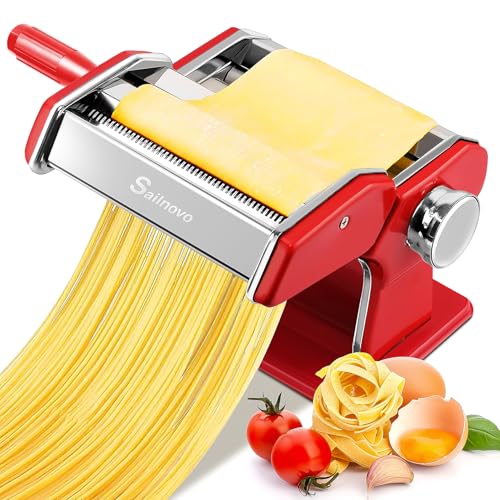
- Nine settings from 0.3 to 3 mm
- Two cutter widths for varied noodles
- Rust-resistant, lightweight roller design
Best For: Beginners seeking versatile manual pasta making
Best Automatic Pick

- Automatic mixing, kneading, and extrusion
- 500g flour capacity for about four servings
- Eight discs and dishwasher-safe parts
Best For: Beginners and families wanting hands-off pasta making
Best Manual Control
Nuvantee Adjustable Pasta Maker

- Seven thickness settings from 0.5mm to 3mm
- Includes 2mm and 6mm cutters
- Manual stainless-steel roller design
Best For: Hands-on cooks making pasta and dumpling wrappers
Best Compact Automatic
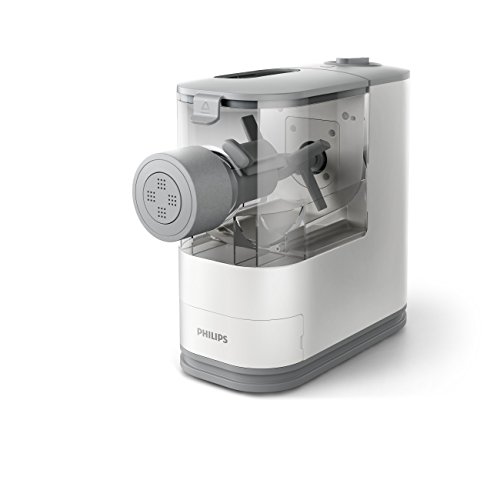
- Automatic kneading and extrusion
- Makes two to three servings in about 18 minutes
- Compact body with built-in disc storage
Best For: Small households making simple everyday pasta batches
Best Value Versatility
YASHE 3-in-1 Adjustable Pasta Maker
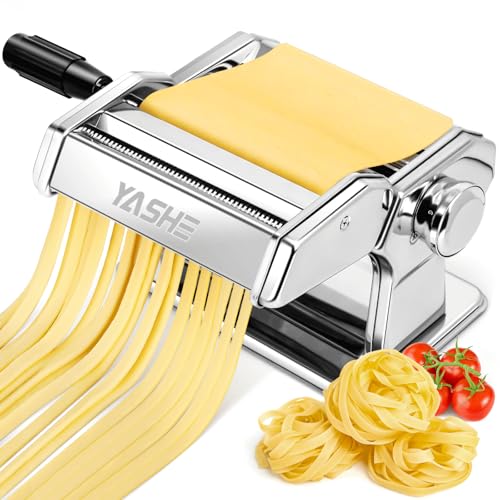
- Nine thickness settings from 0.3mm to 3mm
- 2mm and 6.5mm cutters for varied pasta shapes
- Includes clamp, cleaning brush, and cloth
Best For: Beginners seeking versatile manual pasta making
Best Premium Italian Build
Imperia Classic Line Pasta Maker

- Made in Italy with chromed steel construction
- Makes sheets, fettuccine, and tagliolini
- Compatible with motor and optional accessories
Best For: Pasta enthusiasts wanting an expandable Italian machine
Classic Italian Roller – Atlas150 Manual Pasta Maker
MARCATO Atlas150 Manual Pasta Maker Machine-LASAGNA, FETTUCCINE & TAGLIOLINI. Made in Italy
Check Price On AmazonFor home bakers seeking traditional pasta machines for home bakers, the MARCATO Atlas150 offers manual control, chrome-steel construction, and three built-in pasta formats. Its 10 settings let you adjust sheet thickness for different recipes.
Best For: Home cooks who want a durable manual machine for lasagna, fettuccine, and tagliolini.
Pros:
- Made in Italy with chrome- and nickel-plated steel construction
- 10 thickness settings, ranging from 0.8 to 4.8 millimeters
- Includes a crank handle and three pasta functions
Cons:
- Manual operation requires hand-cranking
- At 2.6 kg, it is not especially lightweight
The Atlas150 is a strong traditional choice when you value hands-on preparation and adjustable rolling over automated convenience.
Fast Family Pick – Philips 7000 Series Pasta Maker
Among pasta machines for home bakers, the Philips 7000 Series stands out for speed and capacity. Its 150W automatic system is designed to produce fresh pasta in under 10 minutes and can make up to eight portions in one batch.
Best For: Families and hosts who want automated, high-capacity pasta making with guided recipes.
Pros:
- Automatic operation with ProExtrude and Perfect Mixing technology
- Produces up to eight portions and includes eight discs
- Dishwasher-safe, non-stick parts simplify cleanup
- HomeID app offers recipe guidance, including vegan and gluten-free options
Cons:
- Its 20-pound weight makes it less portable
- More appliance-like than a compact manual roller
This is the most convenient option in the group for larger batches, especially if you prefer pressing a button to mixing and rolling dough by hand.
Stable Green Classic – Va Bene Manual Pasta Maker
The Va Bene is a practical choice among pasta machines for home bakers who enjoy hand-cranked preparation. Its stainless-steel body includes a clamp for countertop stability, while the adjustable roller and detachable cutter support several familiar pasta styles.
Best For: Traditionalists who want a stable manual machine for ribbons, lasagna sheets, and dumpling skins.
Pros:
- Nine adjustable settings for rolling dough to different thicknesses
- Detachable shaper cuts spaghetti and fettuccine
- Sturdy handle and countertop clamp support smooth operation
- Stainless-steel construction and components
Cons:
- Hand-wash-only care requires extra cleanup time
- Manual operation is slower than an automatic machine
With its stable clamp and versatile cutter, the Va Bene suits cooks who want a straightforward pasta-making setup and do not mind washing it by hand.
Budget-Friendly Starter – Sailnovo 3-in-1 Pasta Maker
For shoppers comparing pasta machines for home bakers, the Sailnovo 3-in-1 offers broad thickness control and a compact manual format. Its nine settings cover 0.3 to 3 millimeters, while two cutter widths handle spaghetti, fettuccine, lasagna, and more.
Best For: Beginners and families looking for an approachable manual machine with multiple pasta options.
Pros:
- Nine thickness settings from 0.3 to 3 millimeters
- Two cutter widths for different noodle styles
- Aluminum-alloy rollers are designed to resist rust and stay lightweight
- Detachable construction supports dry-brush or cloth cleaning
Cons:
- Manual hand-cranking requires more effort
- Cleaning guidance recommends wiping rather than washing with water
The Sailnovo is a flexible entry point for experimenting with homemade noodles, especially when adjustable thickness and multiple cutting widths matter more than automation.
Best Automatic Pick – VEVOR Electric Pasta Maker
For home bakers seeking pasta machines for home bakers with minimal hands-on work, the VEVOR Electric Pasta Maker combines automatic mixing, kneading, and extrusion. Its 500g flour capacity can produce about four servings in roughly 14 minutes, provided you follow the included flour-to-water ratios.
Best For: Beginners and families who want automatic pasta making with multiple shape options.
Pros:
- Four automatic modes simplify preparation.
- Eight pasta discs support a variety of shapes.
- Includes measuring cups, a spatula, cleaning brush, and dishwasher-safe parts.
- Two-way kneading and four-dimensional mixing aim to reproduce hand-kneaded texture.
Cons:
- Incorrect water amounts can cause dough to stick or fail to pass through.
- At 11 pounds, it is less lightweight than a compact manual machine.
The VEVOR is a strong convenience-focused option when speed, capacity, and automation matter more than manual control. Careful measuring is essential for reliable results.
Best Manual Control – Nuvantee Adjustable Pasta Maker
For home bakers comparing pasta machines for home bakers, the Nuvantee offers hands-on control through a manual roller and adjustable thickness settings. It rolls dough from 0.5mm to 3mm and includes cutters for two noodle widths.
Best For: Cooks who enjoy manual preparation and need adjustable sheets for pasta or dumpling wrappers.
Pros:
- Seven thickness settings accommodate delicate to thicker dough sheets.
- Two cutters make 2mm spaghetti and 6mm fettuccini.
- Supports pasta styles including spaghetti, fettuccini, lasagna, linguini, and dumpling wrappers.
- Stainless-steel construction provides a durable-feeling manual setup.
Cons:
- Manual operation requires more effort than an automatic machine.
- It does not extrude shaped pasta automatically.
The Nuvantee suits shoppers who want to control dough thickness and enjoy the process of rolling and cutting pasta by hand. Its two included cutters keep the format versatile but focused.
Best Compact Automatic – Philips Viva Pasta Maker
The Philips Viva is a practical choice for home bakers looking at pasta machines for home bakers and wanting a compact automatic appliance. It kneads and extrudes two to three servings in about 18 minutes and includes shaping discs for spaghetti, penne, and fettuccini.
Best For: Small households that want convenient countertop pasta making and simple everyday storage.
Pros:
- Automatically kneads and extrudes fresh pasta.
- Produces two to three servings in approximately 18 minutes.
- Includes three classic shaping discs for spaghetti, penne, and fettuccini.
- Compact design and built-in disc storage support countertop use.
Cons:
- Includes only three default shaping discs.
- Its stated capacity is smaller than the VEVOR’s 500g flour capacity.
The Philips Viva emphasizes routine convenience and space-conscious storage. It is a good fit for smaller batches, though shoppers wanting more shape variety may prefer a model with more discs.
Best Value Versatility – YASHE 3-in-1 Adjustable Pasta Maker
For home bakers comparing pasta machines for home bakers, the YASHE 3-in-1 offers broad everyday versatility at the manual-machine level. Its nine thickness settings, dual-width cutter, sturdy clamp, and included cleaning tools make it practical for homemade pasta, lasagna sheets, and dumpling skins.
Best For: Beginners and home cooks who want one manual machine for several pasta styles and straightforward cleanup.
Pros:
- Nine thickness settings range from 0.3mm to 3mm.
- Dual cutter widths produce 2mm spaghetti and 6.5mm fettuccine.
- Food-grade stainless steel and aluminum alloy construction includes a fixing clamp.
- Cleaning brush and cloth are included.
Cons:
- Manual operation requires turning the included hand crank.
- It is limited to the included roller and detachable cutter rather than an accessory ecosystem described in the notes.
The YASHE is a well-rounded choice when adjustable thickness and useful included extras matter more than motorized operation. Its wide adjustment range also gives beginners room to experiment with different dough styles.
Best Premium Italian Build – Imperia Classic Line Pasta Maker
Among pasta machines for home bakers, the Imperia Classic Line stands out for its Italian manufacture, chromed steel construction, and expansion options. It makes pasta sheets up to 150mm wide plus 6.5mm fettuccine and 2mm tagliolini, while its side slot supports a compatible electric motor.
Best For: Enthusiasts who want a durable Italian-made manual machine with future accessory and motor compatibility.
Pros:
- Made entirely in Italy with solid chromed steel construction.
- Produces sheets, fettuccine, and tagliolini with six height settings.
- Compatible with a Pasta Facile 4600 motor and optional pasta accessories.
- Includes a storage pouch, non-slip base, table support, crank, and cleaning brush.
Cons:
- Motor and expanded pasta accessories are not included.
- Its 3.66 kg weight may make it less convenient to move and store.
The Imperia is the strongest fit for buyers who value established Italian construction and a machine they can expand over time. The included support pieces and broad compatibility make it more than a basic starter roller.
Best Compact Storage – GOURMEX Stainless Steel Pasta Maker
For shoppers seeking pasta machines for home bakers that are easy to put away, this GOURMEX model combines a detachable handle and clamp with a stainless steel body. Seven thickness settings and a double cutter head support both narrow spaghetti and wider fettuccine.
Best For: Home cooks who want a compact manual pasta maker with adjustable thickness and two pasta widths.
Pros:
- Seven thickness settings accommodate different dough preferences.
- Double cutter head supports spaghetti and fettuccine.
- Detachable handle and clamp help minimize storage footprint.
- Heavy-duty stainless steel construction and stainless steel blades.
Cons:
- It is manual rather than motorized.
- The notes do not list a cleaning brush or expanded accessory compatibility.
The GOURMEX is a practical pick when counter and cabinet space are important. It keeps the core features—adjustable rolling, two cutter widths, and firm clamping—while using removable parts for easier storage.
How We Picked These Pasta Machines for Home Bakers
We focused on practical features that affect everyday use: construction, roller or extrusion performance, thickness control, included cutters or shaping discs, capacity, cleanup, and operating method. The selection includes established Italian manual makers, compact entry-level machines, and electric models for cooks who prioritize speed and convenience.
Because pasta-making preferences vary, no single machine is best for everyone. Manual models offer direct control and a traditional process, while automatic machines can handle more of the mixing and shaping work.
Quick Comparison
| Machine type | Best for | Main advantage | Trade-off |
|---|---|---|---|
| Manual roller | Traditional pasta making | Control and simple mechanics | Requires hand-cranking and dough preparation |
| Manual roller with multiple cutters | Variety on a budget | Several common pasta shapes | Accessories and build quality vary |
| Automatic extruder | Convenience and larger batches | Mixes, kneads, and shapes dough | More parts to clean and less shaping control |
Key Buying Factors for Pasta Machines for Home Bakers
Manual or Automatic Operation
Choose a manual roller if you enjoy working the dough and want to control sheet thickness closely. An automatic machine is more convenient for frequent cooking, family portions, or anyone who prefers a guided process.
Adjustability and Pasta Formats
Look for multiple thickness settings if you make delicate sheets, stuffed pasta, or thicker noodles. Check whether the included cutters or discs produce the shapes you actually plan to use. Extra attachments are useful only if they are easy to install and clean.
Capacity and Batch Size
For automatic models, compare flour capacity and stated serving capacity. A larger hopper can reduce the need for repeated batches, but compact machines may be easier to store. Manual machines are usually better suited to flexible batch sizes.
Build Quality and Cleanup
Metal rollers, a stable clamp, and smooth controls help a manual machine feel secure during use. For electric models, removable components and included cleaning tools make maintenance less frustrating. Never wash components in a way the manufacturer does not recommend, and allow dough residue to dry before brushing it away.
Who Should Buy Which Pasta Machines for Home Bakers?
For Traditionalists and Frequent Roller Users
Choose a well-built Italian manual machine such as the MARCATO Atlas150 or Imperia. These are strong choices when durability, precise rolling, and classic pasta-making technique matter most.
For Convenience-Focused Households
Consider a Philips or VEVOR automatic model if you want the machine to mix and shape dough with less manual work. These are especially useful for larger servings or busy weeknight cooking.
For Beginners and Occasional Cooks
A simpler 3-in-1 manual machine from brands such as Sailnovo, Nuvantee, YASHE, or Sur La Table can provide the essential roller-and-cutter experience without a complex setup.
For Limited Counter Space
Prioritize compact dimensions, secure storage for cutters, and a quick setup. A manual machine often takes less room when stored, while a compact electric model may be worthwhile if convenience outweighs cabinet space.
