The right pH meter can make home fermentation and canning more consistent, while helping you verify acidity before storing or serving food. The best options combine dependable readings with probes designed for thick, wet, or semi-solid foods.
We compared 10 pH meters for home kitchens across accuracy, probe design, calibration, temperature compensation, maintenance, and ease of use. The selections include budget-friendly testers and more specialized models for frequent food makers.
Best 10 Ph Meters for Home Kitchens Picks for 2026
Best Premium Pick

- ±0.01 pH accuracy and broad measurement range
- Auto calibration, ATC, and stable-reading indicator
- Replaceable probe with complete carry-case kit
Best For: Precise testing of water-based kitchen and household solutions
Best Smart Food Tester
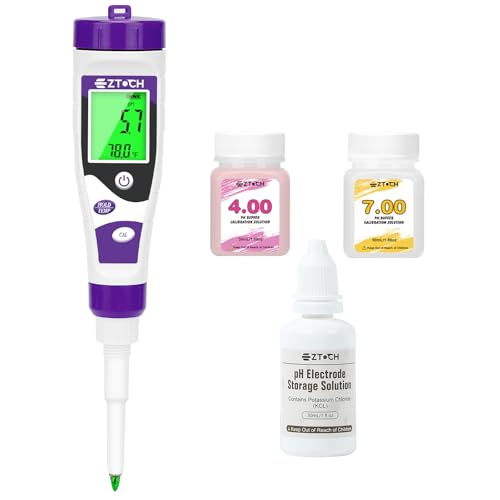
- Built for canning, sourdough, and fermentation tasks
- YINMIK app stores and reviews up to 1,000 readings
- Includes calibration and probe-protection solutions
Best For: Cooks who want food testing with saved digital records
Best Value Pick

- ±0.1 pH accuracy with waterproof construction
- Auto calibration, ATC, and stable-value recognition
- Long battery life and included carrying case
Best For: Routine pH checks on a budget
Best for Semi-Solid Foods

- Spear electrode reaches dough, meat, and cheese
- ±0.01 readings with 32–140°F ATC range
- Replaceable probe and included calibration kit
Best For: Fermentation and pH testing of semi-solid foods
Waterproof Precision Pick

- IP67 waterproof specification
- Flat-surface electrode
- LCD temperature display
Best For: Waterproof, reusable pH testing around the kitchen
Fermentation Specialist

- Includes 4.00 and 7.00 solutions
- Conical probe for dough
- Automatic calibration and ATC
Best For: Sourdough, fermentation, and semi-solid food testing
Versatile Food-Safety Tool

- Spear probe for solids and liquids
- Backlit color display
- Three calibration solutions included
Best For: Canning, fermentation, sauces, meat, and dairy testing
Best Fermentation Starter
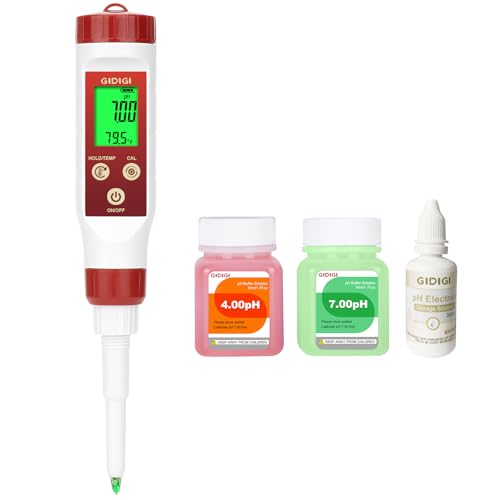
- Includes pH 4.00 and 7.00 calibration solutions
- Spear probe handles liquids and semi-solid foods
- Water-resistant design with a clear backlit display
Best For: Home fermentation and canning projects
Best for Soft Foods

- Stated ±0.01 accuracy across a 0.00–14.00 range
- Spear probe is designed for soft solid foods
- ATC and a moist KCL protective cover support consistent use
Best For: Testing sauces, cheeses, meats, doughs, and fermented foods
Best Smart Option

- Stores up to 1,000 readings in the mobile app
- Spear electrode tests liquids, semi-solids, and solids
- Includes ATC, temperature readings, and range alerts
Best For: Tracking repeated fermentation, canning, and brewing measurements
Best Premium Pick – Apera AI311 PH60
For shoppers comparing ph meters for home kitchens, the Apera AI311 is a premium choice when accuracy, calibration guidance, and long-term probe serviceability matter. It offers ±0.01 pH accuracy, automatic temperature compensation, and a replaceable glass probe for testing water-based kitchen and household solutions.
Best For: Home users who want a complete, highly accurate meter for beverages, fermentation-related liquids, and other water-based solutions.
Pros:
- ±0.01 pH accuracy with a broad -2.00 to 16.00 pH range.
- Automatic calibration recognizes five buffer solutions and includes calibration supplies.
- Replaceable probe, temperature display, backlit LCD, and stable-reading indicator.
- Complete kit includes storage solution, batteries, lanyard, and a rugged case.
Cons:
- Its glass probe is intended for regular water solutions rather than direct testing of thick foods.
- More features and accessories may be unnecessary for occasional basic testing.
The AI311 stands out for careful users who value measurement precision and maintenance options. Its included kit reduces setup friction, while the replaceable probe can extend the tester’s useful life.
Best Smart Food Tester – Bluetooth Food pH Meter
Among ph meters for home kitchens, this food-focused model is designed for cooks who test and document canning, fermentation, and baking results. Bluetooth connectivity links it to the YINMIK app, where readings can be saved and reviewed over time.
Best For: Home canners, sourdough bakers, and fermenters who want food-specific applications plus digital recordkeeping.
Pros:
- Designed for foods and processes including canning, sourdough, yogurt, kombucha, sauces, and pickles.
- Bluetooth app connection can automatically store up to 1,000 readings.
- Includes pH 4.00 and 7.00 calibration solutions and probe protective solution.
- Backlit display and automatic shutdown support convenient everyday use.
Cons:
- Bluetooth and app features add complexity compared with a basic handheld tester.
- The supplied notes do not specify the meter’s measurement accuracy.
This is a practical pick when a kitchen pH meter needs to do more than show a single reading. Its food-oriented use cases and history tracking are particularly useful for repeat batches and recipe development.
Best Value Pick – Apera PH20 Value Series
APERA INSTRUMENTS AI209 Value Series PH20 Waterproof pH Tester Kit, ±0.1 pH Accuracy
Check Price On AmazonIf you want straightforward ph meters for home kitchens without paying for extensive extras, the Apera PH20 offers a simpler value-oriented setup. It provides ±0.1 pH accuracy, automatic temperature compensation, waterproof construction, and automated calibration features.
Best For: Budget-conscious users who need a reusable tester for routine pH checks and prefer simple operation.
Pros:
- Waterproof body with automatic temperature compensation for 32–122°F conditions.
- Automatic buffer recognition and stable-value recognition help simplify measurements.
- Rugged carrying case includes pH 4 and 7 buffers and a lanyard.
- AAA batteries provide up to 2,000 hours of continuous operation.
Cons:
- ±0.1 pH accuracy is lower than the ±0.01 accuracy offered by the premium Apera model.
- The supplied notes do not identify a food-specific spear probe.
The PH20 is best viewed as a dependable general-purpose tester rather than a specialized food meter. Its long battery life and simple calibration make it appealing for routine checks where ultra-fine precision is not essential.
Best for Semi-Solid Foods – GIDIGI Spear Probe Meter
For ph meters for home kitchens that need to reach into dough, meat, or cheese, the GIDIGI food meter uses a replaceable spear electrode. Its ±0.01 pH reading specification, automatic temperature compensation, and food-oriented design make it suited to fermentation and canning projects.
Best For: Home fermenters and food makers testing semi-solid samples such as sourdough, fermented sausage, and cheese.
Pros:
- Spear-tip probe is designed to penetrate dough, meat, and cheese.
- ±0.01 pH readings with automatic temperature compensation from 32–140°F.
- Supports three-point calibration with included acidic and alkaline buffer options.
- Replaceable electrode, backlit display, waterproof body, carrying case, and calibration kit.
Cons:
- Food testing may require more cleaning and probe-care attention than liquid-only use.
- The stated reading time is about 30 seconds, so it is not an instant tester.
The spear design gives this meter a clear advantage for solid and semi-solid kitchen samples. It is a strong fit for users who regularly make fermented foods and want a replaceable probe instead of replacing the entire meter.
Waterproof Precision Pick – Extech PH100 ExStik II
For shoppers comparing ph meters for home kitchens, the Extech PH100 ExStik II stands out for its waterproof construction and flat-surface electrode. It also includes an LCD temperature display and a protective sensor cap for practical, reusable testing.
Best For: Home cooks who want a waterproof meter for flat surfaces and general pH testing.
Pros:
- IP67 waterproof specification for added durability.
- Flat-surface electrode supports testing on suitable surfaces.
- LCD display includes temperature information.
- Auto power-off activates after one hour.
Cons:
- Warranty coverage is listed as one year for the meter only.
- The supplied notes do not identify food-specific probe features.
The PH100 is a solid choice when waterproofing and a temperature display matter most. Buyers focused on sourdough, meat, or other semi-solid foods may prefer a food-specific spear probe instead.
Fermentation Specialist – YINMIK Food pH Tester
Among ph meters for home kitchens, the YINMIK Food pH Tester is tailored to fermentation and baking projects. It includes 4.00 and 7.00 calibration solutions, automatic calibration, ATC, and a conical open-junction electrode intended for semi-solid foods such as dough.
Best For: Home bakers and fermenters testing sourdough, cheese, sauces, jams, and similar foods.
Pros:
- Includes 4.00 and 7.00 calibration solutions.
- Automatic calibration is designed for straightforward setup.
- ATC helps account for changing sample temperatures.
- Conical open-junction electrode is designed for bread and dough.
Cons:
- Calibration is still required regularly for accurate readings.
- It uses three LR44 batteries.
With its food-oriented electrode and included calibration supplies, the YINMIK is the most specialized option here for sourdough and fermentation workflows. Its 0–14 pH range also supports a broad set of kitchen acidity checks.
Versatile Food-Safety Tool – GIDIGI Food pH Meter
For ph meters for home kitchens that cover fermentation and preservation, the GIDIGI Food pH Meter combines a spear-tip probe, ATC, and an illuminated color display. Its included 4.00, 7.00, and 10.01 calibration solutions support testing across acidic and alkaline foods.
Best For: Canning, fermentation, and cooks testing thick foods such as meat, sauces, dairy, and dough.
Pros:
- Spear tip probe penetrates solids, semi-solids, and emulsions.
- Includes 4.00, 7.00, and 10.01 calibration solutions.
- Backlit color display is easier to read in low light.
- ATC and a separate extended temperature sensor support stable readings.
Cons:
- At 1.17 pounds, it is heavier than the YINMIK tester.
- AAA batteries are required.
The GIDIGI offers the broadest food-testing versatility of these three meters, especially for users who move between liquids, thick mixtures, and solid foods. Its display and three-point solution kit add convenience for recurring kitchen testing.
Best Fermentation Starter – Spear-Tip Food pH Meter
If you are comparing ph meters for home kitchens, this model is a practical choice for fermentation and canning projects. It includes pH 4.00 and 7.00 calibration solutions plus electrode protection solution, so you can begin testing and calibrating out of the box. Its spear-shaped probe is designed for liquids and semi-solid foods.
Best For: Home cooks who regularly test fermented foods, sauces, dairy products, meat, bread, kombucha, or canned foods.
Pros:
- Includes calibration and electrode protection solutions.
- Spear probe works with semi-solid foods such as cheese, meat, and bread.
- Clear, well-lit display and a 0–14 pH measurement range.
- Water-resistant design is suited to wet kitchen environments.
Cons:
- Alkaline-food testing may require a separate pH 10.01 calibration solution.
- Its food-focused design may be more specialized than needed for occasional liquid testing.
The included calibration kit and detachable probe make this a well-rounded option for hands-on fermentation and canning. It is especially useful when you need to test directly inside soft or semi-solid foods rather than rely only on strips.
Best for Soft Foods – High-Accuracy Food pH Tester
For shoppers seeking ph meters for home kitchens with a soft-food focus, this tester combines a 0.00–14.00 range with stated ±0.01 accuracy. Its spear probe is made for inserting into foods such as cheese, meats, doughs, jams, and sauces, while automatic temperature compensation helps account for temperature changes during measurement.
Best For: Cooks and fermentation enthusiasts testing soft solids, sauces, canned foods, and temperature-variable samples.
Pros:
- Offers a 0.00–14.00 range and stated ±0.01 accuracy.
- Specialized spear probe suits soft solid foods and fermented products.
- Automatic temperature compensation supports measurements across temperature changes.
- Protective cap includes a moist KCL-soaked sponge to help keep the probe hydrated.
Cons:
- The notes specify calibration at pH 4.00 and 7.00, which may not cover every testing need.
- It uses four LR44 batteries, adding a small battery-maintenance requirement.
This is a focused food tester for users who want precise readings from soft or semi-solid samples. Probe care is supported by the moist protective cover, but routine calibration and storage remain important for consistent results.
Best Smart Option – App-Connected Food pH Meter
If you want ph meters for home kitchens with easier recordkeeping, this smart food pH meter connects to a phone through its app. It measures from 0.00 to 14.00 pH at 0.01 resolution, displays temperature, and can store up to 1,000 measurements with notes and range alerts.
Best For: Home cooks, food-safety enthusiasts, and makers who want to track repeated fermentation, canning, brewing, or recipe measurements digitally.
Pros:
- Phone connectivity supports storage of up to 1,000 measurement records.
- Users can add notes, share results, and set app ranges that trigger a red value.
- Spear-shaped electrode handles liquid, semi-solid, and solid foods.
- Includes backlit display, automatic temperature compensation, and temperature conversion.
Cons:
- Phone connectivity and app features may be unnecessary for one-off tests.
- The broader feature set can involve more setup than a basic standalone meter.
The app is the main differentiator, making this model useful when measurements need to be reviewed over time rather than simply read once. It is a strong fit for repeat kitchen projects, provided you value digital tracking and are comfortable using a connected device.
How We Picked the Best Ph Meters for Home Kitchens
We focused on features that matter in real kitchen use rather than laboratory specifications alone. Each pick was evaluated for stated pH accuracy, calibration controls, probe style, temperature compensation, display readability, waterproofing, and included accessories. We also considered whether the meter is suited to liquid foods, fermented mixtures, sauces, canned foods, meat, sourdough, or other thicker samples.
Replaceable probes, storage solutions, calibration packets, and clear operating instructions received extra consideration because they can significantly affect long-term value. A meter should be judged not only by its resolution, but also by how reliably it can be cleaned, calibrated, stored, and used between batches.
Quick Comparison
- Best for higher precision: Choose a model with approximately ±0.01 pH accuracy and a replaceable probe.
- Best for occasional testing: A basic waterproof tester with simple two- or three-point calibration may be sufficient.
- Best for thick foods: Look for a spear or food-specific probe designed for fermentation, meat, salsa, or sourdough.
- Best for changing temperatures: Select a meter with automatic temperature compensation, commonly labeled ATC.
- Best for convenience: A backlit LCD, automatic shutoff, and included calibration or storage solution can simplify routine testing.
Key Buying Factors for Ph Meters for Home Kitchens
Accuracy and Resolution
Resolution describes how finely a meter displays a reading; it does not guarantee that the reading is accurate. For food preservation and fermentation, prioritize a clearly stated accuracy rating and calibrate the instrument regularly. If safety depends on a target acidity, follow a tested recipe and approved process rather than relying on a meter alone.
Probe Design
Flat or general-purpose electrodes work well with liquids and smooth samples. Spear-style probes are better suited to semi-solid foods, meat, dough, salsa, and other dense mixtures. Check whether the probe is replaceable and whether the manufacturer provides cleaning and storage guidance.
Calibration and Maintenance
Calibration solution is essential. Confirm that the meter supports the buffer values you need and that replacement solutions are easy to obtain. Never store a standard pH electrode dry unless the manufacturer specifically permits it; proper storage solution helps preserve response time and accuracy.
Temperature and Usability
Temperature affects pH readings, so ATC is useful when samples are not at room temperature. It does not correct every food-related measurement issue, however. A readable display, waterproof housing, stable reading indicator, and easy controls are valuable when working with wet ingredients.
Who Should Buy Which Ph Meters for Home Kitchens?
Choose a premium tester if you ferment or preserve food frequently and want tighter accuracy, a durable build, and a replaceable probe. Choose a basic digital meter for occasional checks of liquids, brines, and simple ferments. Choose a food-specific spear-probe model if your projects regularly include sourdough, meat, salsa, hot sauce, or thick mixtures. Choose a model with ATC and a backlit display if you test varied batches or work in less-than-ideal lighting.
Whichever meter you select, calibrate it before important measurements, rinse the probe between samples, avoid cross-contamination, and use validated food-safety procedures alongside pH testing.
