The best water quality meters make it easier to monitor drinking water, hydroponic nutrients, aquariums, and household filtration. The right model depends on whether you need a simple TDS reading or broader testing with pH, turbidity, and app tracking.
We compared these 10 options by measurement range, accuracy, usability, portability, and the types of water-testing tasks they support.
Best 10 Water Quality Meters Picks for 2026
Best Everyday TDS Meter
HoneForest 3-in-1 Water Tester
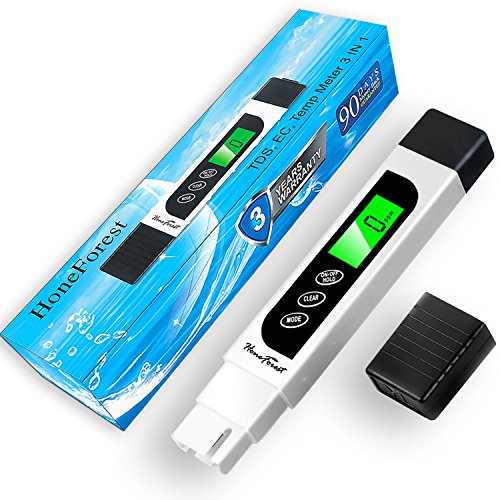
- Measures TDS, EC, and temperature
- Backlit display with auto-lock
- Includes a portable carrying case
Best For: Routine home, RO/DI, aquarium, and hydroponic checks
Best Compact TDS Meter
HM Digital TDS-3 Handheld Tester

- 0–9,990 ppm measurement range
- 1 ppm resolution with ±2% accuracy
- Includes hold function and carrying case
Best For: Focused TDS testing at home or in commercial settings
Best Advanced Water Quality Meter
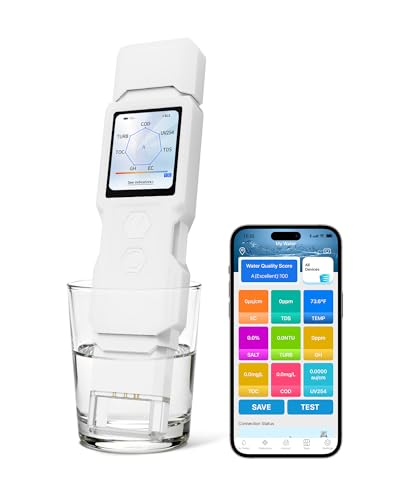
- Tests nine water-quality parameters
- Bluetooth app stores results and trends
- IP67-rated compact design
Best For: Comprehensive home, field, aquarium, and professional monitoring
Best pH and TDS Combo

- Includes pH and TDS/EC meters
- pH range of 0–14 with ±0.01 accuracy
- Comes with calibration buffers and case
Best For: Hydroponics, aquariums, pools, and home water testing
Most Comprehensive
DANOPLUS 6-in-1 Water Quality Tester

- Measures TOC, COD, EC, UV275, temperature, and TDS
- Color-coded four-level water-quality rating
- Portable and calibrates with distilled water
Best For: Broad home and outdoor water testing
Best for RO/DI Checks
4-in-1 TDS, EC & Temperature Meter

- Measures TDS, EC, and temperature
- 0–9990 ppm range for varied testing
- Backlit display with auto-lock and shutoff
Best For: RO/DI systems and everyday water checks
Best Everyday Value
Varify 4-in-1 TDS Water Tester

- Fast TDS, EC, and temperature readings
- One-button operation with backlit LCD
- Includes batteries and digital TDS guide
Best For: Simple household, aquarium, and RO checks
Best for Color-Coded Readability

- Measures TDS, EC, and temperature
- Large dual-color backlit display
- Includes battery and two-year warranty
Best For: Routine testing with easy-to-read alerts
Best Two-Pack Value
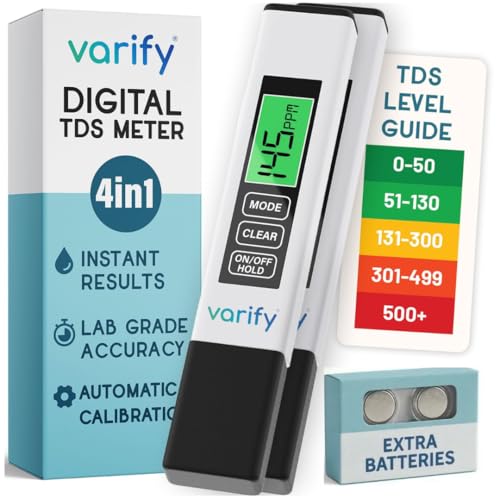
- Includes two digital water testers
- Three-second TDS, EC, and temperature readings
- Extra batteries and interpretation guide included
Best For: Households needing a spare or multiple testing locations
Best for Easy Reference

- Measures TDS, EC, and temperature
- Larger backlit screen with hold function
- Built-in TDS chart for quick reference
Best For: Multi-purpose home and hobby water checks
Best Everyday TDS Meter – HoneForest 3-in-1 Water Tester
For straightforward water quality meters testing, the HoneForest TDS Meter combines TDS, EC, and temperature readings in one compact device. Its backlit display, auto-lock function, and automatic shutoff make it practical for checking drinking water, RO/DI systems, aquariums, hydroponics, pools, and spas.
Best For: Home users who want a simple multipurpose meter for routine TDS and EC checks.
Pros:
- Measures TDS, EC, and temperature in one device.
- Backlit LCD and auto-lock function make readings easier to view and record.
- Automatic shutoff helps conserve battery power.
- Includes a portable leather case for storage and transport.
Cons:
- It does not provide pH, turbidity, hardness, or other broader water-quality measurements.
- The plastic construction may be less rugged than a professional field instrument.
The HoneForest is a convenient choice when your main priority is fast TDS, EC, and temperature monitoring across several household and hobby applications.
Best Compact TDS Meter – HM Digital TDS-3 Handheld Tester
The HM Digital TDS-3 is a focused option among water quality meters for measuring total dissolved solids from 0 to 9,990 ppm. It offers 1 ppm resolution, stated ±2% readout accuracy, a hold function, and a built-in digital thermometer in a handheld design.
Best For: Users who need a dedicated TDS meter for commercial or routine testing.
Pros:
- Provides a 0–9,990 ppm measurement range with 1 ppm resolution.
- Hold function makes readings convenient to record.
- Built-in digital thermometer adds useful temperature information.
- Carrying case includes a belt clip for portability.
Cons:
- It is primarily a TDS meter and does not offer pH, EC, turbidity, or hardness testing.
- The listed battery life is approximately three hours.
- Its narrow feature set may not suit users seeking an all-in-one water tester.
Choose the TDS-3 if you value a compact, purpose-built instrument and do not need the broader testing functions found in more advanced water quality meters.
Best Advanced Water Quality Meter – LKBird 9-in-1 Smart Tester
The LKBird 9-in-1 is one of the most comprehensive water quality meters in this roundup, combining turbidity, hardness, pH, TDS, EC, salinity, TOC, COD, and UV absorbance testing. Bluetooth connectivity and the Kactoily app add historical storage, trend charts, and data tagging for more organized monitoring.
Best For: Users who need broad testing coverage and app-based record keeping for household, aquarium, outdoor, or professional applications.
Pros:
- Combines nine water measurements in a single device.
- App connectivity supports saved results, trend charts, and data classification.
- Automatic temperature compensation supports readings from 0–60°C.
- IP67-rated design, backlit LCD, and compact 90-gram body suit field use.
Cons:
- Its extensive feature set may be more than needed for basic TDS checks.
- Using app-connected functions requires pairing with the dedicated app.
This is the strongest fit for shoppers who want a versatile tester with digital record keeping rather than a simple single-purpose meter.
Best pH and TDS Combo – VIVOSUN Digital Water Meter
The VIVOSUN Digital pH Meter and TDS/EC Meter is a practical two-piece option among water quality meters for hydroponics, aquariums, pools, and home testing. The pH meter covers 0–14, while the companion 3-in-1 meter measures TDS, EC, and temperature with automatic temperature compensation.
Best For: Growers and aquarium or pool owners who need both pH and dissolved-solids measurements.
Pros:
- Includes separate pH and TDS/EC meters for broader testing.
- pH meter offers a 0–14 range with stated ±0.01 accuracy.
- TDS/EC meter measures up to 9,990 ppm or µS/cm and includes temperature readings.
- Comes with calibration buffers, a protective case, and a lightweight handheld design.
Cons:
- It cannot test seawater.
- The TDS meter’s stated accuracy is ±2%, rather than the pH meter’s ±0.01 accuracy.
- It does not measure turbidity, hardness, salinity, or other advanced parameters.
The VIVOSUN set makes sense when pH and TDS/EC are the core measurements you need, especially for hydroponic and aquatic routines.
Most Comprehensive – DANOPLUS 6-in-1 Water Quality Tester
For shoppers comparing water quality meters, the DANOPLUS 6-in-1 tester stands out for tracking more than basic TDS. It measures TOC, COD, EC, UV275, temperature, and TDS, while its color-coded rating makes results easier to interpret at home or outdoors.
Best For: Home users, travelers, campers, and anyone wanting broader water-quality readings from one portable meter.
Pros:
- Measures six values, including TOC, COD, EC, UV275, temperature, and TDS.
- Color-coded four-level display helps simplify readings.
- Compact design includes two AAA batteries.
- Calibration can be completed with distilled or pure water without calibration powder.
Cons:
- Weekly calibration is recommended when used for experiments.
- Its broader set of readings may be more than needed for basic TDS checks.
This is the most feature-rich option in the group and a practical choice when you want portable testing for drinking, well, pond, or lake water. The color rating is useful for quick checks, while the additional measurements provide more context than a standard TDS meter.
Best for RO/DI Checks – 4-in-1 TDS, EC & Temperature Meter
This 4-in-1 option is one of the more straightforward water quality meters for checking TDS, EC, and temperature. Its backlit display, automatic value lock, and one-touch operation make it convenient for drinking water and RO/DI system checks.
Best For: Users monitoring drinking water, reverse-osmosis or DI filtration systems, hydroponic nutrients, pools, or spas.
Pros:
- Measures TDS, EC, and temperature in Celsius or Fahrenheit.
- Reads across a 0–9990 ppm range.
- Backlit screen and automatic value lock improve usability.
- Automatic shutoff after two minutes helps conserve battery power.
Cons:
- Uses two LR44 batteries rather than standard AAA batteries.
- The 40 ppm color prompt is a simple indicator, not a complete water-quality assessment.
Choose this meter if your priority is quick, repeatable TDS and EC checks rather than laboratory-style testing. Its broad application range and readable display make it a practical everyday tool for filtration and water-use monitoring.
Best Everyday Value – Varify 4-in-1 TDS Water Tester
The Varify 4-in-1 is a compact choice for shoppers who want fast water quality meters readings without a complicated setup. It measures TDS, EC, and temperature, and its one-button design suits routine testing around the home.
Best For: Everyday checks of drinking water, aquariums, hydroponic systems, and RO filtration.
Pros:
- Provides TDS, EC, and Celsius/Fahrenheit temperature readings.
- One-button operation delivers readings within seconds.
- Titanium alloy probe and auto-off function support convenient routine use.
- Includes batteries, a quick-start guide, and a downloadable digital TDS guide.
Cons:
- The supplied notes do not specify a measurement range.
- It focuses on common TDS, EC, and temperature measurements rather than expanded water-quality indicators.
This meter makes sense when simplicity and portability matter most. The included guide can help users interpret readings for common applications, while the compact design makes it easy to keep available for recurring checks.
Best for Color-Coded Readability – 4-in-1 TDS Meter
If you want water quality meters with quick readings and easy-to-see alerts, this 4-in-1 tester combines TDS, EC, and temperature measurements in one compact device. Its large dual-color backlit display is designed for checking drinking water, tap water, aquariums, hydroponics, RO systems, and pools.
Best For: Users who prioritize a large display, color-coded notifications, and extended battery life for frequent household or hobbyist testing.
Pros:
- Measures TDS, EC, and temperature in Celsius or Fahrenheit.
- Large dual-color backlit LCD supports day-or-night reading.
- Titanium probe, ABS housing, non-slip grips, and auto-shutoff add practical durability.
- Includes a CR2032 battery and a two-year warranty with customer support.
Cons:
- The product’s color thresholds are presented as a simple drinking-water alert, so they should not replace comprehensive water safety testing.
- Uses a coin-cell battery rather than standard replaceable batteries.
With its broad 0–9,999 ppm range and straightforward controls, this meter is a convenient all-purpose choice. The color display and long stated battery life are particularly useful for routine checks, while the compact 1.76-ounce design makes storage simple.
Best Two-Pack Value – Varify 4-in-1 TDS Testers
Among water quality meters, the Varify two-pack stands out for households that want a spare or need to keep testers in different locations. Each compact meter measures TDS, EC, and temperature, with digital results designed to appear in about three seconds.
Best For: Families, multi-location testing, or buyers who want two meters plus extra batteries and an interpretation guide in one kit.
Pros:
- Two 4-in-1 meters measure TDS, EC, and temperature in Celsius or Fahrenheit.
- Provides stated three-second readings with one-button operation and a backlit display.
- Professional titanium sensors and auto-off support convenient repeat testing.
- Includes extra batteries, a quick-start chart, downloadable guide, and satisfaction guarantee.
Cons:
- The supplied notes do not specify the measurement range or warranty duration.
- A two-pack may be more than needed for buyers who only want a single tester.
This is a practical package for keeping one tester at home and another in an RV, office, or workshop. The included guidance may also help first-time users interpret readings without purchasing additional accessories.
Best for Easy Reference – MEXYBE 4-in-1 Water Tester
For shoppers comparing water quality meters for varied home and hobby uses, the MEXYBE 4-in-1 tester offers TDS, EC, and temperature readings with a 0–9,999 ppm range. A larger backlit LCD, hold function, auto-lock, and built-in TDS reference chart are intended to simplify regular testing.
Best For: Homeowners and hobbyists checking drinking water, RO/DI systems, aquariums, hydroponics, pools, spas, wells, and tap water.
Pros:
- Combines TDS, EC, and Celsius/Fahrenheit temperature measurement.
- Factory calibrated and equipped with hold, auto-lock, and two-minute auto-off functions.
- 25% larger backlit LCD and TDS chart support easier reading and interpretation.
- Premium titanium alloy probe and live customer support are included features.
Cons:
- The supplied notes do not provide battery type, included accessories, or a stated warranty term.
- A TDS meter can help monitor dissolved solids and equipment performance but does not identify every contaminant.
MEXYBE’s strongest advantage is usability: the larger screen, hold function, and printed chart reduce friction during repeated checks. Its wide list of suggested applications also makes it a flexible option for households managing several water systems or hobbies.
How We Picked the Best Water Quality Meters
We focused on the measurements most useful for everyday testing: total dissolved solids (TDS), electrical conductivity (EC), temperature, and pH where available. We also considered measurement range, stated resolution, calibration features, display readability, portability, included accessories, and whether the meter supports app-based monitoring.
A TDS meter can help identify changes in dissolved mineral content, but it does not identify individual contaminants or confirm that water is safe to drink. Products with expanded measurements can provide more context, while still requiring proper calibration and interpretation.
Quick Comparison
- Best for basic TDS checks: Choose a compact 4-in-1 or TDS-only meter for quick readings at home.
- Best for hydroponics: Look for pH, EC, TDS, and temperature measurements, with simple calibration and a readable display.
- Best for broader testing: A smart multi-function tester may measure turbidity, salinity, GH, or other indicators and connect to a mobile app.
- Best for multiple locations: A two-pack or inexpensive handheld design is useful for kitchens, gardens, aquariums, or travel.
Key Buying Factors for Water Quality Meters
Measurements and Range
Confirm that the meter measures what you actually need. TDS and EC are useful for comparing water sources and monitoring nutrient solutions, while pH is especially important for hydroponics and aquariums. Check the stated ppm range before buying, particularly if you test concentrated solutions.
Accuracy and Calibration
Look for a clearly stated accuracy specification, resolution, and calibration process. Calibration solutions may be required for reliable results. Rinse the probe between samples, avoid touching the sensing area, and follow the manufacturer’s storage instructions.
Display, Controls, and Portability
An automatic temperature-compensation feature can make readings easier to compare. A backlit display, stable reading indicator, protective cap, and included carrying case are practical advantages for frequent use.
App Features and Advanced Sensors
App connectivity can help record trends, but it should not replace sound testing practices. Treat claims involving TOC, COD, UV254, or similar advanced indicators carefully, and check whether the device provides clear instructions and meaningful measurement specifications.
Who Should Buy Which Water Quality Meters?
Homeowners and renters will usually be well served by a simple TDS, EC, and temperature meter for checking changes after filtration or comparing water sources. Hydroponic growers should prioritize a dependable pH/EC/TDS combination with calibration support. Aquarium keepers should choose a model that covers the parameters relevant to their specific tank rather than relying on TDS alone. Data-focused users may prefer a connected multi-function tester for logging readings and monitoring trends. For occasional checks across several locations, a low-cost handheld model or two-pack offers convenient coverage without requiring a larger testing kit.
