Controlling salt is easier when you can measure it instead of relying on taste alone. The best salinity meters for home kitchens help cooks check soups, sauces, pickles, broths, and brines quickly and consistently.
We’ve compared these 10 digital testers by measurement range, readability, probe design, temperature features, durability, and everyday kitchen practicality. Use the guide below to narrow the choices based on how and where you cook.
Best 10 Salinity Meters for Home Kitchens Picks for 2026
Best Kitchen-Focused Pick

- 0–10% salt range with 0.01% resolution at lower levels
- Measures salt, sodium, and temperature
- Hot-liquid-safe probe with large display
Best For: Everyday soup, brine, noodle, and stew testing
Best for Brines and Pickling
LOHAND LH-SA10 Digital Salinity Meter

- 0–10% and 0–100 ppt measurement ranges
- Platinum-plated, corrosion-resistant electrode
- Vibrates and locks the reading
Best For: Brine, pickle, sauce, and seafood liquids
Best Accessory Kit
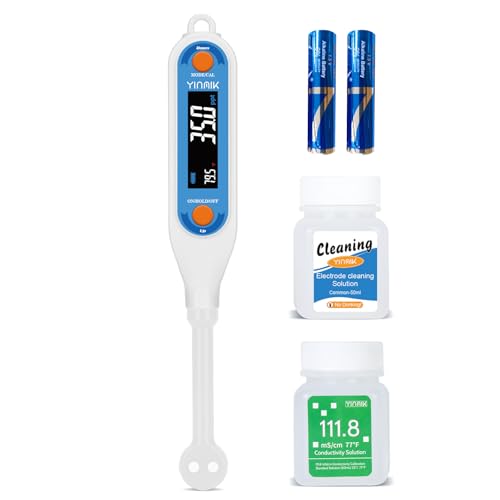
- PPT, %, and SG measurement modes
- Automatic temperature compensation and thermometer function
- Includes calibration and electrode-cleaning solutions
Best For: Versatile food, fermentation, and saltwater testing
Best Simple Compact Option
Doritekku EN901 Salinity Meter

- Measures 0.3–1.5% salt concentration
- Six-stage seasoning consistency indicator
- Compact push-button design with auto shutoff
Best For: Basic low-salinity seasoning checks
Best LED Indicator Pick
Professional LED Food Salinity Tester

- Conductivity-based testing for liquid foods
- Seven LEDs show salinity and power status
- Compact 2.4-ounce pen-style design
Best For: Home cooks who want portable LED-guided testing
Best Digital Display Option
Digital Electronic Food Salinity Tester

- Results in approximately three seconds
- Clear display with automatic detection
- Stated 0.01%–10.0% measurement range
Best For: Cooks testing brines, sauces, marinades, and water
Best Lightweight Pen
DOITOOL Handheld Digital Salt Meter

- Small, lightweight pen-style design
- Suitable for brine, soups, and marinades
- Simple operation for kitchen testing
Best For: Cooks wanting portable testing across prepared foods
Compact Kitchen Salinity Pen

- Temperature-compensation function
- LED salt-level indicators
- Compact 155 mm pen design
Best For: Routine salt checks in soups, stews, and sauces
Multifunction Fermentation Salinometer
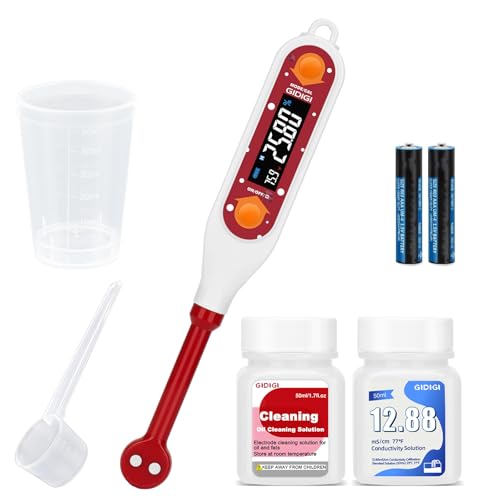
- 0.01%-26.00% salinity range
- Measures EC, TDS, temperature, and specific gravity
- Includes calibration and cleaning solutions
Best For: Fermentation, brines, sauces, and multifunction testing
LED Kitchen Salt Detector

- Bright, easy-to-read LED display
- Copper testing top
- Portable handheld design
Best For: Checking salt levels in soups, broths, and sauces
Best Kitchen-Focused Pick – Digital Food Salinity Tester
For home cooks comparing salinity meters for home kitchens, this model is built around everyday foods such as soups, noodles, dumplings, brines, and stews. It combines a 0–10% salt range with temperature measurement, a three-second response, and simple one-button operation.
Best For: Home cooks who want quick salt and temperature readings directly from hot food or brine.
Pros:
- Measures 0–10% salt and displays salt, sodium, and temperature readings.
- Food-grade 304 stainless-steel probe is rated for liquids up to 99°C.
- Large display, audio and LED alerts, IP66 housing, and fold-out hanging hook support kitchen use.
- Includes AAA batteries and a silicone test cup.
Cons:
- Accuracy varies by concentration range, with wider tolerances at higher salinity.
- The display and battery compartment should be kept dry; only the probe should be rinsed.
This is a particularly practical choice for routine cooking because it requires no calibration and is designed for fast readings from pot to plate. Its dual salt-and-sodium readout is useful when monitoring either standard seasoning or sodium intake.
Best for Brines and Pickling – LOHAND LH-SA10 Digital Salinity Meter
The LOHAND LH-SA10 is a focused option among salinity meters for home kitchens, especially when you regularly prepare cooking brine, pickles, sauces, or other salty liquids. Its 0–10% and 0–100 ppt ranges cover both lower- and higher-salinity applications.
Best For: Home cooks and food makers testing brine, pickling liquid, sauces, and seafood preparations.
Pros:
- Platinum-plated electrode is designed for corrosion resistance and easier cleaning.
- Measures across 0–10% and 0–100 ppt ranges.
- Vibration and value-lock feature helps signal a completed reading in noisy kitchens.
- Compact design includes batteries, cleaning cloth, cover opener, and manual.
Cons:
- The supplied notes do not specify a temperature-measurement function.
- Its food applications are described primarily around liquids rather than dry or solid foods.
Choose this model if your main goal is repeatable liquid-salinity checks and you value an electrode intended to resist buildup. The vibration alert is a useful touch when you cannot watch the display continuously.
Best Accessory Kit – YINMIK Food Salt Meter
For shoppers seeking versatile salinity meters for home kitchens, the YINMIK YK-SA01 stands out with PPT, percentage, and specific-gravity modes. It also works as a food thermometer and includes calibration and cleaning supplies for ongoing electrode care.
Best For: Home users who want multiple salinity formats, temperature compensation, and a complete maintenance kit.
Pros:
- Offers PPT, %, and SG measurement modes.
- Includes automatic temperature compensation for samples at varying temperatures.
- Color backlit display supports reading in dim kitchens, and the unit also functions as a thermometer.
- Package includes AAA batteries, calibration solution, cleaning solution, sample spoon, and hanging rope.
Cons:
- Its 13.4-ounce weight is higher than the compact alternatives listed here.
- Calibration and cleaning supplies add useful maintenance steps rather than providing a no-maintenance workflow.
- The supplied notes do not state a salt-concentration accuracy specification.
This is the most accessory-rich choice in the group. It makes sense for users who test food, fermented liquids, or saltwater and want calibration materials included rather than purchased separately.
Best Simple Compact Option – Doritekku EN901 Salinity Meter
The Doritekku EN901 is a straightforward choice for shoppers comparing salinity meters for home kitchens and wanting a small, push-button device. It measures salt concentration in the 0.3–1.5% range in 0.1% increments and indicates seasoning consistency across six stages.
Best For: Simple seasoning checks for lower-salinity dishes within the meter’s stated range.
Pros:
- Compact, lightweight design measures at the push of a button.
- Provides 0.1% salt-concentration readings from 0.3% to 1.5%.
- Six-stage consistency indicator offers an additional seasoning reference.
- Automatic power-off helps prevent leaving the unit switched on.
Cons:
- Its stated range is narrower than the other meters, limiting use for concentrated brines and pickles.
- Readings are available in 0.1% increments rather than finer resolution.
- The supplied notes do not mention temperature measurement, calibration supplies, or a splash-resistance rating.
The EN901 is best viewed as a basic seasoning aid rather than an all-purpose salinity instrument. Its small size and uncomplicated controls are appealing if your recipes generally fall within the 0.3–1.5% range.
Best LED Indicator Pick – Professional LED Food Salinity Tester
For shoppers comparing salinity meters for home kitchens, this compact pen-style tester uses conductivity testing to estimate salt concentration in liquid foods. Its probe is placed about 2 cm above the liquid surface, while seven LED indicators communicate the reading and power status.
Best For: Home cooks who prefer a compact salinity tester with simple LED readouts for liquid foods.
Pros:
- Uses a conductivity test method for liquid-food salinity measurement.
- Seven LED indicators show salt concentration and power status.
- Compact, lightweight design weighs 2.4 ounces and is portable.
- Designed for straightforward probe-based operation.
Cons:
- LED indicators may offer less detailed information than a numerical display.
- The supplied notes focus on liquid foods rather than solid-food testing.
This is a practical choice when portability and quick visual indicators matter most. Buyers wanting a more detailed digital reading may prefer a display-based model.
Best Digital Display Option – Digital Electronic Food Salinity Tester
This digital salinity meter is aimed at home and kitchen use, with a clear display, automatic detection, and replaceable batteries. It uses food-grade sensors and is designed to provide a concentration reading in about three seconds for applications such as brines, sauces, marinades, and water.
Best For: Kitchen enthusiasts who want quick digital testing across common liquid cooking applications.
Pros:
- Food-grade sensors are designed for salinity measurements.
- Provides results in approximately three seconds.
- Clear display and automatic detection support user-friendly operation.
- Rated for temperatures up to 98°C and a stated range of 0.01% to 10.0%.
Cons:
- The supplied range is specified without temperature compensation.
- The notes do not provide details about calibration or water resistance.
With its quick readout and broad stated liquid-use range, this model is a strong fit for cooks who value speed and a digital interface. Consider the lack of supplied calibration details when comparing alternatives.
Best Lightweight Pen – DOITOOL Handheld Digital Salt Meter
For those seeking salinity meters for home kitchens, the DOITOOL handheld digital salt meter emphasizes portability and simple operation. Its pen-style format is intended for checking salt concentration in brine, marinated vegetables, fermented bean curd, vegetable soups, and other foods.
Best For: Home cooks who need a lightweight tester for several prepared-food and brine applications.
Pros:
- Supports testing across brine, soups, marinades, and fermented foods.
- Pen-style construction is small, lightweight, and easy to store.
- Designed for simple, convenient operation.
- Promotes precise salt-concentration measurement for diet-conscious cooking.
Cons:
- The supplied notes do not specify a measurement range or reading time.
- No display, calibration, or temperature details are provided in the notes.
This model suits shoppers who prioritize a very portable design and varied food-use applications. Because key technical specifications are not supplied, compare its available documentation with more fully specified meters before buying.
Compact Kitchen Salinity Pen – Electronic Food Salt Tester
For shoppers comparing salinity meters for home kitchens, this compact electronic pen is designed for quick salt-concentration checks in everyday liquid foods. Its temperature-compensation function, LED level indicators, and portable size make it a straightforward option for soups, stews, and sauces.
Best For: Home cooks and chefs who want a simple salinity tester for routine food-seasoning checks.
Pros:
- Measures salt concentration in soups, stews, sauces, and similar foods.
- Includes temperature compensation for more consistent readings.
- Compact 155 mm pen-style design is easy to carry and operate.
- LED indicators make salt-level readings easy to view.
Cons:
- The supplied notes do not specify a numerical measurement range.
- Only the tester is listed in the package contents, with no calibration accessories mentioned.
This is a practical, no-frills choice when portability and basic food salinity monitoring matter more than multifunction water testing. Its unspecified range may be a consideration for shoppers needing precise fermentation or aquarium measurements.
Multifunction Fermentation Salinometer – Digital Food Salt Tester
This multifunction model stands out among salinity meters for home kitchens because it combines food salt testing with EC, TDS, temperature, and seawater-specific-gravity readings. Its 0.01%-26.00% salinity range and included calibration and cleaning solutions make it suitable for detailed brine, sauce, and fermentation work.
Best For: Home cooks and fermenters who need broad measurement capabilities for brines, kimchi, pickles, sauces, and related liquids.
Pros:
- Measures salinity from 0.01% to 26.00% using conductivity technology.
- Also measures EC, TDS, temperature, and seawater specific gravity.
- Automatic temperature compensation supports more consistent results.
- Includes calibration solution, cleaning solution, and measuring cup.
Cons:
- For hot soups, oil should be skimmed and samples tested below 176°F.
- Its multiple functions may be more than needed for simple seasoning checks.
- Readings take less than 30 seconds rather than being instantaneous.
With its broad range and accessories, this is the most versatile option in the group. It is especially compelling for households that ferment foods or also maintain marine aquariums, while simpler kitchens may prefer a less feature-heavy tester.
LED Kitchen Salt Detector – NS01 Food Salinity Tester
For shoppers seeking salinity meters for home kitchens with a simple handheld format, the NS01 focuses on checking salt concentration in soups, broths, and sauces. Its bright LED display, copper testing top, and ergonomic body are intended to make routine food-preparation measurements convenient.
Best For: Home cooks and food-preparation users who want an easy-to-read tester for common liquid dishes.
Pros:
- Designed to measure salt content in food.
- Bright LED display is intended to remain readable in low light.
- Useful for soups, broths, sauces, baking, and professional preparation.
- Handheld design is portable and comfortable to operate.
Cons:
- The supplied notes do not provide a numerical measurement range.
- No temperature-compensation feature or calibration accessories are listed.
- The listed color information may vary between red and green.
This tester is a reasonable fit for straightforward kitchen use where clear display visibility and portability are priorities. Buyers who need documented accuracy ranges, temperature compensation, or fermentation-specific controls may want a more fully specified meter.
How We Picked the Best Salinity Meters for Home Kitchens
We focused on the features that matter most during real kitchen use: useful salt-concentration ranges, readable displays, straightforward operation, probe materials, response time, and cleaning convenience. Models with temperature measurement, higher resolution, waterproof protection, or a specialized electrode received extra consideration when those features could improve repeatability.
Because product specifications and included accessories can vary, check the listing carefully for calibration instructions, batteries, storage caps, and stated measurement units before buying. A meter designed for liquid food is generally more useful at home than a device intended only for laboratory or aquarium applications.
Quick Comparison
| Best For | Look For | Why It Matters |
|---|---|---|
| Everyday soups and sauces | Simple digital display and fast readings | Easy checks while cooking |
| Brines and heavily salted foods | Up to 10% or 100 ppt range | Handles concentrated solutions |
| Temperature-sensitive testing | Built-in thermometer | Helps interpret readings more consistently |
| Frequent kitchen use | Durable probe and water-resistant body | Better suited to spills and repeated cleaning |
Key Buying Factors for Salinity Meters for Home Kitchens
Measurement Range and Resolution
Choose a range that matches your recipes. A 0–10% scale covers many soups, sauces, and brines, while a 100-ppt rating may be useful for users who prefer parts-per-thousand measurements. Resolution tells you how finely the device displays changes; finer resolution can help when adjusting a recipe gradually, but it does not automatically guarantee laboratory-level accuracy.
Probe Design and Cleaning
Look for stainless-steel or otherwise food-suitable probes that can be rinsed thoroughly. Test liquid should contact the sensing area without food particles, foam, or sediment interfering with the reading. Never immerse the entire meter unless the manufacturer specifically gives it an appropriate water-resistance rating.
Calibration and Temperature
Calibration is essential for dependable results. Confirm whether the meter supports user calibration and whether calibration solution is included or must be purchased separately. A built-in thermometer can be helpful because salinity readings may vary with temperature, especially when testing hot cooking liquids.
Display and Handling
A clear LED or LCD screen, automatic shutoff, compact shape, and quick response make a tester more convenient during meal preparation. If you work around wet counters, a sealed or IP-rated body is preferable, but still follow the cleaning and immersion limits in the manual.
Who Should Buy Which Salinity Meters for Home Kitchens?
Choose a basic digital salt tester if you mainly check soups, sauces, and gravies and want a quick yes-or-no adjustment tool. Pick a wider-range model if you regularly prepare pickles, curing solutions, or concentrated brines. A thermometer-equipped tester is the better fit for cooks who want temperature context alongside salinity readings, while a model with a durable probe and water-resistant body suits frequent use.
For occasional cooks, prioritize simple controls and low maintenance. For serious home fermenters or recipe developers, prioritize calibration support, finer resolution, repeatable readings, and clearly documented specifications over the lowest price.
