A dough rolling machine can make repeated rolling more consistent, whether you are preparing pastry layers, pizza bases, or pasta sheets. The right choice depends on more than its widest setting: you also need enough counter space, a workable thickness range, and surfaces you can clean easily.
These 10 picks focus on manual, mostly foldable sheeters, alongside a hand-crank roller. Use the guide below to match their designs to your dough and workflow.
Best 10 Dough Rolling Machine Picks for 2026
Most Thickness Options
15.5-Inch Folding Dough Sheeter

- 55 settings across a stated 0–27 mm range
- Folding manual design
- Stainless steel dough-contact rollers
Best For: Bakers seeking fine thickness control in a foldaway sheeter
Best Board Options
Folding Sheeter With Two Rolling Boards

- Rough and smooth PE boards included
- Stated 0–17.5 mm thickness range
- Non-slip base
Best For: Bakers who want two rolling surfaces
Best Compact Storage
40.6-Inch Foldable Manual Sheeter

- Folds to 18.5 x 11.8 x 4.7 inches
- Stated 0–25 mm adjustment
- Stainless steel dough-contact surfaces
Best For: Larger rolling tasks with limited storage space
Best Wide-Board Pick
15.5-Inch Countertop Dough Sheeter

- Extra-wide dough board
- Stainless steel rollers and frame
- Non-slip feet
Best For: Rolling wider dough sheets on a dedicated counter
Widest Thickness Range
40.5-Inch Foldable Stainless Steel Sheeter

- 2–30 mm thickness adjustment
- Foldable manual-crank design
- Food-grade 304 stainless steel
Best For: Home bakers making pastries and pizza dough
Most Adjustment Settings
A400 Foldable Manual Dough Sheeter

- 56 thickness settings
- Stated 0–25 mm adjustment range
- Folds and runs without electricity
Best For: Bakers seeking fine control for pasta and pastry sheets
Stable Tabletop Pick
40.5-Inch Folding Pastry Sheeter

- Foldable stainless steel frame
- 360° rotating manual handle
- Thickness maximum differs across supplied specs
Best For: Tabletop rolling for pizza, pastry, and cookie dough
Wide Pizza Roller
DKN Extra Large Hand-Crank Dough Roller
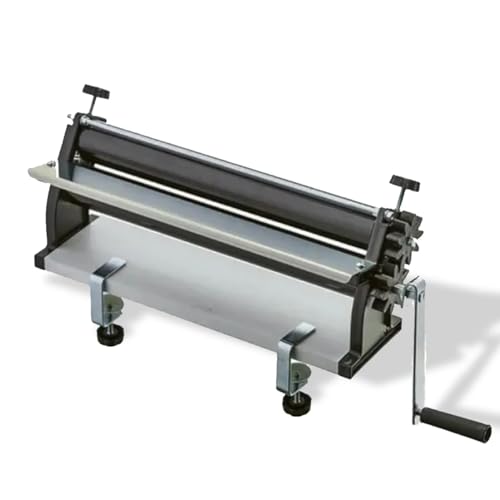
- Wide feeder for larger pizza bases
- Adjusts from 0.12 to 0.25 inches
- Includes table clamps and hand crank
Best For: Manual pizza rolling with occasional pasta or fondant
Fine-Adjustment Sheeter
Foldable 12-Inch Manual Dough Sheeter

- 55 stated thickness settings
- Foldable, hand-cranked design
- 25.9 pounds; verify listed thickness range
Best For: Varied pastry recipes needing fine thickness control
Compact Pastry Sheeter
Folding 12-Inch Stainless Steel Roller

- Adjustable from 0 to 17.5 mm
- Folding 12-inch manual design
- Includes two sheeter boards
Best For: Countertop croissant, puff pastry, and pizza prep
Most Thickness Options – 15.5-Inch Folding Dough Sheeter
This manual dough rolling machine offers 55 thickness settings across a stated 0–27 mm range, making it a flexible choice for bakers who switch between thin pastry and thicker dough. Its folding design helps reclaim counter space after use.
Best For: Home bakers or small kitchens that want a wide adjustment range without an electric machine.
Pros:
- 55 stated thickness settings for varied dough projects.
- Folds for storage when counter space is limited.
- Food-grade stainless steel dough-contact rollers.
Cons:
- Manual cranking requires hands-on effort.
- Includes one rolling surface rather than multiple boards.
The adjustment range is the main reason to consider this model; choose it if flexibility and foldaway storage matter more than powered operation.
Best Board Options – Folding Sheeter With Two Rolling Boards
This manual dough rolling machine stands out for its two included 27.5 x 12-inch PE rolling boards: one rough and one smooth. It also offers adjustable thickness from 0–17.5 mm for projects such as pizza, pasta, and laminated pastry.
Best For: Bakers who want a choice of rolling-board surfaces for different dough tasks.
Pros:
- Includes both rough and smooth rolling boards.
- Adjustable across a stated 0–17.5 mm thickness range.
- Non-slip base helps keep the machine steady during use.
Cons:
- Manual operation takes time and effort.
- At a stated 22 pounds, it may be cumbersome to move frequently.
The extra board makes this a practical pick if surface choice matters to your workflow. Check that the board dimensions fit your workspace before buying.
Best Compact Storage – 40.6-Inch Foldable Manual Sheeter
This dough rolling machine pairs a stated 40.6-inch operating length with a fold-down design. Its listed dimensions shrink from 40.6 x 22.8 x 15.7 inches in use to 18.5 x 11.8 x 4.7 inches for storage.
Best For: Bakers who need a sizable manual work area but limited storage space.
Pros:
- Folds down to a much smaller stated storage footprint.
- 0–25 mm thickness range with stated 0.5 mm increments.
- Stainless steel dough-contact surfaces and an ergonomic rotating handle.
Cons:
- Requires manual cranking rather than electric operation.
- At 24.5 pounds, it is not especially lightweight.
Its clearest advantage is the contrast between working size and stored size. Measure your counter and storage spot against the listed dimensions before choosing it.
Best Wide-Board Pick – 15.5-Inch Countertop Dough Sheeter
This 15.5-inch manual dough rolling machine is aimed at bakers who want an extra-wide board for rolling larger batches. Its adjustable control knob, rotating handle, and non-slip feet support everyday countertop use.
Best For: Home bakers, cafés, or small shops that regularly roll wider sheets of dough.
Pros:
- Extra-wide dough board for larger rolling tasks.
- Food-safe stainless steel rollers and frame.
- Non-slip feet add stability during operation.
Cons:
- Manual operation still requires hands-on work.
- Its listed 40.5 x 22.8-inch footprint and 35-pound weight demand substantial counter space.
This model makes the most sense when board width is a priority. Despite its folding design, check the listed working dimensions and weight before committing counter space.
Widest Thickness Range – 40.5-Inch Foldable Stainless Steel Sheeter
This manual dough rolling machine offers a 2–30 mm thickness range for everything from thin pastry sheets to thicker pizza crusts. Its foldable design makes it easier to store between baking sessions.
Best For: Home bakers who want a broad thickness range for pastries and pizza dough.
Pros:
- Adjusts from 2 to 30 mm.
- Folds for storage.
- Food-grade 304 stainless steel surfaces are designed for easy cleaning.
Cons:
- Manual cranking is required.
- At 22.4 pounds, it may be cumbersome to move frequently.
Choose this model if thickness flexibility matters more than having a powered roller; check that you have room to unfold it before buying.
This dough rolling machine stands out for its 56 thickness settings across a 0–25 mm adjustment range. The hand-crank design requires no electricity, and the frame folds away for storage.
Best For: Bakers who want fine thickness control for pasta, laminated pastries, and pizza dough.
Pros:
- 56 settings provide incremental thickness control.
- Reinforced alloy frame and food-grade stainless steel surfaces.
- Foldable design helps with storage.
Cons:
- Requires manual cranking.
- Maximum stated thickness is 25 mm, less than a 30 mm option.
Its many settings make it a practical pick when repeatable thickness adjustments are a priority, provided you prefer a manual machine.
This tabletop dough rolling machine combines a foldable stainless steel frame with a rotating hand crank and a polished roller surface. Its listed uses include pizza dough, pastries, bread, and cookies.
Best For: Bakers who want a foldable tabletop roller for varied dough projects.
Pros:
- Tabletop design is intended to stay steady during rolling.
- 360° rotating handle supports manual control.
- Folds for storage.
Cons:
- Requires hand-crank operation.
- Thickness specifications conflict: the bullets state 2–25 mm, while the details list a 30 mm maximum.
This is worth considering for its tabletop setup and versatile applications, but confirm the actual maximum thickness if that specification matters to you.
Wide Pizza Roller – DKN Extra Large Hand-Crank Dough Roller
If you want a dough rolling machine for larger pizza bases without using a rolling pin, the DKN has a wide feeder, a hand crank, and adjustable thickness dials. It also works for pasta, fondant, tortillas, and other doughs.
Best For: Home cooks who want a manual roller primarily for pizza dough, with flexibility for other recipes.
Pros:
- Steel and aluminum construction with a nonstick rolling surface.
- Adjustable sheet thickness from 0.12 to 0.25 inches.
- Includes table clamps, a hand crank, and a recipe book.
Cons:
- Thickness range is limited to 0.12–0.25 inches.
- Manual cranking takes more effort than powered rolling.
This is the practical choice if pizza is your priority and its stated thickness range suits your recipes. Check that range before choosing it for particularly thin pastry sheets.
This dough rolling machine pairs a foldable frame with a 12-inch sheeter and a hand crank. Its listing describes 55 thickness settings, making it worth considering for bakers who switch between pizza dough, fondant, and laminated pastries.
Best For: Bakers who want many thickness adjustments for varied pastry work and can accommodate a 25.9-pound manual machine.
Pros:
- 55 stated thickness settings for fine adjustment.
- Foldable design helps free up space after use.
- Stainless steel rollers and manual operation that needs no outlet.
Cons:
- At 25.9 pounds, it is relatively heavy to move.
- The title specifies 0–25 mm, while the bullets say 0–27 mm; confirm the range before buying.
The broad adjustment options make this a strong candidate for varied baking. Its folded storage is useful, but check the listed thickness discrepancy if a precise maximum setting matters to you.
For a countertop dough rolling machine aimed at pastry as well as pizza, this folding 12-inch model offers manual rolling and adjustable thickness from 0 to 17.5 mm. The listing also specifies 304 stainless steel construction and two included sheeter boards.
Best For: Home bakers or small bakeries seeking a foldable manual sheeter for croissants, puff pastry, and pizza dough.
Pros:
- Adjustable 0–17.5 mm thickness range.
- Folding design supports countertop storage.
- Includes two sheeter boards, a hand crank, and a stand.
Cons:
- Manual rolling requires hand-crank effort.
- Maximum listed thickness is 17.5 mm, less than the other folding sheeter’s stated maximum.
Choose this model if its stated thickness range covers your recipes and you value the included boards. For thicker sheets, compare its 17.5 mm limit with the other options first.
How We Picked These Dough Rolling Machines
We focused on the practical differences among the selected manual machines: rolling width, stated thickness adjustment, foldable or tabletop design, construction, and intended uses. Those details matter more than a long list of suggested foods. A machine described as suitable for pizza, pastry, and pasta may still be better at one task than another.
Several listings use similar names and dimensions. Treat their stated sizes and features as comparison points, not proof that they perform identically. Before ordering, confirm the current listing’s measurements, included parts, operating instructions, and return terms.
Quick Comparison: Which Style Fits Your Kitchen?
| Style | Best starting point for | Main trade-off |
|---|---|---|
| Compact foldable sheeter | Home baking and limited storage | Less room for broad dough sheets |
| Large foldable sheeter, around 40 inches long | Pastry batches and wider work surfaces | Needs substantial space when open |
| Hand-crank nonstick roller | Buyers who prefer direct crank control | Check how it handles your preferred dough width |
Dimensions in listings may describe the whole machine rather than the usable rolling width. Check both before choosing a larger model.
Key Buying Factors for a Dough Rolling Machine
Sheet Width and Counter Space
Measure the surface where you will operate and store the machine. Allow room to feed dough in and guide it out; a folding frame saves storage space but does not eliminate the working footprint. For large pastry sheets, verify the usable roller or belt width rather than relying on the overall length.
Thickness Control and Dough Type
Look for an adjustment range that covers your usual recipes and settings you can repeat reliably. A stated 0–25 mm range or numerous adjustment positions offers potential flexibility, but the listed range alone does not tell you how thin a particular dough will roll cleanly. If you make laminated pastry, prioritize even passes; for pizza, consider whether you want a pressed sheet or prefer to finish shaping by hand.
Handling and Cleanup
Consider how the machine stays steady during use, how easily dough enters and exits, and whether you can reach flour-catching areas for cleaning. Stainless steel construction and nonstick surfaces describe different characteristics; neither guarantees that sticky dough will release without proper flouring or that every component is dishwasher-safe. Follow the manufacturer’s cleaning directions.
Who Should Buy Which Dough Rolling Machine?
Choose a compact foldable model if storage is your main constraint and your batches are modest. Consider one of the larger foldable sheeters if you regularly work with broad pastry sheets and have a dedicated counter or table. A hand-crank roller may suit occasional pizza, pasta, or fondant projects if its usable width meets your needs. If you need high-volume production or powered operation, these manual options may not be the right category; look at commercial electric sheeters instead.
