Making fresh pasta at home is much easier when the machine handles repetitive mixing, kneading, rolling, or cutting. The best electric pasta machines can turn basic ingredients into consistent noodles with less manual effort.
This roundup compares 10 options, from fully automatic extrusion machines to motorized roller-and-cutter systems and add-on motors for classic Marcato pasta makers.
Best 10 Electric Pasta Machines Picks for 2026
Best Automatic Capacity
VEVOR 150W Electric Pasta Maker

- 500g flour capacity for family-sized batches
- Eight discs and four automatic modes
- Dishwasher-safe parts and included measuring tools
Best For: Beginners and families wanting varied homemade noodles
Best Italian Electric Roller

- Made and assembled in Italy
- Six-inch sheets with 10 thickness settings
- Includes Pastadrive motor and handcrank
Best For: Cooks who want adjustable sheets and manual/electric flexibility
Best Disc Variety

- 13 interchangeable shaping discs
- Automatic mixing, kneading, and extrusion
- 500g capacity for family portions
Best For: Households wanting many pasta and noodle styles
Best Manual-Electric Flexibility
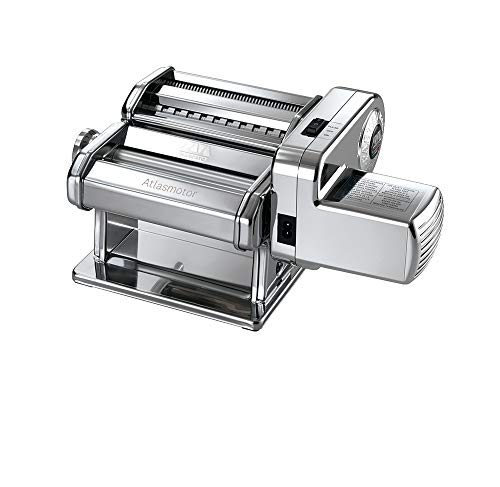
- Italian-made Atlas 150 roller
- Includes Pastadrive motor and handcrank
- 10 thickness positions for six-inch sheets
Best For: Cooks seeking traditional rolling with electric assistance
Best for Large Batches
Philips 7000 Series Pasta Maker

- Makes up to 8 portions
- Includes 8 shaping discs
- Dishwasher-safe parts
Best For: Families and frequent batch cooking
Best for Adjustable Thickness
Marcato Atlas Motor Attachment

- Offers 9 thickness settings
- Attached motor aids rolling
- Steel body resists corrosion
Best For: Users seeking precise sheets and traditional control
Best Compact Option
Philips Viva Compact Pasta Maker
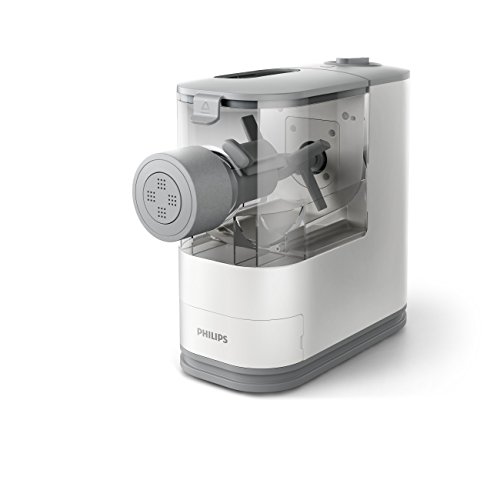
- Makes 2–3 servings automatically
- Includes 3 classic shaping discs
- Designed for countertop storage
Best For: Small households and space-conscious kitchens
Best Stainless-Steel Pick
GVODE 3-in-1 Electric Pasta Maker

- Stainless-steel housing with metal drive gears
- Eight thickness settings from 0.4 to 2 mm
- Two speeds, reverse, and spaghetti/fettuccine cutters
Best For: Regular home pasta making and durability-focused shoppers
Best High-Output Pick
WICHEMI Automatic Noodle Maker

- Automatic one-button operation
- Three built-in noodle sizes and shapes
- Stainless-steel body with up to 22 lb/h efficiency
Best For: Families and small food-service setups needing faster noodle production
Best Simple Pick
GVODE White Electric Pasta Maker

- Lightweight 5.2-pound plastic housing
- Eight thickness settings plus two speeds and reverse
- Includes spaghetti and fettuccine cutting functions
Best For: Small kitchens and easy-to-store home pasta setups
Best Automatic Capacity – VEVOR 150W Electric Pasta Maker
For shoppers comparing electric pasta machines, the VEVOR offers automatic mixing, kneading, and extrusion with a 500g flour capacity. Its four modes and eight pasta discs make it a practical option for preparing fresh noodles for a family meal, though accurate flour-to-water measuring is important for smooth operation.
Best For: Beginners and families who want several pasta shapes from an automatic countertop machine.
Pros:
- 500g flour capacity can make approximately four servings in about 14 minutes.
- Eight discs support a variety of pasta shapes.
- Includes measuring cups, spatula, cleaning brush, and dishwasher-safe parts.
- Four automatic modes simplify operation for beginners.
Cons:
- Incorrect water quantities may cause dough to stick or fail to extrude.
- At 11 pounds, it is relatively substantial for a countertop appliance.
The VEVOR is a feature-rich choice among electric pasta machines, especially if batch size and shape variety matter. Follow the included ratio guide closely to get the best results.
Best Italian Electric Roller – Marcato Ampiamotor 150
The Marcato Ampiamotor is a chrome-steel option for shoppers seeking electric pasta machines that roll sheets rather than automatically extrude shaped noodles. Its included Pastadrive motor can be used electrically or swapped for the handcrank, while 10 thickness positions provide control over the finished sheet.
Best For: Home cooks who prefer adjustable pasta sheets and the flexibility of motorized or manual operation.
Pros:
- Made and assembled in Italy.
- Rolls pasta sheets up to 150mm, or 6 inches, wide.
- Offers 10 clear thickness settings.
- Includes the machine, handcrank, clamp, motor, and instruction manual.
Cons:
- Additional Marcato accessories for other pasta shapes are sold separately.
- Cleaning requires allowing dough residue to dry before brushing it away.
Choose the Ampiamotor if sheet control and traditional roller-style preparation are more important than one-touch mixing and extrusion. Its dual manual/electric setup also adds flexibility for different cooking sessions.
Best Disc Variety – 260W Automatic Pasta Maker
This 260W model is one of the more shape-focused electric pasta machines, combining mixing, kneading, and extrusion in a single appliance. With 13 interchangeable discs and a 500g flour capacity, it is designed for everyday homemade pasta, noodles, and dumpling-style preparations.
Best For: Families and home cooks who want the widest selection of included noodle and pasta shapes.
Pros:
- Includes 13 interchangeable shaping discs.
- 260W motor handles automatic mixing, kneading, and extrusion.
- 500g flour capacity suits small to medium family portions.
- Detachable food-contact parts and included cleaning spatula simplify cleanup.
Cons:
- Food-contact parts require hand washing.
- The plastic construction may feel less substantial than metal roller-style machines.
The main appeal here is versatility: 13 discs cover pasta, noodle, and dumpling-skin styles without requiring separate accessories. It is a practical pick for households that value variety and automated preparation.
Best Manual-Electric Flexibility – Marcato Atlasmotor 150
The Marcato Atlasmotor combines a traditional pasta roller with a Pastadrive motor, making it a flexible alternative among electric pasta machines. It produces sheets up to 6 inches wide, offers 10 thickness positions, and can also be operated with the included handcrank.
Best For: Pasta makers who want Italian construction and the option to switch between electric and manual rolling.
Pros:
- Made and assembled in Italy.
- Supports manual or powered operation.
- Creates pasta sheets up to 150mm, or 6 inches, wide.
- Includes a clamp, handcrank, motor, and instruction manual.
Cons:
- Additional accessories for more pasta shapes are sold separately.
- Cleanup requires letting remaining dough dry before brushing it off.
The Atlasmotor is a strong fit for cooks who want the feel of a classic roller with electric assistance when needed. Its 10-position adjustment gives useful control over sheet thickness, while the handcrank provides a manual fallback.
Best for Large Batches – Philips 7000 Series Pasta Maker
If you want electric pasta machines that can handle family-size portions with minimal effort, the Philips 7000 Series is a strong fit. Its automatic operation, 150W motor, eight shaping discs, and stated under-10-minute preparation time make it suited to frequent homemade pasta sessions.
Best For: Families and hosts who want high-capacity, versatile pasta making with guided recipes.
Pros:
- Prepares up to eight portions in one batch.
- Includes eight discs for different pasta shapes.
- Dishwasher-safe, non-stick parts simplify cleanup.
- HomeID app offers step-by-step recipes, including vegan and gluten-free options.
Cons:
- Its 20-pound weight makes it less convenient to move or store.
- The larger design may be more machine than small households need.
The Philips 7000 Series stands out among electric pasta machines for capacity and versatility. Choose it if you value large batches, multiple shaping options, and assisted preparation more than a compact footprint.
Best for Adjustable Thickness – Marcato Atlas Motor Attachment
For shoppers comparing electric pasta machines with a more traditional rolling approach, the MARCATO Atlas combines an attached motor with manual-style thickness control. Its nine-position dial rolls dough from 2.5 mm down to 0.3 mm, while the steel construction is designed for long-term resistance to corrosion.
Best For: Pasta makers who want precise sheet thickness and a solid Italian-style machine.
Pros:
- Nine settings provide detailed thickness adjustment.
- Attached motor supports automatic operation.
- Nickel-plated and chrome-plated steel body is built for durability.
- Removable double-cutter adds versatility for pasta shapes.
Cons:
- It focuses on rolling and cutting rather than fully automatic kneading and extrusion.
- The listed 32-inch length may require substantial counter space.
- Only one disc is included.
The Atlas is a practical choice when thickness control and durable construction matter most. It is less appropriate for hands-off, all-in-one preparation, but its adjustable roller and cutter suit users who prefer a traditional pasta workflow with motor assistance.
Best Compact Option – Philips Viva Compact Pasta Maker
If counter space is a priority, this compact Philips Viva model is one of the more approachable electric pasta machines to consider. It automatically kneads and extrudes two to three servings in about 18 minutes and includes discs for spaghetti, penne, and fettuccini.
Best For: Small households and everyday cooks who want automatic pasta making in a space-saving design.
Pros:
- Automatically kneads and extrudes fresh pasta.
- Compact design can remain on the counter for regular use.
- Includes three classic shaping discs for spaghetti, penne, and fettuccini.
- Built-in storage keeps the shaping discs organized.
Cons:
- Its two-to-three-serving capacity is limited for larger gatherings.
- Only three shaping discs are included.
- The stated preparation time is about 18 minutes, slower than the Philips 7000 Series.
The Viva Compact is a sensible entry point for smaller kitchens and households. Its automatic kneading and extrusion reduce hands-on work, while the limited capacity and disc selection keep it better suited to routine portions than large entertaining.
Best Stainless-Steel Pick – GVODE 3-in-1 Electric Pasta Maker
For shoppers comparing electric pasta machines, this GVODE model stands out for its stainless-steel housing, metal drive gears, and flexible roller-and-cutter setup. Its 700W motor, two speeds, reverse function, and eight thickness settings support everything from thin noodles to lasagna sheets.
Best For: Home cooks who want a durable, versatile machine for regular weekly pasta making.
Pros:
- Stainless-steel housing and rollers resist dents, staining, and discoloration.
- Eight thickness settings cover 0.4 to 2 mm, with fettuccine and spaghetti cutters included.
- Two speeds and reverse help manage dough that bunches during operation.
- Metal drive gears are designed to help maintain roller alignment through repeated use.
Cons:
- The motor should be run in 15-minute batches with a five-minute cool-down.
- Its stainless-steel construction may be less convenient to move than a lightweight plastic model.
This is a strong choice when long-term durability and precise thickness control matter more than the smallest footprint. Following the recommended rest intervals should help support consistent motor performance.
Best High-Output Pick – WICHEMI Automatic Noodle Maker
Among electric pasta machines, the WICHEMI is geared toward users who value automatic operation and higher output. Its 135W motor and three built-in blade options produce round, narrow flat, and wide flat noodles, while the stainless-steel body is suited to home or small food-service settings.
Best For: Families, small restaurants, and cooks who want multiple noodle shapes with minimal manual effort.
Pros:
- Automatic one-button operation is straightforward for different skill levels.
- Three noodle formats include 2.5 mm round, 4 mm flat, and 9 mm flat noodles.
- Stainless-steel construction is designed to resist rust and aging.
- Rated efficiency is up to 22 lb/h, according to the supplied specifications.
Cons:
- At 17.6 pounds, it is substantially heavier than the compact GVODE option.
- The listed thickness range is 1.5 to 4 mm, offering less fine adjustment than an eight-setting roller.
- Its noodle-focused blade system does not list separate spaghetti or fettuccine cutters.
The WICHEMI makes the most sense for buyers who prioritize automatic production and defined noodle shapes over delicate sheet-thickness control. Its heavier stainless-steel build may also suit a dedicated countertop location.
Best Simple Pick – GVODE White Electric Pasta Maker
This lightweight GVODE is a practical option for shoppers seeking electric pasta machines that are easy to lift and store. It combines a 700W maximum-power drive with eight thickness settings, two speeds, reverse, and cutters for spaghetti and fettuccine, while its white plastic housing keeps the unit compact.
Best For: Small kitchens and home cooks who want broad pasta-making flexibility without a heavy appliance.
Pros:
- Lightweight design is listed at 5.2 pounds for easier countertop storage.
- Eight settings adjust sheets from 0.4 to 2 mm for pasta and lasagna preparation.
- Two speeds and reverse provide added control when dough bunches.
- Metal drive gears and stainless-steel blades support aligned rolling and clean cutting.
Cons:
- The plastic housing may not feel as substantial as a stainless-steel-bodied alternative.
- The motor requires 15-minute operating batches followed by five-minute cool-downs.
- Vents must remain clear during use, so storage convenience does not eliminate the need for operating space.
Choose this model if portability and storage are priorities but you still want multiple thickness settings and common pasta cutters. Its lighter construction is convenient, while the specified pacing routine is important for motor care.
How We Picked the Best Electric Pasta Machines
We focused on the features that matter most in everyday home pasta making: motor power, automation, shaping options, dough capacity, included accessories, ease of cleaning, and the type of pasta each machine produces. The selection includes automatic machines that mix and extrude dough, electric roller-and-cutter models, and motor attachments that convert compatible manual machines.
We also considered brand reputation, construction materials, versatility, and whether the package is practical for beginners or more experienced cooks. Because these machines work differently, the best choice depends on whether you prioritize convenience, control, speed, or traditional pasta texture.
Quick Comparison
| Machine type | Best for | What to check |
|---|---|---|
| Automatic extruder | Hands-off mixing and shaping | Disc selection, capacity, and cleaning |
| Electric roller and cutter | Lasagna sheets and classic noodles | Roller width, cutter styles, and dough handling |
| Motor attachment | Upgrading a manual pasta machine | Compatibility, voltage, and included drive parts |
Key Buying Factors for Electric Pasta Machines
Machine Type and Pasta Styles
Choose an extruder if you want the machine to mix dough and press it through shaping discs. These models are convenient for short shapes, spaghetti, macaroni-style pasta, and other extruded formats. Roller-and-cutter machines are better for flat sheets, fettuccine, tagliolini, and filled-pasta preparation.
Power, Capacity, and Batch Size
Higher wattage can help with demanding dough, but power alone does not determine performance. Check the flour or dough capacity and portion claims. A smaller machine may suit occasional meals, while a larger bowl is more useful for families or batch cooking.
Controls, Accessories, and Cleanup
Automatic programs simplify the process, while manual controls provide more control over thickness and timing. Count the included discs, cutters, trays, measuring tools, and cleaning accessories. Removable parts and dry-cleaning tools can make maintenance significantly easier.
Build Quality and Compatibility
Metal rollers and sturdy clamps generally offer a more durable feel than lightweight plastic components. If buying a motor attachment, verify that it matches the exact pasta-machine model, voltage, and connector before ordering.
Who Should Buy Which Electric Pasta Machines?
- For maximum convenience: Choose a fully automatic extruder with preset programs and several shaping discs.
- For classic pasta sheets and noodles: Pick an electric roller-and-cutter machine with adjustable thickness settings.
- For Marcato owners: A compatible Atlasmotor or Ampiamotor attachment can add powered operation without replacing the existing machine.
- For families: Prioritize generous capacity, reliable controls, and a motor designed for repeated batches.
- For beginners: Look for clear instructions, automatic mixing, included measuring tools, and simple cleanup.
- For experienced cooks: Favor adjustable rollers, broad accessory compatibility, and manual control over dough thickness and timing.
Before buying, decide whether you want true hands-off dough preparation or simply powered rolling and cutting. That single distinction will narrow the options quickly and help you choose an electric pasta machine that fits your cooking routine.
